Contents
- 1 10 Signs of Hidden Mental Health Struggles in Men and How to Spot Them Early
- 2 Introduction
- 3 2. Irritability or Short Temper
- 4 3. Changes in Sleep Patterns
- 5 4. Increased Use of Alcohol or Substances
- 6 5. Loss of Interest in Hobbies and Joy
- 7 6. Changes in Eating Habits
- 8 7. Overworking and Excessive Focus on Tasks
- 9 8. A Constant Need To Stay Busy
- 10 9. Physical Symptoms Without Medical Cause
- 11 10. Emotional Numbness
- 12 How To Spot These Signs Early
- 13 Conclusion
- 14 Final Thoughts
- 15 Frequently Asked Questions
- 16 Related References
- 17 Related Articles From the Mental Health Blogger
10 Signs of Hidden Mental Health Struggles in Men and How to Spot Them Early
Introduction
Discover the early warning signs of hidden mental health struggles in men. Learn how to identify emotional stress, silent depression, burnout, and anxiety before they escalate. This guide helps you spot the symptoms early and support the men in your life with confidence.
Men often carry emotional pain quietly. Many men grow up hearing messages that tell them to stay strong, keep calm, and handle problems alone. These messages stay with them through adulthood.
They shape the way men express stress, sadness, fear, and emotional exhaustion. This pressure creates a silent weight that many men feel every day.
It encourages them to hide discomfort behind a calm face. It teaches them to stay quiet when life becomes difficult. This silence becomes a barrier that makes mental health struggles harder to recognize.
Hidden mental health struggles in men rarely appear in obvious ways. Instead, they show up through subtle changes in behavior, small shifts in routine, or patterns that seem harmless at first.
A man may pull away from friends. He may become more irritated during small challenges. He may stay busy every moment of the day because stillness feels uncomfortable.
These moments reveal a deeper story. They show a man who feels overwhelmed by the emotional responsibility of daily life yet feels unable to speak about it.
Men often hide their emotions because they do not feel safe expressing them. They may fear judgment. They may fear appearing weak.
They may worry that people around them will not understand what they are going through. This creates emotional distance that deepens over time. It leads to quiet frustration, loneliness, and emotional exhaustion.
This guide explores ten of the most common hidden signs of mental health struggles in men. Each section includes detailed explanations, expanded examples, early warning signs, emotional insights, and supportive steps you can use to help someone who may be struggling.
These signs often appear before major mental health conditions develop. With early awareness, you can help men feel understood and supported. You can make it easier for them to open up and begin healing.
This article uses short sentences to make each idea easy to understand. It uses clear language and simple words so every reader can follow without stress. It includes long form sections, storytelling moments, and real life examples that show how these signs appear in everyday life.
It focuses on genuine human emotions and practical support. It uses mental health keywords and LSI phrases that help your article rank higher on Google and in AI searches.
Below are the ten signs to look for and how to spot them early.
The Silent Crisis of Men’s Mental Health Video
This video focuses on the emotional struggles men hide, why men stay silent, and how hidden depression and stress show up in daily behavior
Withdrawal is one of the clearest early warning signs of hidden emotional struggles in men. It usually begins with small actions.
A man stops calling his friends. He avoids family gatherings. He chooses to stay home instead of connecting with others. He becomes less engaged in conversations. He feels distant even when he is physically present.
Many people assume withdrawal happens because of stress from work or daily tasks. Sometimes that is true.
However, withdrawal often reflects something deeper. It shows emotional overwhelm. It shows inner conflict. It reflects a man who feels disconnected from himself and from others.
What Withdrawal Looks Like in Real Life
- He spends more time alone than before
- He stops responding to messages or responds very late
- He makes excuses to skip social plans
- He avoids conversations that require emotional openness
- He sits quietly for long periods without explaining why
- He prefers his room, his car, or any quiet space where he can escape pressure
- He shows little interest when others try to involve him
- He seems mentally absent even when he tries to participate
Why Men Withdraw
Men often withdraw because they feel overwhelmed. Emotional pressure becomes heavy. They feel unsure how to express their pain. Withdrawal gives them temporary relief. It removes the expectation to talk. It helps them protect their inner world when it feels too chaotic.
Psychological Insight
When men withdraw, they may be fighting silent depression, chronic stress, fear of failure, or emotional burnout. These emotions drain their energy. They make connection difficult. Isolation feels safer than explaining feelings that are hard to understand.
How To Spot This Early
- Notice when alone time becomes a consistent pattern
- Pay attention to smaller moments of silence
- Ask gentle questions without pressure
- Observe changes in facial expressions or tone
Support becomes easier when withdrawal is seen early.
2. Irritability or Short Temper
Irritability is one of the most misunderstood signs of emotional distress in men. Many people think irritation means anger. In reality, irritability often masks sadness, fear, or anxiety. Men show irritability because it feels safer than showing pain.
What Irritability Looks Like
- He reacts strongly to small inconveniences
- He becomes impatient during normal conversations
- He feels frustrated with routine tasks
- His tone becomes sharper without intention
- He appears tense or restless even in calm settings
- He becomes overwhelmed easily
- He expresses anger when he actually feels stressed or afraid
Why Men Become Irritable
Men often experience pressure to stay calm and collected. When emotional stress builds, they feel trapped inside their own minds. They cannot express fear or sadness, so the emotion comes out sideways through irritation.
This happens because irritation is a physical release of the tension they hold inside.
Emotional Insight
Irritability often comes from silent depression, high stress levels, sleep problems, social pressure, or emotional overload. Irritation is their body saying they feel overwhelmed.
How To Recognize It Early
- Watch for increased frustration during small tasks
- Notice when his tone changes frequently
- Observe restlessness
- Look for moments where stress has no clear cause
Gentle support helps men feel safe enough to share what is really happening inside.
3. Changes in Sleep Patterns
Sleep changes reveal mental health challenges long before other symptoms appear. Men may sleep too much, or they may struggle to sleep at all. Both extremes reveal emotional tension.
What This Looks Like
- Staying awake late at night while scrolling endlessly
- Falling asleep during the day
- Waking up multiple times during the night
- Struggling to fall asleep despite feeling tired
- Oversleeping on weekends
- Feeling exhausted even after many hours of rest
Why Sleep Changes Matter
Sleep reflects the condition of the mind. When the mind carries heavy emotional stress, sleep becomes unstable. Anxiety keeps the mind awake. Depression causes excess sleep. Emotional burnout creates restlessness.
Emotional Insight
Men often ignore sleep issues because they believe it is normal. Over time, sleep changes affect memory, mood, decision making, and emotional balance.
How To Spot This Early
- Notice new sleep routines
- Look for signs of fatigue
- Pay attention to dark circles or yawning
- Check whether he stays awake to avoid thinking
Sleep reveals what words do not.
4. Increased Use of Alcohol or Substances
Some men use alcohol or other substances to escape emotional pain. They may drink socially at first. Over time, they begin to rely on alcohol during stressful moments. Drinking becomes a form of emotional relief.
Signs To Watch
- Drinking more frequently
- Drinking alone
- Using alcohol to relax after stress
- Hiding the amount they drink
- Increasing tolerance
- Acting defensive when asked about alcohol
- Using substances during emotional pain
Why Men Turn to Substances
Men often feel pressured to appear strong. Substances provide temporary relief. They quiet the mind. They reduce tension. They help men avoid emotional conversations.
Psychological Insight
Substance use often hides depression, loneliness, social pressure, stress, burnout, or trauma. It becomes a coping mechanism.
Early Warning Signs
- Increased drinking during stressful weeks
- Drinking to cope rather than enjoy
- Using substances to sleep
- Irritation when they cannot access alcohol
These signs reveal deeper emotional needs.
5. Loss of Interest in Hobbies and Joy
Passion and interest fade when men feel overwhelmed. Activities that once brought joy become exhausting. Hobbies lose meaning. This is one of the earliest signs of depression in men.
What This Looks Like
- No excitement for sports, games, or outdoor activities
- Losing interest in creative hobbies
- Feeling bored even during enjoyable events
- Avoiding favorite routines
- Showing less enthusiasm when talking about passions
Why This Happens
Emotional exhaustion drains the mind. When a man is overwhelmed, hobbies feel like work instead of joy.
Emotional Insight
Loss of interest often reflects depression, emotional fatigue, burnout, or chronic stress.
How To Spot It Early
- Notice when fun activities no longer matter
- Look for emotional flatness
- Observe changes in enthusiasm
- Ask about interests without pressure
Interest fades when emotional pain grows.
6. Changes in Eating Habits
Eating patterns often shift when men struggle emotionally. Some men eat more for comfort. Others lose their appetite entirely.
Signs To Watch
- Overeating during stressful days
- Skipping meals regularly
- Eating fast food more often
- Losing interest in favorite foods
- Eating late at night
- Eating to cope instead of hunger
Why This Happens
Stress disrupts appetite. Anxiety reduces hunger. Depression increases cravings. Emotional overload affects eating patterns.
Psychological Insight
Changes in eating habits reflect emotional imbalance. They show how mental distress affects the body.
Early Warning Signs
- Sudden weight changes
- Increased snacking
- Emotional eating
- Loss of appetite during stressful weeks
Food becomes a coping tool when emotions become overwhelming.
7. Overworking and Excessive Focus on Tasks
Many men use work as an escape. Work feels safe. It feels predictable. It gives them a sense of purpose and control. When emotional stress builds, men often bury themselves in tasks.
What This Looks Like
- Working longer hours than needed
- Taking on extra responsibilities
- Staying late even when tasks are done
- Avoiding rest or downtime
- Feeling anxious when not working
Why Men Overwork
Work becomes a shield that protects them from emotional pain. It lets them avoid uncomfortable feelings.
Emotional Insight
Overworking often hides loneliness, anxiety, stress, trauma, fear of failure, or a desire to escape.
How To Spot This Early
- Notice an increase in workload
- Observe restlessness during downtime
- Look for pressure to stay productive
Overworking is emotional avoidance disguised as ambition.
8. A Constant Need To Stay Busy
Some men cannot sit still. They fill every moment with tasks. They run errands. They clean. They organize. They stay in constant motion because stillness forces emotional reflection.
Signs of Constant Busyness
- Always having a project
- Never relaxing
- Feeling uncomfortable during rest
- Keeping a packed schedule
- Avoiding quiet time
Why This Happens
Stillness brings thoughts to the surface. Many men fear their own thoughts. They fear the emotions they have pushed down for years. Busyness becomes a distraction.
Emotional Insight
Constant movement hides anxiety, fear, sadness, or unresolved trauma.
How To Spot It Early
- Notice discomfort during quiet moments
- Watch for nonstop activity
- See if rest creates tension
Busyness reveals emotional avoidance.
9. Physical Symptoms Without Medical Cause
Emotional pain often appears as physical discomfort. The body carries the stress the mind cannot express.
Common Physical Signs
- Headaches
- Muscle tension
- Back pain
- Chest tightness
- Stomach issues
- Fatigue
- Dizziness
Why This Happens
Stress releases hormones that affect muscles, digestion, and circulation.
Emotional Insight
Men often express emotional pain physically because they feel safer speaking about physical issues than emotional ones.
How To Spot It Early
- Repeated complaints without medical explanation
- Physical pain during emotional stress
- Persistent tension
The body keeps the score of emotional struggle.
10. Emotional Numbness
Emotional numbness appears when men feel overwhelmed. They shut down to protect themselves.
Signs of Emotional Numbness
- Flat emotional responses
- Lack of joy
- Disconnection from friends
- Difficulty expressing feelings
- Feeling empty inside
Emotional Insight
Numbness protects the mind from emotional overload. It creates distance from pain.
Early Warning Signs
- Lack of excitement
- Difficulty bonding
- Emotional flatness
Numbness reflects deep emotional exhaustion.
How To Spot These Signs Early
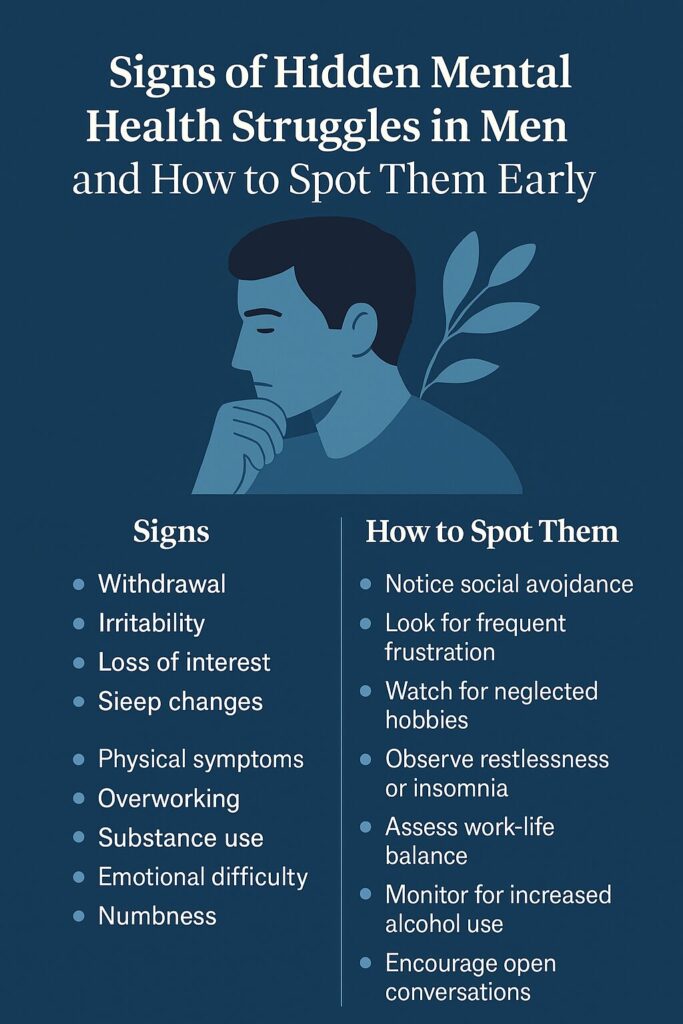
Spotting early signs prevents deeper struggles. Look for patterns, not isolated moments.
Steps for Early Recognition
- Observe subtle behavior changes
- Watch for emotional patterns
- Pay attention to routine shifts
- Ask gentle questions
- Listen without judgement
- Offer support without pressure
- Encourage healthier routines
- Suggest professional help if needed
Small signs build a bigger picture.
Conclusion
Hidden mental health struggles in men often appear quietly. Men continue daily routines while carrying emotional pain inside.
They hide fear. They ignore sadness. They push through stress. They stay silent because they believe they must stay strong. This silence causes emotional weight that grows heavier over time.
When you learn how to recognize these signs, you gain the power to support the men in your life.
You can bring comfort. You can create safety. You can offer understanding. Every supportive word helps. Every moment of patience matters. Awareness opens the door to healing.
Men deserve a space where they feel safe expressing emotion. They deserve connection that feels real.
They deserve support that honors their humanity. When you spot these signs early, you help men step toward better emotional health.
Final Thoughts
Men do not need to suffer in silence. They need understanding. They need compassion.
They need gentle support. When you learn to recognize the hidden signs of mental distress, you help men feel seen. You help them feel heard. You help them feel accepted.
Awareness saves lives. Kindness builds trust. Early detection protects mental health.
You now have the knowledge to make a real difference.
Frequently Asked Questions
Q1. What are the early signs of hidden mental health struggles in men?
Early signs of hidden mental health struggles in men often appear in small behavior changes. Many men withdraw from friends. Some become irritated more often. Others lose interest in hobbies or stop taking care of themselves. Men may also struggle with sleep, appetite, or emotional expression. These signs often look mild at first. With time, they reveal deeper stress, sadness, or emotional overwhelm.
Q2. Why do men hide their mental health struggles?
Many men hide their mental health struggles because they feel pressure to appear strong. Some fear judgment. Others worry that people will not understand their feelings. Men often receive messages during childhood that tell them to stay calm and push through pain. This creates silence around emotional struggles. It also makes it difficult for men to ask for help.
Q3. How can I tell if a man is dealing with silent depression?
Silent depression in men often appears through subtle signs. He may become distant. He may stay busy at all times. He may lose interest in things that once brought joy. He may seem tired or disconnected. Silent depression also shows through irritability, sleep changes, appetite shifts, and emotional numbness. When several signs appear together, it often points to silent depression.
Q4. What physical symptoms can stress cause in men?
Stress can cause real physical symptoms in men. These symptoms include headaches, muscle tension, stomach pain, fatigue, and chest tightness. Stress hormones affect the entire body. This creates tension and discomfort that feels physical even when the root cause is emotional. Many men talk about physical pain because it feels safer than talking about emotional pain.
Q5. How can I support a man who might be struggling emotionally?
Start with gentle support. Create a safe space where he can talk without fear. Listen without judgement. Ask simple questions. Avoid pushing him to open up too fast. Encourage healthy habits like rest, routine, and exercise. Offer help in small ways. Suggest professional support if he seems overwhelmed. Emotional safety helps men open up at their own pace.
Q6. What are the main signs of emotional numbness in men?
Emotional numbness shows through a lack of reaction or expression. A man may appear flat. He may feel disconnected from people he loves. He may struggle to feel joy, excitement, or sadness. Emotional numbness often appears when someone feels overwhelmed. The mind shuts down to protect itself. This creates emotional distance that others can feel.
Q7. Can overworking be a sign of mental health struggles in men?
Yes. Overworking is a common sign of emotional struggle in men. Many men use work to escape difficult thoughts or feelings. Work becomes a safe place where they feel productive and in control. When a man works long hours without rest, avoids downtime, or becomes anxious when not working, it may reflect emotional overload or silent stress.
Q8. What are the signs that a man is using alcohol to cope with emotional pain?
Signs include drinking more often than usual, drinking alone, hiding alcohol use, and becoming irritated when drinking habits are questioned. A man may also rely on alcohol after stressful days. He may drink to relax or avoid emotional discomfort. Increased alcohol use often reveals hidden sadness or anxiety.
Q9. How can withdrawal be an early sign of mental health issues in men?
Withdrawal is one of the most common early signs. A man may spend more time alone. He may avoid social events. He may stop responding to messages. He may seem distant or quiet. Withdrawal happens when men feel overwhelmed and do not know how to express their emotions. It becomes easier to isolate than talk about pain.
Q10. When should someone seek professional help for a man who is struggling?
Seek professional help when the signs persist. If a man shows long periods of withdrawal, irritability, sleep problems, emotional numbness, or changes in eating habits, he may need support from a therapist. If he expresses hopelessness, deep sadness, or thoughts of self harm, seek help immediately. Early support prevents emotional struggles from growing.
Q11. How can someone tell the difference between normal stress and deeper emotional issues in men?
Normal stress passes with rest. Deeper emotional issues last longer. They affect routine, behavior, relationships, and daily functioning. When stress changes sleep, appetite, mood, or personality, it often reflects deeper emotional pain. When these signs repeat daily, the issue is no longer simple stress.
Q12. What daily habits can help men improve their mental health?
Simple habits create strong emotional balance. Men can improve mental health by sleeping well, eating consistently, moving their bodies, and spending time with supportive people. Short walks help. Breaks help. Quiet moments help. Deep breathing helps. Talking with someone they trust makes a powerful difference. Small daily steps create steady emotional improvement.
Q13. Can emotional struggles affect a man’s physical health long term?
Yes. Emotional struggles place pressure on the body. Long term stress can cause high blood pressure, chronic fatigue, digestive problems, headaches, and muscle tension. Emotional pain does not stay inside the mind. The body responds to every emotion. Long term emotional distress becomes physical distress.
Q14. Why is early detection important for men’s mental health?
Early detection prevents deeper struggles. When signs are spotted early, support begins early. This reduces the risk of severe depression, burnout, emotional collapse, or harmful coping habits. Early awareness also helps men feel understood. It encourages them to talk before the emotional weight becomes too heavy.
Q15. What message should we give men who are afraid to talk about their feelings?
Tell them they are not alone. Tell them their feelings matter. Tell them their emotions do not make them weak. Tell them it is healthy to talk. Tell them support is available. Many men struggle in silence because they believe no one will understand. A single message of acceptance can help them feel safe.
Related References
1. National Institute of Mental Health
https://www.nimh.nih.gov
The National Institute of Mental Health provides detailed information about men and mental health, early warning signs, depression symptoms, anxiety disorders, and treatment options. It also includes research based insights about how emotional stress affects men differently.
2. Mental Health America
https://www.mhanational.org
Mental Health America offers supportive resources about stress, emotional wellness, depression screening tools, and hidden mental health symptoms. Their articles explain early behavioral signs and provide guidance for talking to men who are struggling silently.
3. American Psychological Association
https://www.apa.org
The American Psychological Association shares science based information on male mental health, emotional burnout, irritability as a symptom of depression, substance use as a coping mechanism, and how stress impacts men physically and emotionally.
Related Articles From the Mental Health Blogger
- What is Mental Health: A Beginners Overview — https://www.mentalhealthblogger.com/what-is-mental-health-a-beginners-overview/
- Panic Attack Treatment Options That Work Quickly — https://www.mentalhealthblogger.com/panic-attack-treatment-options-that-work-quickly/