
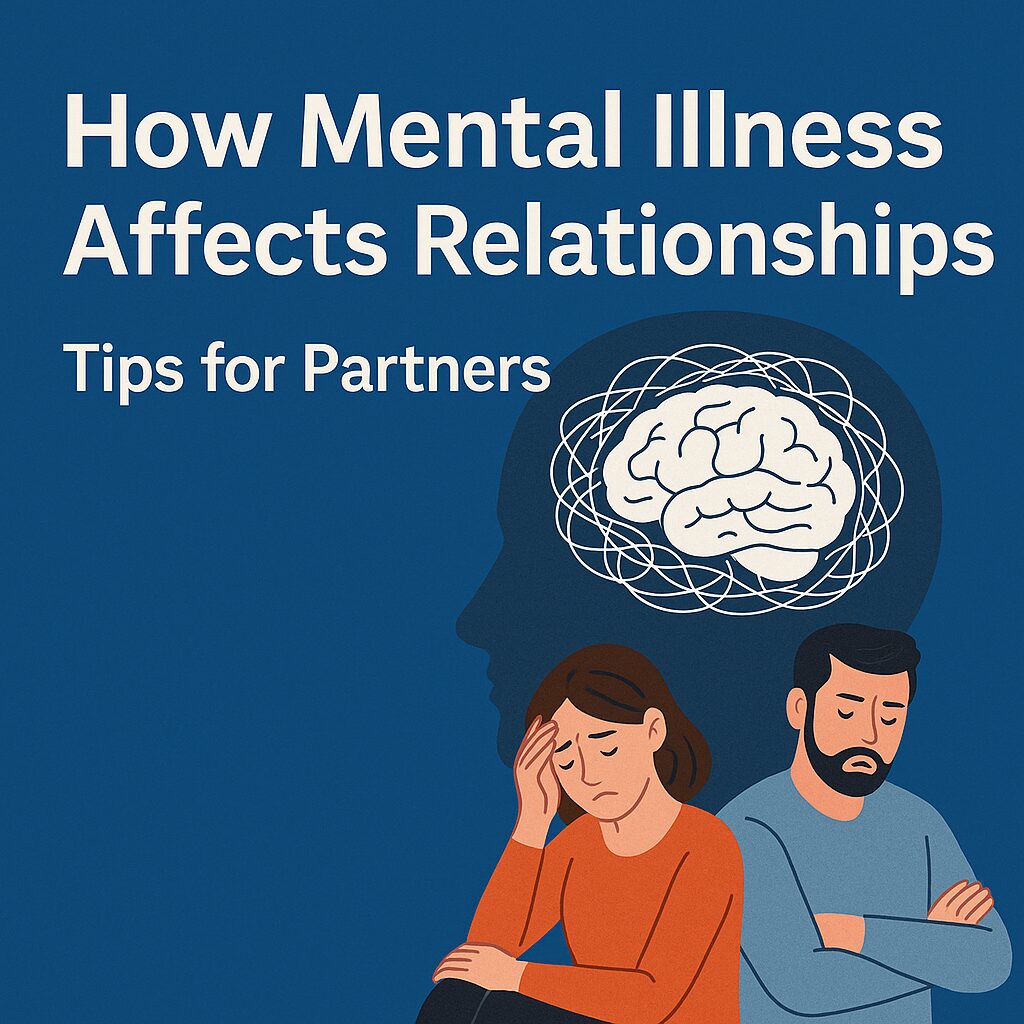
How Mental Illness Affects Relationships and Supportive Tips for Partners
Learn how mental illness affects relationships, communication, trust, and emotional connection. This guide gives partners clear steps, supportive tips, and real ways to strengthen the relationship while navigating mental health challenges.
Understanding how mental illness affects relationships can feel overwhelming, confusing, and emotional for both people involved. Many partners want to help but do not always know what to say or what to do.
Mental health symptoms can show up in communication, daily routines, intimacy, and trust. These changes often create moments of frustration or distance that neither partner ever wanted.
When you read about how mental illness affects relationships, you begin to see that these challenges are not a sign of weakness. They are signs that both people need support, compassion, and patience.
Mental illness affects relationships by influencing how someone feels, thinks, and interacts. Anxiety can make a person worry more or avoid conversations. Depression can create low energy, sadness, or withdrawal that partners may take personally.
Bipolar symptoms can shift moods and create confusion or emotional tension. Trauma can trigger emotional reactions that feel hard to understand. None of these reactions reflect a lack of love. They simply show how deeply mental health can shape emotional connection.
For partners, it can be hard when the person they love seems distant or overwhelmed. Many feel unsure about how to fix the situation or how to comfort their partner without saying the wrong thing.
These videos on how mental illness affects relationships gives partners a clearer understanding of what is happening underneath the surface. It shows how symptoms influence behavior and how both people can work together to protect the relationship.
Support begins with open communication. When partners talk honestly about feelings, triggers, needs, and boundaries, the relationship becomes safer and more grounded. Small changes in communication make a big difference.
Validating feelings can calm tension. Listening without judgment invites trust. Checking in regularly prevents misunderstandings and helps both partners feel seen.
Healthy relationships grow stronger when both people understand their roles. Partners can learn how to support without fixing everything. They can encourage professional help when needed.
They can practice patience during difficult moments and celebrate progress when things get better. Self care for partners is also important because caring for someone with mental illness requires emotional strength and balance.
Knowing how mental illness affects relationships helps partners approach challenges with empathy rather than frustration. With compassion, education, and steady communication, couples can build a relationship that supports healing, deeper connection, and long term emotional growth.
How Mental Health Affects Relationships
-
 Original Case Study: How Do Couples Navigate the Highs and Lows of Bipolar Disorder in a Marriage?
 -
How to Clear Your Mind Before Bed: A 5-Minute Practical Decompression Guide
-
How to Improve Mental Wellness When You Have no Time?
-
How Do I Create a Daily Mental Health Checklist for Digital Detoxing?
-
How Do I Clear Brain Fog Naturally and Get My Focus Back?