
Contents
- 1 Effective Progressive Muscle Relaxation for Sleep and Stress Relief | Step by Step Guide
- 2 Introduction to Progressive Muscle Relaxation
- 3 What Is Progressive Muscle Relaxation
- 4 How Progressive Muscle Relaxation Works in the Body
- 5 Why Progressive Muscle Relaxation Helps With Sleep and Stress
- 6 Benefits of Progressive Muscle Relaxation for Sleep and Stress
- 7 Who Should Use Progressive Muscle Relaxation
- 8 Preparing for Progressive Muscle Relaxation
- 9 Step by Step Guide to Progressive Muscle Relaxation
- 10 Additional PMR Techniques and Variations
- 11 How Often You Should Practice Progressive Muscle Relaxation
- 12 Troubleshooting Common PMR Challenges
- 13 Progressive Muscle Relaxation for Sleep
- 14 Long Term Benefits of Practicing Progressive Muscle Relaxation
- 15 Conclusion
- 16 Frequent Asked Questions
- 17 Trusted Website References for Progressive Muscle Relaxation
- 18 The Mental Health Blogger
- 19 Recent Posts
Effective Progressive Muscle Relaxation for Sleep and Stress Relief | Step by Step Guide
A Simple Step by Step Relaxation Method to Reduce Stress and Improve Sleep Naturally
Introduction to Progressive Muscle Relaxation
Improve your sleep and reduce stress with effective progressive muscle relaxation. Learn how PMR calms your body, eases tension, supports better rest, and helps you feel more relaxed. Simple steps included for beginners.
Progressive muscle relaxation is one of the most calming techniques you can add to your daily routine. It helps you settle your mind and relax your body in a simple and gentle way.
Many people struggle with sleep because they carry stress in their muscles without noticing it. The body stays tense long after the mind tries to slow down.
Progressive muscle relaxation breaks this cycle. It teaches your muscles how to let go of tightness.
It teaches your mind how to release pressure. It guides you into a calmer state so you can breathe easier and fall asleep with less effort.
This technique works for anyone who deals with stress, restlessness, racing thoughts, or tension that builds throughout the day.
It supports the mind body connection by helping you notice exactly where your tension hides. You learn how to release it slowly and naturally.
You do not have to meditate. You do not have to sit in silence for long. You only need a few minutes and a quiet place. Progressive muscle relaxation activates the natural relaxation response in your nervous system.
It helps reduce the physical symptoms of stress that keep you awake at night. It brings warmth and softness to your muscles. It creates a soothing path to peace.
People who use progressive muscle relaxation for sleep often report that their mind drifts more easily.
Their breathing deepens. Their body feels lighter. Their muscles soften. They find it easier to let go of the day. This practice is simple. It is powerful. It can transform how you handle stress and how you rest.
What Is Progressive Muscle Relaxation
Progressive muscle relaxation is a step by step method that helps you relax your body by working through individual muscle groups. You tense one area gently.
You hold that tension for a moment. Then you release it while breathing slowly. This simple pattern trains the body to recognize the difference between tension and relaxation.
With practice, your body learns how to relax more quickly. The technique was developed by Dr. Edmund Jacobson in the early 1900s. He believed that mental calmness begins with physical relaxation.
His research showed that people can reduce anxiety and stress by releasing muscle tension with intention and awareness.
At its core, progressive muscle relaxation teaches you how to notice your physical state. Many people carry tight shoulders, a clenched jaw, or a tight stomach without realizing they do it.
Stress can tighten your muscles even when you feel mentally calm. Progressive muscle relaxation helps you create awareness of these patterns.
When you tense and relax each muscle group, you become more in tune with your body. You recognize where you hold stress. You understand how tension feels.
You learn how to soften those areas at will. This mindful connection is one of the reasons the technique supports both stress relief and emotional well being.
How Progressive Muscle Relaxation Works in the Body
Progressive muscle relaxation supports your nervous system in a natural way. When you tense a muscle and then relax it, you trigger a shift in your autonomic nervous system.
Your body moves out of the stress response and into the relaxation response. This helps slow your heart rate. It helps deepen your breathing.
It helps lower stress hormones. It clears mental pressure. It creates a sensation of warmth and heaviness throughout the body. These effects prepare you for sleep and reduce physical discomfort.
The technique also improves circulation by encouraging muscles to relax properly. When your muscles stay tense for too long, blood flow decreases and discomfort increases.
A gentle tension and release cycle helps bring fresh oxygen into the tissues. It helps remove stress built up in the muscles. It sends soothing signals through your nerves that tell your brain it is safe to relax.
This is why progressive muscle relaxation is used for insomnia, anxiety, pain, stress, and emotional overload. It aligns both the physical and emotional systems in a calming rhythm.
Why Progressive Muscle Relaxation Helps With Sleep and Stress
When your body feels tight, your mind stays alert. When your mind feels overwhelmed, your body tightens more.
This cycle keeps many people awake at night. Progressive muscle relaxation helps break that loop. Deep muscle relaxation lowers the overall stress level in your body.
It slows your thinking. It softens physical tension. It guides you into a state that supports sleep.
Stress often keeps the body in a high alert mode. Your breathing becomes shallow. Your shoulders rise. Your muscles tighten. Your jaw clenches.
Your heart may beat faster. Progressive muscle relaxation counteracts these reactions. It teaches your nervous system to move toward calm.
It creates a sense of control and comfort. It supports emotional grounding. It shifts your mind into a slower and more peaceful state, which helps you drift into sleep more easily.
Benefits of Progressive Muscle Relaxation for Sleep and Stress
Progressive muscle relaxation offers many benefits for both physical and emotional well being. It is gentle, natural, and effective.
Your body responds quickly to the simple pattern of tension and release. With practice, you feel calmer throughout the day and more prepared for rest at night.
Physical Benefits
- Less muscle tension from stress
- Improved breathing rhythm
- Reduced headaches and jaw tension
- Reduced tight shoulders and neck pain
- Lower blood pressure during stressful moments
- Improved circulation and nerve relaxation
- Reduced restlessness before sleep
Your muscles become softer. Your body becomes less reactive. Your physical comfort increases. These changes support better sleep and more emotional stability.
Mental and Emotional Benefits
- Fewer racing thoughts
- Lower anxiety levels
- Better emotional grounding
- Relief from internal pressure
- Increased sense of control
- Calmer mood during stressful days
Your mind slows down as your muscles relax. Your thoughts become more manageable. You find it easier to release stress that used to stay with you.
Sleep Benefits
- Easier transition into sleep
- Fewer nighttime interruptions
- Less mind wandering before bed
- Reduced insomnia caused by physical tension
- Greater relaxation in the body and mind
- More consistent pre sleep routine
This technique guides your brain into a restful state. It sets the stage for deeper and more refreshing sleep.
Who Should Use Progressive Muscle Relaxation
Progressive muscle relaxation benefits almost anyone. It is safe. It is accessible. It requires no special equipment. You can use it at home, at work, or in any quiet place. Many people who struggle with stress or sleep find that this technique feels like a gentle reset for the entire body.
People Who Feel Stressed or Overwhelmed
Stress shows up in the body before it appears in the mind. You might feel tight shoulders, a tense jaw, a heavy chest, or a stiff back. Progressive muscle relaxation helps release this stored tension. It reduces physical stress and emotional pressure.
People Who Struggle With Sleep
This practice helps slow your thoughts and relax your muscles. It sends a clear message to your mind that the day is finished. It prepares your body for rest and supports a healthy sleep cycle.
People Who Deal With Anxiety or Physical Symptoms of Anxiety
Muscles tighten during moments of anxiety. The breathing becomes shallow. The heart beats faster. Progressive muscle relaxation helps reverse these changes. It calms the body and helps the mind follow.
People Who Want a Natural Method for Relaxation
This technique uses your body’s natural systems to calm itself. It does not require medication. It does not rely on technology. It only uses slow breathing, gentle movements, and mindful awareness.
Preparing for Progressive Muscle Relaxation
Preparation sets the foundation for a successful relaxation session. Many people rush into relaxation exercises without preparing their space or their mind. This often makes it harder to feel calm.
A peaceful environment helps your body feel safe. A prepared mind helps your thoughts slow down. Good preparation increases the power of progressive muscle relaxation and helps you get the most from each session.
When you prepare your space, you allow your senses to settle. Your eyes soften. Your hearing becomes less alert. Your breathing slows.
When you prepare your mindset, you feel more open to relaxation. You release expectations and let the process unfold naturally. This combination creates a gentle path toward deep relaxation and better sleep.
Create a Calm Environment
Your environment influences your stress level more than you may realize. A calm space sends signals to your nervous system that it is time to slow down.
You do not need a perfect room. You only need a few simple adjustments that make your mind and body feel safe and supported.
Consider these elements:
- Lower the lights or use warm soft lighting
- Reduce noise as much as possible
- Place your phone away to avoid interruptions
- Use a comfortable bed, couch, or chair
- Keep the temperature comfortable
- Add a soft blanket or pillow to support your body
- Use gentle background sound if it helps you relax
A peaceful setting helps your body relax with less effort. It encourages your mind to settle. It reduces sensory overload. It creates a space where stress has less influence over your thoughts and muscles.
Prepare Your Mindset
Relaxation begins with acceptance. You do not need to relax perfectly. You only need to participate. Many people struggle with relaxation because they become frustrated when their mind wanders.
This creates tension instead of calm. It is important to allow your thoughts to come and go naturally. Do not judge them. Simply return your attention to your breathing.
Before starting the session, remind yourself:
- I will relax little by little
- My body will soften over time
- It is normal if my mind wanders
- My only job is to focus on the process
- Relaxation does not need perfection
This gentle mindset removes pressure. It opens the door for deeper comfort. It helps you stay present. It helps your nervous system wind down with ease.
Ground Your Breathing
Breathing is one of the most important parts of progressive muscle relaxation. Slow breathing supports your muscles and your nervous system.
It helps you feel grounded. It helps your thoughts slow down. It prepares your entire body for the tension and release cycle.
Use this simple pattern before beginning:
- Inhale slowly through your nose for four seconds
- Hold your breath for one second
- Exhale through your mouth for six seconds
- Pause gently before the next inhale
This rhythm activates your relaxation response. It calms your heart rate. It reduces stress signals in the body. Your muscles become more receptive to relaxation. Your mind becomes more focused on the present moment.
Step by Step Guide to Progressive Muscle Relaxation
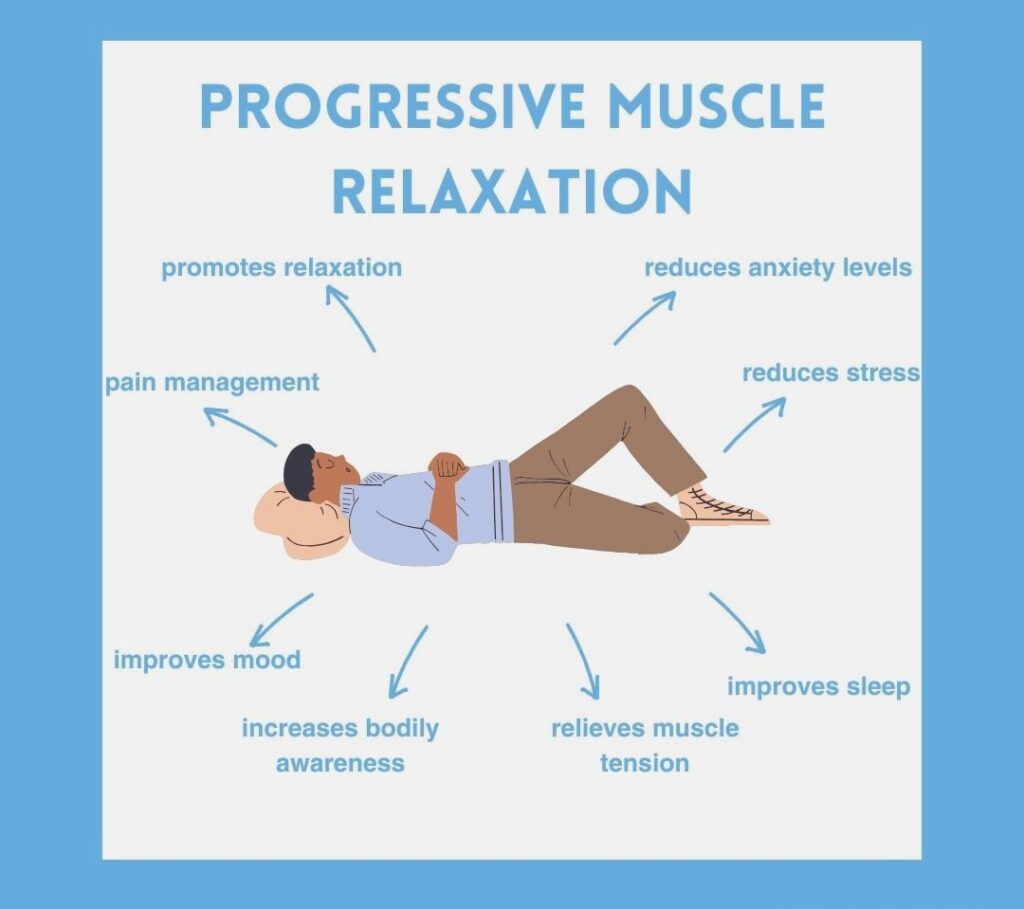
This guide is the heart of the practice. Each step follows the same pattern. You tense a group of muscles gently.
You hold for a short moment. Then you release completely while breathing out. The goal is not to strain your muscles.
The goal is to create awareness. You notice how your muscles feel when they are tight and when they are soft. This teaches your body how to relax deeply.
Move slowly through each step. Allow each release to settle. Notice the warmth and softness that follows. Your body will begin to feel heavier. Your breathing will deepen. Your thoughts will quiet.
Step 1: Start With Slow Deep Breathing
Begin with a few slow breaths. Let your body sink into your bed or chair. Notice where you feel tension. Notice your shoulders. Notice your jaw. Notice your stomach. Allow each breath to soften these areas. Do not rush. Let your breathing guide you into a calmer state.
Slow deep breathing prepares your muscles for relaxation. It reduces mental noise. It supports calm nerves. It balances your body and mind before you begin the technique.
Step 2: Feet and Toes
Tense your feet by curling your toes downward. Hold the tension for five to seven seconds. Then release completely. Let your feet sink into the surface beneath you.
Notice what happens after the release. You may feel a slight warmth. You may feel your feet become heavier. You may sense a gentle tingling sensation. These feelings show that your muscles are relaxing and letting go of built up stress.
Your feet support you all day. They carry weight and pressure. Many people hold tension in their feet without knowing it. Releasing tension in your feet creates a strong foundation for the rest of the session.
Step 3: Calves
Pull your toes upward toward your body. Tense your calf muscles gently. Hold the tension for a few seconds. Then release while exhaling slowly.
Your calves tighten when you stand for long periods. They tighten when you feel anxious. They tighten when you rush through your day. Relaxing this area improves circulation and sends a calming signal up your legs. It helps the rest of your lower body soften.
Step 4: Thighs
Press your thighs together or tighten your quadriceps. Hold the tension. Then release.
Your thighs are large muscles that influence your overall tension level. When they relax, the rest of your body follows. Your legs feel heavier. Your breathing deepens. You feel more grounded. This release creates a wave of calm that moves upward through the body.
Step 5: Hips and Glutes
Squeeze your glute muscles gently. Hold the tension. Then release into the surface beneath you.
The hips store emotional tension. Stress often shows up here even if you do not notice it. Relaxing the hips helps your lower back soften. It improves your posture. It helps your body settle into stillness. Many people feel a significant emotional release after relaxing this area.
Step 6: Abdomen and Core
Tighten your abdominal muscles slightly. Hold for a moment. Then release fully. Allow your stomach to rise naturally with each breath.
Your abdomen becomes tight during anxiety, stress, or worry. Many people hold emotional discomfort in this area.
Relaxing the abdomen improves your breathing. It activates the vagus nerve. It supports digestive comfort. It helps the nervous system shift toward calm.
Step 7: Shoulders
Lift your shoulders toward your ears. Hold the tension. Then release completely. Let your shoulders drop down.
The shoulders are one of the most common places for stress to collect. People tighten their shoulders without realizing it.
This keeps the nervous system in alert mode. Relaxing the shoulders creates an instant shift toward peace. You may feel a wave of relief. You may feel your breathing change. You may feel your chest soften.
Step 8: Arms and Hands
Make fists with your hands. Tighten your forearms. Hold the tension. Then release gently.
Stress often causes people to clench their hands. Many do this unknowingly during sleep or while thinking. Relaxing the hands and arms helps soften emotional pressure. It helps reduce restlessness. It helps your upper body relax completely.
Step 9: Neck
Press your head back gently into your pillow or chair. Hold the tension. Then release slowly.
The neck is sensitive. Stress can cause tightness and headaches in this area. Move carefully and avoid strong pressure. Relaxing the neck helps ease discomfort. It supports better posture. It allows your jaw and face to soften more easily.
Step 10: Face and Jaw
Tighten your facial muscles by scrunching your face gently. Clench your jaw lightly. Hold the tension. Then release. Let your jaw hang loose. Let your forehead soften. Let your eyes rest.
The face holds emotional stress. Jaw clenching is common during anxiety or sleep disturbances.
Releasing this tension sends a powerful message to your nervous system. It signals that you are safe. It supports mental calm. It helps your thoughts slow down.
Step 11: Full Body Scan and Final Release
Once all muscle groups are relaxed, scan your body slowly. Notice any areas that still feel tight. Breathe into those areas. Imagine warmth moving through them. Allow your entire body to sink deeper into relaxation.
You may feel light. You may feel heavy. You may feel warm. You may feel peaceful. These sensations show that your body is moving into a deeper state of rest. This final release completes the practice and prepares your mind for sleep or calm focus.
Guided Progressive Muscle Relaxation
Additional PMR Techniques and Variations
Progressive muscle relaxation can be adapted in many ways. You do not need to follow one strict method. You can adjust the length. You can change the pace. You can add breathwork.
You can pair it with visualization or grounding exercises. These variations help you get the most from the practice. They also allow you to choose the style that matches your needs on any particular day.
Some days you may want a long session. Other days a short routine may feel more manageable.
When you learn different versions, you gain a flexible tool you can use anywhere. This flexibility helps you keep the habit consistent. It also helps your body respond faster when you need stress relief or sleep support.
Short Progressive Muscle Relaxation Routine for Busy Days
A short routine works well when you need a quick reset. You might use it during a work break. You might use it during a stressful moment.
You might use it when you feel overwhelmed or unfocused. This routine takes only three to five minutes but still gives you a strong sense of calm.
Here is a simple version:
- Take slow deep breaths
- Tense and relax your shoulders
- Tense and relax your hands
- Tense and relax your face and jaw
- Tense and relax your feet
- Take a long slow breath and release
This shorter routine helps interrupt stress in real time. It gently resets your body. It reduces tension quickly. It makes your mind feel clearer.
Expanded PMR Routine With Guided Imagery
Some people enjoy adding visualization to deepen the experience. This creates a soothing mental atmosphere. It helps distract the mind from stress. It also enhances the sense of calm in the body.
You might visualize:
- A warm beach with soft waves
- A quiet forest with gentle sunlight
- A peaceful room with soft pillows
- A calm lake with still water
- A safe place that brings you comfort
As you tense and relax each muscle, imagine tension leaving your body like mist drifting away. Picture relaxation entering your muscles like warm light. These images help your mind enter a restful state.
Bedtime Progressive Muscle Relaxation Routine
The bedtime routine works best when your goal is better sleep. Move slowly. Use soft lighting. Follow your breathing. Allow your mind to drift as you relax each area. Do not worry about doing every step perfectly. The purpose is to prepare your body and mind for rest.
Best practices for bedtime PMR:
- Use dim lights
- Move through steps slowly
- Keep your breathing gentle
- Allow your thoughts to float
- Stay in bed after the routine
- Let your body sink into the mattress
This version helps you transition into sleep. It lowers the stress level in your body. It reduces nighttime tension. It encourages a calm and steady sleep cycle.
Combining PMR With Breathwork
Breathwork enhances the relaxation response. It increases oxygen flow. It calms the heart rate. It sends soothing messages to your nervous system. When paired with progressive muscle relaxation, breathwork strengthens the entire process.
Try this rhythm:
- Inhale while preparing to tense
- Hold the tension briefly
- Exhale as you release
- Pause for a moment
This creates a steady slow rhythm that relaxes your muscles and mind together. Your nervous system responds quickly. Your body feels lighter. Your thoughts become quieter.
How Often You Should Practice Progressive Muscle Relaxation
Consistency helps your body learn the relaxation pattern. You do not need to practice for a long time every day. Even a short session builds awareness. The more often you practice, the faster your muscles respond. Over time, your body begins to relax more easily.
Daily Practice Recommendations
A good schedule might include:
- One session before bed
- One session during a stressful moment
- One short practice during the day if needed
Daily practice helps you manage stress more effectively. It reduces overall tension in your muscles. It prepares your mind for sleep each night.
Building a Relaxation Habit
Habits form when you link actions together. Try adding PMR to an existing daily routine. This helps you practice regularly without forgetting.
You can pair PMR with:
- A nightly skincare routine
- Evening journaling
- A warm bath
- Soft music before bed
- A morning stretch
When you attach the practice to another activity, it becomes easier to maintain. Your mind and body begin to expect the relaxation time.
Tracking Your Progress
You may not notice immediate changes. This is normal. Progress develops slowly. Pay attention to small improvements. These signs show that the technique is working.
Signs of progress:
- You notice tension earlier
- Your muscles feel softer
- Your thoughts slow down sooner
- You fall asleep more easily
- You wake up fewer times at night
- You feel calmer during stressful moments
Tracking your progress helps you stay motivated. It also helps you see how your body responds over time.
Troubleshooting Common PMR Challenges
Some people experience challenges during relaxation exercises. These challenges do not mean the technique is not working. They are simply part of the learning process. Your body and mind need time to adjust. With small adjustments, you can overcome each challenge.
Difficulty Noticing Relaxation in Muscles
You may feel unsure at first. The change between tension and relaxation can feel subtle. This becomes easier with practice.
Try these tips:
- Slow down each step
- Focus more on breathing
- Use fewer muscle groups per session
- Repeat a step if needed
- Pay attention to warmth or heaviness
As your awareness grows, the sensations become stronger.
Feeling Restless or Impatient
Restlessness is common during stress relief exercises. Your mind may resist slowing down. This is normal.
Try this:
- Start with shorter routines
- Focus on your breathing
- Let go of expectations
- Move through steps slowly
- Remind yourself that calm grows over time
Your body eventually becomes more cooperative as it learns the pattern.
Discomfort During Tension
Never push through pain. The technique should feel gentle.
If discomfort appears:
- Reduce the strength of the tension
- Shorten the hold time
- Skip muscle groups that feel tender
- Use only breathing if needed
Relaxation should feel soothing. It should never strain your body.
Overthinking During PMR
Your mind may wander. This is part of the process. Do not fight your thoughts. Gently bring your attention back to the muscle you are relaxing.
Helpful strategies:
- Focus on warmth or heaviness
- Use imagery to guide your mind
- Pay attention to the breath
- Move slower to stay grounded
With practice, your thoughts will settle more easily.
Progressive Muscle Relaxation for Sleep
Progressive muscle relaxation is one of the most effective bedtime tools. It signals your mind and body that the day is ending. It creates a clear pathway into rest.
It reduces the stress and tension that interfere with sleep. A nighttime routine helps you prepare for deep and refreshing rest.
PMR to Help Release Tension, Relieve Anxiety or Insomnia
Nighttime Routine Integration
Your bedtime routine influences your sleep quality. Progressive muscle relaxation becomes even more powerful when you combine it with other calming habits.
Add these elements:
- Dim lights
- A quiet and clean space
- A warm bath or shower
- Slow breathing exercises
- Light stretching
- Soft background noise
This combination helps your nervous system unwind. It creates a smooth transition into sleep.
How PMR Helps the Brain Slow Down
When you tense and relax your muscles, your brain receives signals that you are safe. This shifts your focus away from stress.
It helps your brain move toward a slower rhythm. Your thoughts drift. Your emotions settle. Your breathing deepens. Your mind shifts from alertness to calm.
This is why PMR is so effective for insomnia and nighttime anxiety.
Using PMR When You Wake Up at Night
If you wake up in the middle of the night, try a short PMR routine. Focus on your shoulders, jaw, and hands. These areas often become tense during sleep.
A three step nighttime reset:
- Relax your shoulders
- Release your jaw
- Relax your hands and fingers
This small reset helps your body return to stillness. It makes it easier to drift back into sleep.
Long Term Benefits of Practicing Progressive Muscle Relaxation
With daily use, progressive muscle relaxation becomes a powerful wellness tool. Your body learns how to release stress faster. Your mind becomes calmer. Your sleep improves. You feel more grounded and balanced.
Better Stress Management
Your body learns to recognize tension early. You release it before it becomes overwhelming. You react less intensely to stress. You recover faster after difficult moments.
Stronger Sleep Patterns
Relaxation becomes a signal for rest. Your body learns to transition smoothly into sleep. You stay asleep longer. You wake up fewer times. You wake up feeling more refreshed.
Mental Health Support
Progressive muscle relaxation can help reduce symptoms of anxiety. It supports emotional balance. It promotes a sense of inner safety. It strengthens your mind body connection.
Improved Awareness
You become more aware of how your body responds to stress. You understand where you hold tension. You develop the ability to relax quickly during difficult moments.
Conclusion
Progressive muscle relaxation is a simple and powerful skill. It helps calm your mind. It softens your muscles.
It lowers stress. It prepares your body for deep and peaceful sleep. You can use it during the day or at night. You can use a short routine or a long version. You can adjust it to your needs and comfort.
This practice gives you a sense of control over your stress. It teaches your body how to relax naturally.
It supports emotional balance and physical comfort. With regular use, you build a calmer mind. You build a softer body. You build a peaceful routine that helps you rest and recover each day.
Frequent Asked Questions
What is progressive muscle relaxation used for
Progressive muscle relaxation is used to reduce stress, calm the nervous system, and promote better sleep. It works by tensing and relaxing muscle groups in a slow pattern that helps release physical tension and quiet racing thoughts.
How does progressive muscle relaxation help with sleep
Progressive muscle relaxation helps with sleep by lowering muscle tension, slowing breathing, and signaling the brain that it is safe to rest. The technique activates the relaxation response, which reduces alertness and prepares the body for deep sleep.
How long does progressive muscle relaxation take to work
Many people feel relief within a few minutes. When practiced regularly, progressive muscle relaxation becomes more effective because the body learns how to relax faster. Daily use often leads to better sleep and less stress within one to two weeks.
Is progressive muscle relaxation good for anxiety
Yes. Progressive muscle relaxation helps reduce physical symptoms of anxiety such as tight shoulders, jaw tension, rapid breathing, and restlessness. It also slows mental activity, which makes anxious thoughts easier to manage.
Can you do progressive muscle relaxation in bed
Yes. You can do progressive muscle relaxation while lying in bed. This makes it a powerful bedtime technique because it helps the body drift into sleep after the final muscle release.
What muscles do I relax during progressive muscle relaxation
You work through major muscle groups one at a time. Common groups include the feet, legs, hips, abdomen, shoulders, arms, hands, neck, jaw, and face. You tense each area gently for a few seconds, then release fully.
How often should I practice progressive muscle relaxation
Practicing once a day provides the best results, especially before bed. A short three to five minute routine during stressful moments can also help calm the body quickly.
Does progressive muscle relaxation have any risks
Progressive muscle relaxation is safe for most people. Those with muscle injuries, chronic pain, or mobility limitations may need to modify the tension level or skip certain steps. Always use gentle movements and avoid straining.
Can progressive muscle relaxation help with nighttime anxiety
Yes. Progressive muscle relaxation reduces muscle tightness and slows mental activity, which helps calm nighttime anxiety. It also helps the brain transition from alertness to rest, which supports easier sleep.
What is the best way to start progressive muscle relaxation
Begin with slow breathing, then move from the feet upward or from the head downward. Tense each muscle group gently, hold for a few seconds, and release while exhaling. Focus on sensations of warmth and heaviness as the muscles relax.
Trusted Website References for Progressive Muscle Relaxation
1. Progressive Muscle Relaxation Techniques for Stress Relief – Cleveland Clinic
The Cleveland Clinic provides a clear explanation of progressive muscle relaxation, how it works, and why it supports stress reduction. It includes medically reviewed steps and practical guidance for beginners.
2. How Progressive Muscle Relaxation Helps Anxiety and Sleep – Healthline
Healthline offers a detailed and accessible guide to PMR. It explains the benefits, the step by step method, and how PMR can improve sleep and reduce anxiety symptoms.
3. Relaxation Techniques and Stress Management – Mayo Clinic
The Mayo Clinic provides an evidence based overview of relaxation techniques, including PMR. It discusses the benefits for stress, emotional health, and overall wellness.
The Mental Health Blogger
The Mental Health Blogger is dedicated to creating a safe and supportive space for anyone who wants to understand their mind, improve emotional wellness, and learn practical tools for everyday mental health.
Our goal is to make complex topics simple, compassionate, and easy to use in real life.
Whether you want guidance for stress relief, anxiety management, better sleep, or overall balance, we offer clear information that empowers you to take meaningful steps toward a healthier mind and body.
Explore more helpful articles, guides, and wellness resources at the link below.
https://www.mentalhealthblogger.com
Recent Posts
-
 Original Case Study: How Do Couples Navigate the Highs and Lows of Bipolar Disorder in a Marriage?
 -
How to Clear Your Mind Before Bed: A 5-Minute Practical Decompression Guide
-
How to Improve Mental Wellness When You Have no Time?
-
How Do I Create a Daily Mental Health Checklist for Digital Detoxing?
-
How Do I Clear Brain Fog Naturally and Get My Focus Back?