
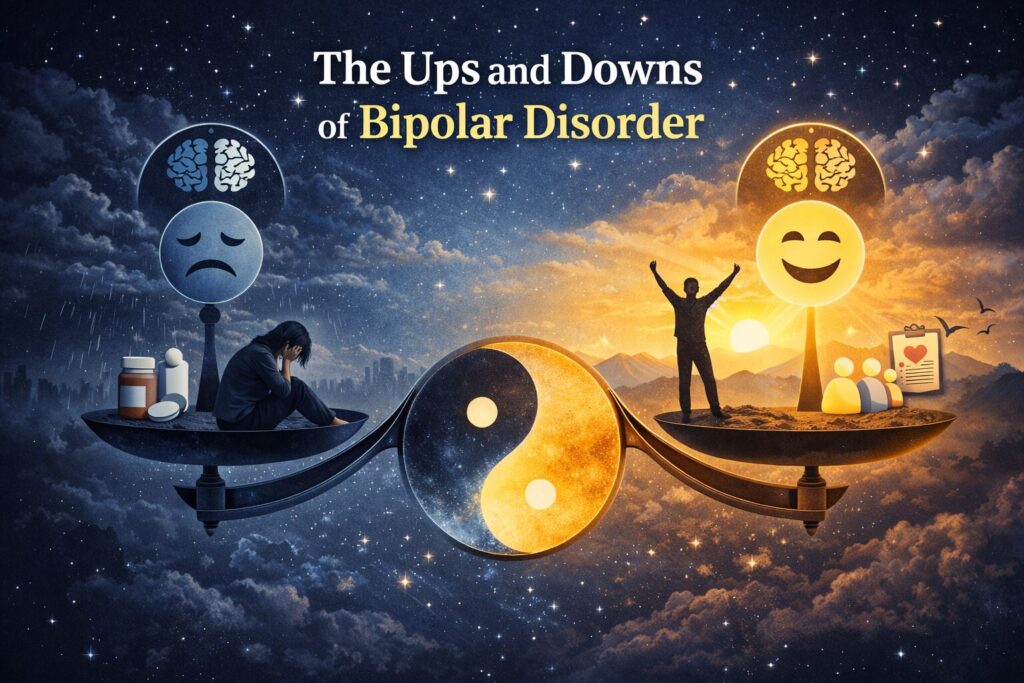
Navigating the Ups and Downs of Bipolar Disorder: Symptoms, Support, and Stability
A clear, compassionate guide to understanding bipolar disorder, managing mood episodes, and building long-term stability through treatment, support, and self-care.
Learn how to navigate the ups and downs of bipolar disorder, including mood swings, symptoms, treatment options, coping strategies, and long-term emotional stability.
In this informative and evidence-based video on Navigating the Ups and Downs of Bipolar Disorder, mental health experts break down the complex experience of bipolar disorder with clarity and compassion.
Bipolar disorder is a mental health condition marked by extreme mood changes that include emotional highs, known as manic or hypomanic episodes, and emotional lows, known as depressive episodes. These shifts can affect energy levels, sleep, thinking, behavior, and daily functioning. With proper treatment, support, and coping strategies, many people with bipolar disorder are able to manage symptoms and maintain long-term mood stability.
The presenter offers an update on bipolar depression and presents a framework for understanding the antipsychotic spectrum, helping viewers grasp why mood symptoms oscillate between high (manic or hypomanic) and low (depressive) states.
Throughout the video, you’ll learn:
- What bipolar disorder is and how it affects daily life.
- The clinical signs of depressive and manic episodes.
- How current antipsychotic approaches fit into overall treatment strategies.
- Practical insights for people living with bipolar disorder and their support networks.
By combining expert explanations with real-world context, the video is designed to support both those personally affected and anyone seeking to better understand this mental health condition.
Watch the Living With the Ups and Downs of Bipolar Disorder Video Below
Medical Disclaimer for “Navigating the Ups and Downs of Bipolar Disorder”
The information provided in “Navigating the Ups and Downs of Bipolar Disorder” is intended for educational and informational purposes only.
It is not a substitute for professional medical advice, diagnosis, or treatment.
Bipolar disorder is a complex mental health condition that affects individuals differently.
Any symptoms, treatment options, medications, coping strategies, or management techniques discussed in this content should not be used as a replacement for guidance from a licensed medical professional.
Always seek the advice of a qualified healthcare provider with any questions you may have regarding bipolar disorder or any other mental health condition.
Never disregard professional medical advice or delay seeking care because of information presented in this article or related materials.
If you or someone you know is experiencing a mental health emergency, including thoughts of self-harm or suicide, seek immediate help by calling 911, contacting local emergency services, or reaching out to the 988 Suicide & Crisis Lifeline in the United States.
If you are outside the U.S., please contact your local emergency number or a trusted mental health support organization.
This content does not establish a doctor–patient relationship.
The authors and publishers assume no responsibility for any outcomes resulting from the use or reliance on the information provided.
By reading or using this content, you acknowledge and agree to this medical disclaimer.
Mental Health Help Reference
National Institute of Mental Health (NIMH)
Website: https://www.nimh.nih.gov
The National Institute of Mental Health (NIMH) is the leading U.S. government agency dedicated to mental health research, education, and public awareness.
NIMH provides evidence-based information on bipolar disorder, including symptoms, diagnosis, treatment options, medications, therapy approaches, and coping strategies.
All content is medically reviewed and regularly updated to reflect current clinical research and standards of care.
Optional Secondary Reference (Support & Crisis Help)
988 Suicide & Crisis Lifeline
Website: https://988lifeline.org
Provides 24/7 free and confidential support for people in emotional distress, mental health crises, or suicidal thoughts in the United States.
-
 Original Case Study: How Do Couples Navigate the Highs and Lows of Bipolar Disorder in a Marriage?
 -
How to Clear Your Mind Before Bed: A 5-Minute Practical Decompression Guide
-
How to Improve Mental Wellness When You Have no Time?
-
How Do I Create a Daily Mental Health Checklist for Digital Detoxing?
-
How Do I Clear Brain Fog Naturally and Get My Focus Back?