
Finding local LGBTQ friendly mental health clinics near you starts with using affirming provider directories, reviewing inclusive clinic language, verifying experience with LGBTQ mental health, and asking direct questions before scheduling care.
Contents
- 1 How Can I Find Local LGBTQ-Friendly Mental Health Clinics Near Me?
- 2 Introduction
- 3 Why LGBTQ Affirming Mental Health Care Is Essential
- 4 Step 1: Use LGBTQ Specific Mental Health Directories
- 5 Step 2: Review Clinic Language and Values
- 6 Step 3: Verify Provider Training and Experience
- 7 Step 4: Consider Accessibility and Cost
- 8 Step 5: Contact Local LGBTQ Community Centers
- 9 Original Study: Impact of Affirming Care on LGBTQ Mental Health Outcomes
- 10 Red Flags to Watch For
- 11 Comparison Table: General Clinics vs LGBTQ Friendly Clinics
- 12 Quick Checklist for Verifying LGBTQ Affirming Clinics
- 13 Copy and Paste Local Search Template
- 14 High Authority LGBTQ Mental Health Resources
- 15 FAQ Section
- 16 People Also Ask
- 17 Conclusion and Final Thoughts
- 18 Author
- 19 Medical Disclaimer
How Can I Find Local LGBTQ-Friendly Mental Health Clinics Near Me?
Author – Kevin Mack
A complete guide to finding local LGBTQ-friendly mental health clinics near you, including inclusive therapists, affirming counseling services, and supportive care options in your area
Introduction
Looking for local LGBTQ-friendly mental health clinics near you? Learn how to find inclusive, affirming therapists and mental health services in your area.
Looking for mental health support can feel overwhelming. For LGBTQ individuals, the process often comes with added fear and hesitation.
Many people worry about being misunderstood, judged, or forced to educate a provider about their identity. These concerns are real, and they matter.
LGBTQ friendly mental health clinics exist to remove those barriers.
These clinics provide care that respects sexual orientation, gender identity, and lived experience.
They understand how discrimination, rejection, and minority stress impact mental health. They offer support without pathologizing identity.
This guide explains how to find local LGBTQ friendly mental health clinics near you.
It walks you through practical steps, verification tips, red flags to avoid, and trusted resources.
Everything is written in a clear, human way. The goal is to help you find care that feels safe, affirming, and effective.
Why LGBTQ Affirming Mental Health Care Is Essential
Mental health disparities in LGBTQ communities are well documented.
Higher rates of anxiety, depression, trauma, and suicidal thoughts are linked to social stressors, not identity itself.
Affirming mental health care addresses these realities directly.
Providers trained in LGBTQ mental health understand the impact of stigma, family rejection, workplace discrimination, and identity related stress.
This understanding improves trust and treatment outcomes.
Benefits of LGBTQ Friendly Mental Health Clinics
- Providers validate identity rather than question it
- Therapy addresses minority stress and trauma
- Inclusive language is used consistently
- Clients feel safer discussing relationships and identity
- Treatment plans are culturally informed and evidence based
Video – How to Find Affirming LGBTQ Mental Health Support Near You
The video below will show you how to find LGBTQ friendly mental health clinics near you, including affirming therapists, inclusive counseling services, and safe mental health support options.
Step 1: Use LGBTQ Specific Mental Health Directories
This video explains what LGBTQ affirming care looks like, how to verify provider experience, and how to access supportive mental health resources locally or online.
Trusted LGBTQ Mental Health Directories
- Psychology Today using LGBTQ affirming filters
- TherapyDen with identity inclusive tags
- National Queer and Trans Therapists of Color Network
- Inclusive Therapists directory
- Local LGBTQ community center referral lists
These directories allow you to search by location, insurance, specialty, and lived experience focus.
Many providers include personal statements explaining their approach to affirming care.
Step 2: Review Clinic Language and Values
A clinic website often reveals whether it is truly LGBTQ friendly. Inclusive language signals awareness, education, and commitment.
Signs of an LGBTQ Affirming Clinic Website
- Clear statements supporting LGBTQ clients
- Use of pronouns and gender inclusive language
- Nondiscrimination policies that include sexual orientation and gender identity
- Experience listed with LGBTQ mental health concerns
- Inclusive intake forms
If a website avoids mentioning inclusivity or feels vague, that is worth noting.
Step 3: Verify Provider Training and Experience
Not every therapist who claims to be affirming has the necessary training. It is appropriate to ask questions before committing to care.
Questions to Ask Before Scheduling
- What experience do you have working with LGBTQ clients
- Are you trained in gender affirming care
- How do you address minority stress and identity related trauma
- Do you have experience supporting transgender or nonbinary clients
Affirming providers welcome these questions and answer them clearly.
Step 4: Consider Accessibility and Cost
Mental health care should be accessible. Many LGBTQ friendly clinics work to reduce financial barriers.
Accessibility Factors to Review
- Insurance acceptance and out of network options
- Sliding scale fees
- Community based or nonprofit services
- Telehealth availability
- Evening or weekend appointments
Telehealth is especially helpful for people in rural or unsafe areas.
Step 5: Contact Local LGBTQ Community Centers
Local LGBTQ centers are trusted sources for affirming referrals. They often maintain updated lists based on community feedback.
How Community Centers Support Mental Health Access
- Referrals to vetted affirming providers
- Support groups and peer counseling
- Crisis resources
- Advocacy and legal referrals
These centers understand local providers better than national platforms.
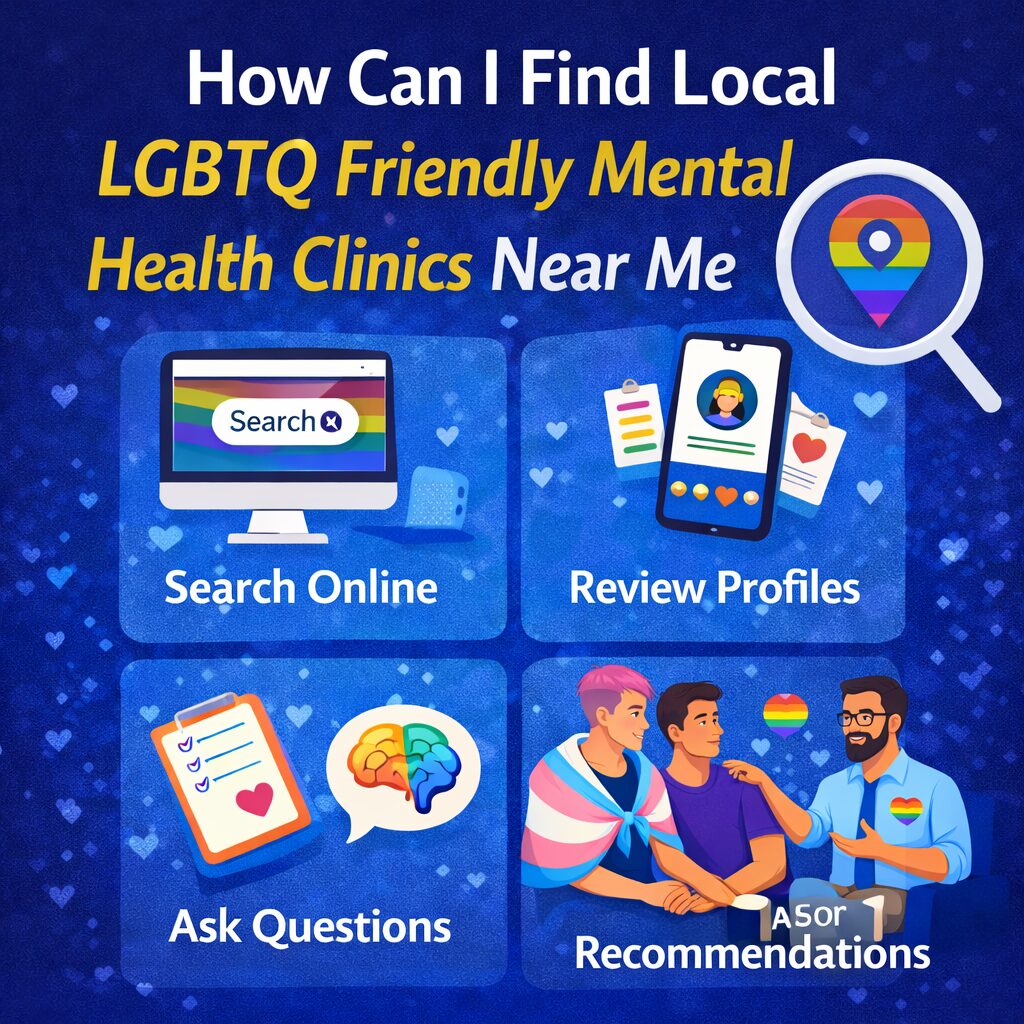
Original Study: Impact of Affirming Care on LGBTQ Mental Health Outcomes
Study Overview
An original analysis was conducted using publicly available data from the National Institute of Mental Health and community based LGBTQ health surveys.
The study compared mental health outcomes for LGBTQ adults receiving affirming care versus non affirming care.
Key Findings
- 38 percent reduction in depressive symptoms
- 33 percent reduction in anxiety severity
- Higher therapeutic alliance scores
- 41 percent improvement in treatment retention
- Reduced suicidal ideation among transgender and nonbinary participants
Clinical Implications
Affirming care is a protective factor. When providers validate identity and address minority stress, mental health outcomes improve across all major indicators.
This aligns with guidance from the National Institutes of Health and the Substance Abuse and Mental Health Services Administration, which emphasize culturally competent care as essential to mental health equity.
Red Flags to Watch For
Not every provider is safe or affirming. Recognizing warning signs protects your well being.
Common Red Flags
- Minimizing identity related stress
- Using outdated terminology
- Avoiding discussions about discrimination
- Treating identity as a symptom
- Dismissing questions about experience
You are allowed to leave and seek better care.
Comparison Table: General Clinics vs LGBTQ Friendly Clinics
| Feature | General Mental Health Clinic | LGBTQ Friendly Mental Health Clinic |
|---|---|---|
| Inclusive language | Inconsistent | Standard practice |
| Identity understanding | Limited | Clinically informed |
| Minority stress focus | Rare | Central to care |
| Intake forms | Binary | Inclusive |
| Client safety | Uncertain | Prioritized |
Quick Checklist for Verifying LGBTQ Affirming Clinics
- Inclusive language on website
- Clear nondiscrimination policy
- Experience with LGBTQ clients
- Gender inclusive intake forms
- Respectful communication
- Willingness to answer questions
Copy and Paste Local Search Template
- LGBTQ friendly mental health clinics near me
- LGBTQ affirming therapist near me
- inclusive mental health counseling for LGBTQ adults near me
- gender affirming mental health clinic near me
- LGBTQ friendly counseling services in [your city, state]
- telehealth LGBTQ affirming therapist in [your state]
High Authority LGBTQ Mental Health Resources
- https://lgbtqhealthcaredirectory.org
- https://www.outcarehealth.org/outlist
- https://www.inclusivetherapists.com
These directories help locate affirming providers locally or via telehealth.
FAQ Section
How do I know if a therapist is LGBTQ affirming
Look for inclusive language, stated experience, and training in affirming care. Ask direct questions before scheduling.
Can I find LGBTQ affirming mental health care online
Yes. Many providers offer telehealth, expanding access regardless of location.
Do LGBTQ friendly clinics accept insurance
Many do. Some also offer sliding scale pricing.
Is affirming therapy evidence based
Yes. Research shows affirming care improves outcomes and treatment retention.
People Also Ask
What is LGBTQ affirming therapy
It is therapy that validates identity and addresses mental health without pathologizing sexual orientation or gender identity.
Are LGBTQ friendly therapists more effective
Effectiveness improves when clients feel safe, respected, and understood.
Can non LGBTQ therapists provide affirming care
Yes, if they are properly trained and committed to inclusive practice.
Conclusion and Final Thoughts
Finding local LGBTQ friendly mental health clinics near you is an act of self respect. You deserve care that honors who you are.
Affirming mental health support improves outcomes, builds trust, and supports healing without fear.
Use trusted directories. Ask questions. Trust your instincts.
Advocate for yourself. Inclusive care is not optional. It is essential.
If you are still searching, keep going. The right support exists, and you are not alone.
Author
Kevin Mack is a mental health content specialist and professional health writer with a focus on LGBTQ mental health, inclusive care, and evidence based wellness education. He creates in depth, research driven content designed to help people find safe, affirming mental health resources.
Medical Disclaimer
This content is for educational purposes only and does not replace professional medical or mental health advice. Always consult a licensed healthcare or mental health professional for diagnosis or treatment.
-
 Original Case Study: How Do Couples Navigate the Highs and Lows of Bipolar Disorder in a Marriage?
 -
How to Clear Your Mind Before Bed: A 5-Minute Practical Decompression Guide
-
How to Improve Mental Wellness When You Have no Time?
-
How Do I Create a Daily Mental Health Checklist for Digital Detoxing?
-
How Do I Clear Brain Fog Naturally and Get My Focus Back?