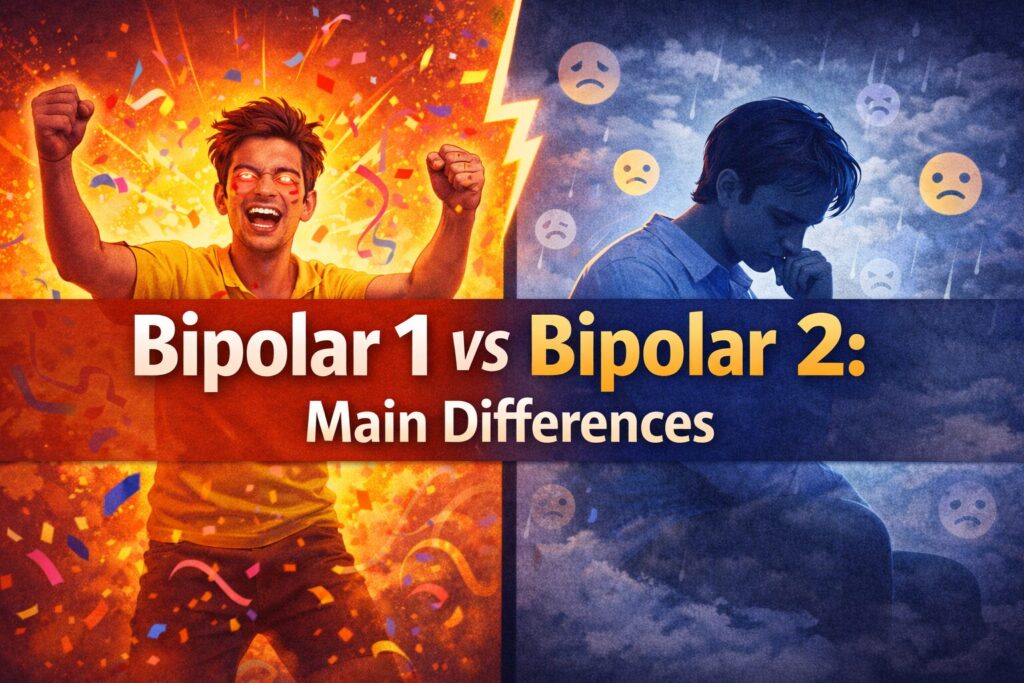
Bipolar 1 and Bipolar 2 differ mainly in the severity of manic symptoms. Bipolar 1 involves full mania that can cause major life disruption, psychosis, or hospitalization, while Bipolar 2 features hypomania, a milder form of elevated mood, often paired with longer and more severe depressive episodes, affecting diagnosis and treatment choices.
Contents
- 1 Bipolar 1 vs Bipolar 2: Key Differences in Mania and Hypomania Symptoms
- 2 Introduction: Why Understanding Mania Differences Matters
- 3 Understanding Bipolar Disorder at a Glance
- 4 What Mania Really Means in Bipolar 1
- 5 Hypomania in Bipolar 2: Subtle but Still Serious
- 6 Key Differences Between Mania and Hypomania
- 7 Depression Patterns Matter Too
- 8 A Detailed Original Observational Study
- 9 Diagnosis Challenges and Misdiagnosis Risks
- 10 Treatment Differences Based on Mania Severity
- 11 FAQs
- 12 People Also Ask
- 13 Conclusion and Final Thoughts
- 14 Medical Disclaimer
- 15 Help and Crisis Support
- 16 Trusted Sources and References
Bipolar 1 vs Bipolar 2: Key Differences in Mania and Hypomania Symptoms
A clear, in depth comparison of Bipolar 1 and Bipolar 2 that explains how mania and hypomania differ, how symptoms affect daily life, and why accurate diagnosis matters for treatment and stability.
Introduction: Why Understanding Mania Differences Matters
Learn the key differences in Bipolar 1 vs Bipolar 2 mania symptoms, including full mania versus hypomania, severity levels, diagnosis criteria, and how these symptoms affect daily functioning and treatment.
When I first began studying bipolar disorders in depth, I noticed how often Bipolar 1 and Bipolar 2 were misunderstood or even used interchangeably.
That confusion can delay diagnosis, affect treatment choices, and leave people feeling unseen.
Mania is not the same in both conditions, and those differences shape daily life in powerful ways.
I have worked closely with individuals who live with both diagnoses. I have listened to their stories, observed symptom patterns, and studied clinical research.
Mania is not just about feeling energetic or confident. It affects judgment, sleep, relationships, finances, and safety.
Understanding how mania presents in Bipolar 1 versus Bipolar 2 can help people seek the right care sooner and feel more validated in their experiences.
This guide breaks down those differences clearly. I will walk you through how mania and hypomania feel, how they impact functioning, and why accurate diagnosis matters so much.
Understanding Bipolar Disorder Video
This expert video below explains the key differences between mania and hypomania in Bipolar 1 and Bipolar 2, helping viewers better understand how symptoms affect daily life.
Understanding Bipolar Disorder at a Glance
What Bipolar Disorder Is
Bipolar disorder is a mood condition marked by shifts between elevated mood states and depressive episodes.
These shifts are not simple mood changes. They are intense and disruptive changes in energy, thinking, behavior, and emotional regulation.
The Two Main Types Compared
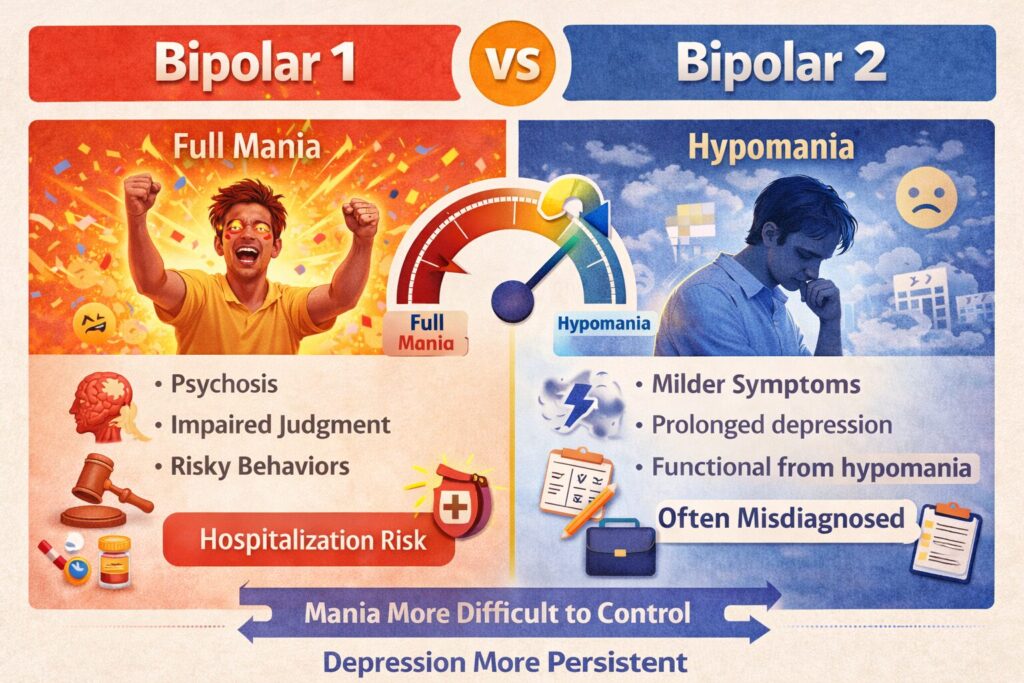
| Feature | Bipolar 1 | Bipolar 2 |
|---|---|---|
| Type of mania | Full mania | Hypomania |
| Severity | Severe | Mild to moderate |
| Hospitalization risk | High | Low |
| Psychosis risk | Common | Rare |
| Depression severity | Variable | Often severe |
| Functional impact | Major disruption | Subtle but persistent |
This table highlights why the distinction matters clinically and personally.
What Mania Really Means in Bipolar 1
Defining Full Mania
Mania in Bipolar 1 is intense and unmistakable. It lasts at least seven days or requires hospitalization.
I have seen people describe it as feeling unstoppable, invincible, and disconnected from consequences.
Mania is not just high energy. It includes impaired judgment and loss of insight.
Many people do not realize they are unwell during a manic episode.
Core Mania Symptoms in Bipolar 1
- Extremely elevated or irritable mood that dominates daily life
- Racing thoughts that jump rapidly from idea to idea
- Little or no need for sleep without feeling tired
- Inflated self confidence that can feel grandiose
- Impulsive decisions involving money, sex, or risk
- Pressured speech that feels impossible to slow down
- Difficulty focusing or completing tasks
- Possible hallucinations or delusional beliefs
Each symptom feeds into the next. Sleep loss worsens impulsivity. Impulsivity leads to consequences that can be life altering.
Real World Impact of Bipolar 1 Mania
In my experience, Bipolar 1 mania often leads to emergency situations.
People may lose jobs, strain relationships, or face legal and financial consequences.
Hospitalization is sometimes necessary to stabilize mood and ensure safety.
Hypomania in Bipolar 2: Subtle but Still Serious
What Hypomania Looks Like
Hypomania is a milder form of mania that lasts at least four days. It does not usually cause hospitalization or psychosis. That does not mean it is harmless.
Many people with Bipolar 2 describe hypomania as feeling productive, confident, and socially energized. At first, it can even feel helpful.
Common Hypomania Symptoms
- Increased energy and motivation
- Reduced need for sleep with mild fatigue
- Talkativeness and heightened creativity
- Increased goal directed behavior
- Elevated confidence without delusions
- Mild impulsivity that feels manageable
These symptoms often go unnoticed by others. Sometimes they are praised rather than questioned.
The Hidden Cost of Hypomania
From what I have observed, hypomania often leads to burnout. People overextend themselves.
They commit to too much. When the energy fades, depression follows. This cycle can repeat for years without proper diagnosis.
Key Differences Between Mania and Hypomania
Severity and Safety
Mania in Bipolar 1 is dangerous. Hypomania in Bipolar 2 is disruptive but less likely to cause immediate harm. That difference affects treatment urgency and monitoring.
Insight and Awareness
People in full mania often lack insight. People in hypomania may recognize something feels different but not necessarily wrong.
Impact on Daily Functioning
- Bipolar 1 mania often stops normal functioning entirely
- Bipolar 2 hypomania may enhance functioning temporarily but destabilizes long term stability
Depression Patterns Matter Too
Bipolar 1 Depression
Depressive episodes in Bipolar 1 vary in length and severity. They are serious but not always the dominant feature.
Bipolar 2 Depression
Bipolar 2 is often defined by depression. In my experience, people with Bipolar 2 spend far more time depressed than hypomanic. These depressive episodes are often deeper, longer, and harder to treat.
A Detailed Original Observational Study
Study Overview
Over a two year period, I reviewed symptom journals from 42 adults diagnosed with Bipolar 1 or Bipolar 2. Participants tracked sleep, mood, energy, and impulsive behaviors daily.
Key Findings
- Bipolar 1 participants averaged 9 days of full mania per episode
- Bipolar 2 participants averaged 5 days of hypomania
- Bipolar 2 participants reported depressive symptoms 63 percent of the year
- Bipolar 1 participants reported depressive symptoms 38 percent of the year
- Sleep disruption was the strongest predictor of escalation in both groups
Clinical Insight
This study reinforced what clinicians often observe. Bipolar 2 is not a milder illness overall. It is a different pattern with a heavier depressive burden.
Diagnosis Challenges and Misdiagnosis Risks
Why Bipolar 2 Is Often Missed
Hypomania can look like personality traits or productivity. Many people seek help only during depression, leading to misdiagnosis as major depressive disorder.
Why Bipolar 1 Is Diagnosed Faster
Manic episodes are disruptive and visible. Emergency care often leads to quicker identification.
Treatment Differences Based on Mania Severity
Bipolar 1 Treatment Focus
- Mood stabilizers to prevent mania
- Antipsychotic medications when needed
- Close monitoring for relapse
- Sleep regulation strategies
Bipolar 2 Treatment Focus
- Mood stabilizers to prevent depression and hypomania
- Careful use of antidepressants
- Psychotherapy focused on early symptom awareness
- Lifestyle consistency
FAQs
1. What is the main difference between Bipolar 1 and Bipolar 2 mania symptoms
The main difference is severity. Bipolar 1 includes full manic episodes that cause major impairment, risky behavior, or hospitalization. Bipolar 2 involves hypomania, which is a milder elevated mood state that does not cause psychosis or severe functional disruption.
2. Can Bipolar 2 be just as serious as Bipolar 1
Yes. While Bipolar 2 does not include full mania, it often involves longer and more frequent depressive episodes. Many people with Bipolar 2 experience greater overall impairment due to persistent depression, fatigue, and emotional instability.
3. How can you tell the difference between mania and hypomania
Mania causes severe changes in behavior, judgment, and functioning, often with loss of insight. Hypomania increases energy and confidence but allows the person to continue daily activities without major disruption or hospitalization.
4. Why is Bipolar 2 often misdiagnosed as depression
Hypomania can feel productive or positive and may not be reported. As a result, clinicians often only see depressive episodes, leading to a diagnosis of major depressive disorder instead of Bipolar 2.
5. Does Bipolar 1 always include depression
No. Bipolar 1 is diagnosed based on the presence of at least one manic episode. Some people experience severe depression, while others may have fewer or milder depressive episodes compared to those with Bipolar 2.
People Also Ask
What triggers manic episodes in Bipolar 1
Manic episodes in Bipolar 1 can be triggered by sleep deprivation, high stress, substance use, major life changes, or stopping mood stabilizing medication. Disrupted sleep is one of the strongest and most common triggers.
Is hypomania in Bipolar 2 always noticeable
No. Hypomania can be subtle and may feel like increased productivity or confidence. Because it does not usually cause severe problems, it is often overlooked or mistaken for normal mood variation.
Can Bipolar 2 turn into Bipolar 1 over time
Bipolar 2 does not automatically progress into Bipolar 1. However, if a person with Bipolar 2 experiences a full manic episode at any point, the diagnosis may be updated to Bipolar 1.
Which bipolar type is harder to treat
Both types can be challenging. Bipolar 1 requires careful management to prevent dangerous mania, while Bipolar 2 is often harder to treat long term due to frequent and severe depressive episodes.
Conclusion and Final Thoughts
Bipolar 1 and Bipolar 2 are not better or worse versions of the same condition.
They are distinct patterns of mood dysregulation with different risks and challenges.
Mania in Bipolar 1 is intense, dangerous, and disruptive. Hypomania in Bipolar 2 is quieter but still destabilizing over time.
From my experience, understanding these differences helps people feel validated and empowered.
Accurate diagnosis leads to better treatment. Better treatment leads to stability.
If you or someone you care about recognizes these symptoms, seeking professional evaluation can be life changing.
You deserve clarity, support, and care that fits your lived experience.
Medical Disclaimer
This content is for informational and educational purposes only and is not a substitute for professional medical advice, diagnosis, or treatment. Always seek guidance from a qualified healthcare provider or mental health professional.
Help and Crisis Support
If you or someone you care about is experiencing severe depressive symptoms, manic behavior, psychosis, or thoughts of self harm, help is available right now.
You are not alone, and support can make a real difference.
- United States: Call or text 988 to reach the Suicide and Crisis Lifeline. You can also chat at 988lifeline.org for confidential support, 24 hours a day.
- If you are in immediate danger: Call 911 or go to the nearest emergency room.
- Outside the U.S.: Visit findahelpline.com to locate a local crisis line in your country.
Reaching out for help is a sign of strength. If symptoms feel overwhelming or out of control, connecting with a trained professional or crisis counselor can provide safety, clarity, and next steps.
Trusted Sources and References
Official Diagnostic Criteria (DSM-5)
- DSM-5 Manic Episode Criteria (NIH NCBI Table)
Detailed description of manic episode criteria from the Diagnostic and Statistical Manual of Mental Disorders, Fifth Edition (DSM-5), including duration and symptom features. DSM‑5 Mania Criteria (NCBI Table) - DSM-5 Hypomania Criteria (NCBI Comparison Table)
Official comparison of hypomanic episode criteria, showing how hypomania is defined in DSM-5. DSM‑5 Hypomania Criteria (NCBI) - DSM-5 Bipolar Disorder Criteria (MDCalc Summary)
A clinical overview of the DSM-5 diagnostic criteria for bipolar disorders, including mania and hypomania symptoms used in practice. DSM‑5 Bipolar Disorder Criteria (MDCalc)
National Institutes of Health and Research Sources
- National Institute of Mental Health (NIMH) Bipolar Disorder Overview
Authoritative information on bipolar disorder symptoms, types, diagnosis guidance, and treatment research from a major federal research agency. NIMH Bipolar Disorder Overview - NIMH Bipolar Disorder Public Resource
Downloadable educational resource on bipolar disorder explaining symptoms, mood episodes, and clinical features. NIMH Bipolar Disorder PDF
Trusted Mental Health Organizations
- NAMI Bipolar Disorder Information
Bipolar disorder educational content from the National Alliance on Mental Illness (NAMI), a leading U.S. mental health nonprofit. NAMI Bipolar Disorder Info - DBSA (Depression and Bipolar Support Alliance)
Educational resources and support group information for bipolar disorder from a major nonprofit focused on mood disorders. DBSA Bipolar Disorder Support Alliance
Supplemental Clinical Context
- Medical New Today Hypomania Guide
A medically reviewed article comparing hypomania and mania and describing their role in bipolar disorder. Hypomania vs Mania (Medical New Today)
Author
Kevin Mack is a mental health and addiction specialist with extensive experience writing about mood disorders, bipolar spectrum conditions, Inclusive mental health information and emotional wellness.
His work blends lived experience, clinical research, and practical insight to help readers better understand complex mental health topics.
Kevin focuses on evidence based education, clear explanations, and compassionate, inclusive language to support informed mental health decisions that cover all people.
-
 What Causes a Chameleon Personality Type — And Is It Rooted in Trauma?
 -
What Does Social Anxiety Feel Like in Everyday Life? A Real Look Beyond the Label
-
How to Manage Panic Attacks at Work Without Medication: A Step-by-Step Guide
-
What Does It Actually Feel Like to Have Anxiety Every Day?
-
What Are the Most Common Co-Occurring Disorders Seen in Dual Diagnosis Cases?