By Kevin Mack, Mental Wellness Advocate and Mental Health Blogger • January 30, 2026
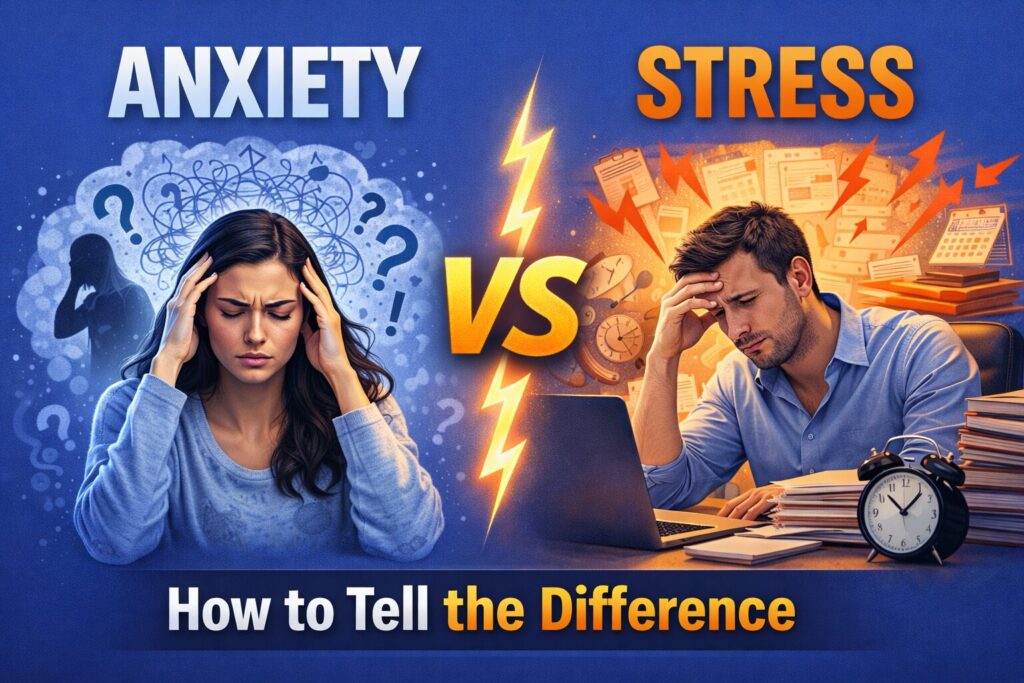
Stress is a reaction to a specific external pressure and usually fades when the situation passes. Anxiety is a lingering internal feeling of worry or fear that can continue even without a clear cause.
What is the Difference Between Stress and Anxiety?
Learn the real-life differences between anxiety and stress. This guide explains how to recognize each one, understand their triggers and symptoms, and know when it might be time to seek support.
In this informative video titled “What’s the Difference Between Stress and Anxiety?”, mental health expert breaks down the key differences between stress and anxiety in clear, real-life terms.
You’ll learn how both stress and anxiety can produce similar physical symptoms like muscle tension, rapid breathing, and difficulty concentrating, but how their causes and how long they last can be very different.
The video explains that stress is typically a reaction to a specific external situation, like work deadlines or life events, and usually fades once the stressor is removed.
Anxiety, on the other hand, may persist even without a clear trigger and can impact your daily thoughts, emotions, and behaviors over time.
Practical examples, expert insights, and simple explanations make this a great resource for anyone trying to better understand their own feelings, support a loved one, or improve overall mental wellness.
The Difference Between Stress and Anxiety
People Also Ask
What is the main difference between anxiety and stress?
Stress is a response to an external situation such as work pressure, deadlines, or conflict, and it usually improves once the situation changes. Anxiety is an internal feeling of ongoing worry or fear that can continue even when there is no clear cause.
Can stress turn into anxiety over time?
Yes, long-term or unmanaged stress can sometimes lead to anxiety. When stress lasts for weeks or months, the body and mind may stay in a constant state of alert, making anxious thoughts and physical symptoms more likely.
How can you tell if what you feel is stress or anxiety?
Stress is often tied to a specific problem and eases when that problem is resolved. Anxiety tends to linger, feels harder to control, and may show up as constant worry, restlessness, or fear even when things seem fine.
Do anxiety and stress feel the same in the body?
They can feel very similar physically. Both may cause a racing heart, muscle tension, headaches, or trouble sleeping. The difference is usually how long the symptoms last and whether they are linked to a specific trigger.
Is anxiety always caused by stress?
No, anxiety is not always caused by stress. While stress can contribute to anxiety, anxiety can exist on its own and may come from internal thoughts, fears, or patterns of worry rather than an external situation.
Author Box
Kevin Mack is a mental wellness advocate and experienced mental health blogger who writes about real-life, non-medical mental health topics. Drawing from personal experience and extensive research, Kevin focuses on anxiety, stress, depression, and emotional wellbeing in everyday life. His work is designed to be inclusive, supportive, and easy to understand, helping readers feel seen, informed, and empowered on their mental health journey.
Medical Disclaimer
This content is for informational and educational purposes only and is not intended as medical, psychological, or professional advice. If you are experiencing ongoing distress or mental health concerns, consider reaching out to a qualified healthcare or mental health professional for support.
-
 What Causes a Chameleon Personality Type — And Is It Rooted in Trauma?
 -
What Does Social Anxiety Feel Like in Everyday Life? A Real Look Beyond the Label
-
How to Manage Panic Attacks at Work Without Medication: A Step-by-Step Guide
-
What Does It Actually Feel Like to Have Anxiety Every Day?
-
What Are the Most Common Co-Occurring Disorders Seen in Dual Diagnosis Cases?