Contents
- 1 How Social Media Affects Teen Mental Health: A Comprehensive Guide
- 1.1 Introduction: The Digital Era and Teen Mental Health
- 1.2 The Rise of Social Media Use Among Teens
- 1.3 Understanding Teen Brain Development
- 1.4 The Negative Effects of Social Media on Teen Mental Health
- 1.5 The Positive Side of Social Media
- 1.6 The Role of Parents, Teachers, and Caregivers
- 1.7 Practical Steps for Teens to Maintain Mental Health
- 1.8 The Role of Schools and Mental Health Programs
- 1.9 Expert Opinions and Scientific Studies
- 1.10 Case Studies and Real-Life Examples
- 1.11 The Future of Teen Social Media and Mental Health Awareness
- 1.12 Conclusion: Finding a Healthy Balance
- 1.13 FAQ: How Social Media Affects Teen Mental Health
- 1.14 authoritative website references
Opening: How Social Media Affects Teen Mental Health
Discover how social media impacts teen mental health, including the effects on self-esteem, anxiety, depression, and body image. Learn practical ways to create a healthier digital balance for teens in today’s online world.
Social media shapes how teens see the world and themselves. It connects friends, shares ideas, and builds communities. Yet, it can also harm emotional health when not used carefully.
Many teenagers spend hours scrolling through posts, comparing their lives to others.
The constant stream of likes and comments can boost confidence one day and break it the next.
Online popularity often becomes a measure of self-worth, creating pressure to look perfect and stay active.
Research shows that heavy social media use can affect focus, sleep, and mood.
Teens who spend more time online are more likely to feel anxious, stressed, or lonely.
Images of flawless lives and unrealistic beauty standards often lead to low self-esteem.
Cyberbullying and online drama can make these feelings worse.
This guide explains how social media affects teen mental health.
It explores the risks, the benefits, and how to build a healthier online balance.
The goal is not to blame technology but to understand how it shapes emotional well-being.
By learning how to use it mindfully, teens can protect their mental health and find real value in digital connection.
How Social Media Affects Teen Mental Health: A Comprehensive Guide
Introduction: The Digital Era and Teen Mental Health
In today’s world, social media has become a central part of teenage life.
Platforms like Instagram, TikTok, Snapchat, and YouTube have turned into digital playgrounds where teens connect, share, and express themselves.
These platforms offer endless opportunities for creativity and learning.
But they also come with emotional challenges that can quietly shape a teenager’s mental health.
Teens today are growing up in a world where likes, shares, and followers often define self-worth.
Constant exposure to idealized images and highlight reels can create unrealistic standards.
Many teenagers feel pressure to keep up, fit in, or be perfect. This constant comparison can lead to stress, anxiety, depression, and loneliness.
This guide explores how social media affects teen mental health.
It explains both the positive and negative sides, the science behind it, and the steps parents, teachers, and teens can take to create a healthy balance.
The Rise of Social Media Use Among Teens
Statistics and Trends
Recent studies show that most teens spend over three hours a day on social media.
Platforms like TikTok and Instagram dominate daily use, with teens checking their feeds multiple times each hour.
The digital world has replaced traditional social circles, and online interaction has become the new normal.
- About 95% of teens have access to a smartphone.
- Nearly 60% use social media daily.
- Platforms like TikTok, Instagram, and Snapchat are the top choices for users between ages 13 and 19.
These numbers reveal that social media isn’t just a hobby anymore. It’s part of a teen’s social identity and daily routine.
Why Teens Are Drawn to Social Media
- Connection and Belonging: Teens use social platforms to stay in touch with friends, find new ones, and feel part of something bigger.
- Validation and Popularity: Likes and comments create a sense of approval. For developing minds, this can feel rewarding.
- Creativity and Self-Expression: Teens use videos, photos, and posts to show their personalities and talents.
- Entertainment and Learning: From humor to DIY tutorials, social media is a powerful source of both entertainment and education.
While these benefits are real, they come with hidden psychological effects that need attention.
Understanding Teen Brain Development
Teenage years are a critical period of brain growth.
The prefrontal cortex, the area that manages decision-making and emotional control, is still developing.
At the same time, the brain’s reward center responds strongly to likes and positive interactions online.
Each notification releases dopamine, the brain’s pleasure chemical.
Over time, this can make social media use feel addictive.
Teens start craving more validation and become emotionally dependent on online feedback.
This process affects self-esteem, mood regulation, and decision-making skills.
Teens are also more sensitive to peer influence.
Online trends and viral content can easily shape their sense of self and values.
Understanding this helps explain why social media can have such a deep impact on their mental and emotional well-being.
The Negative Effects of Social Media on Teen Mental Health
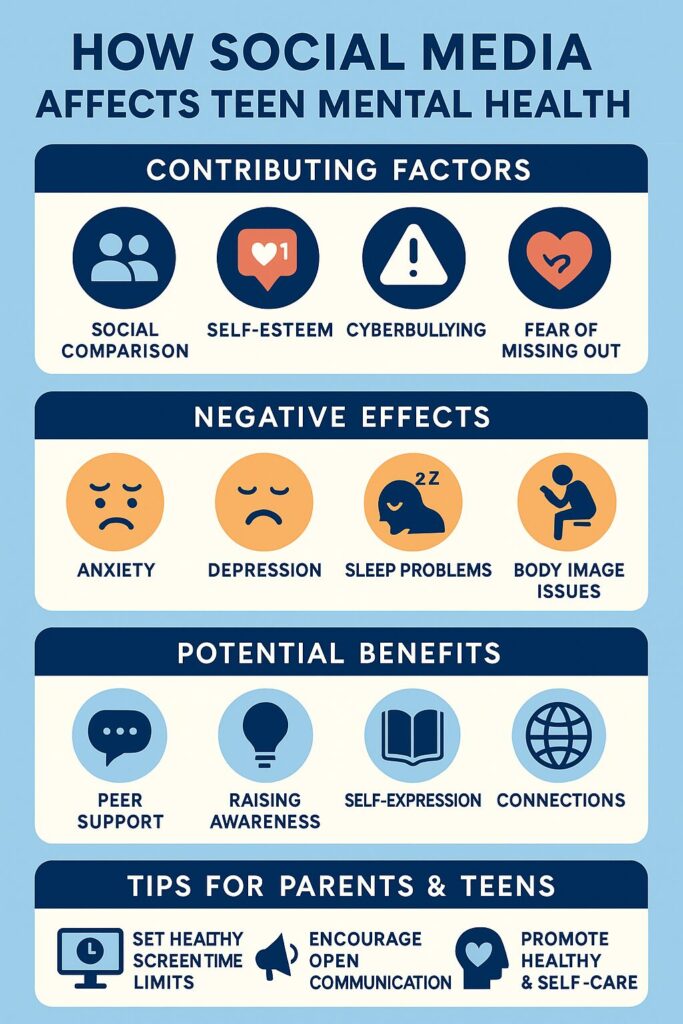
Anxiety and Stress
Social media can make teens feel constantly “on.”
The need to respond quickly, stay updated, and maintain an online image creates pressure.
Group chats, online arguments, and viral posts can heighten anxiety levels.
Notifications keep the brain alert, even during rest, leading to mental fatigue.
Research shows that teens who spend more time online are more likely to report feelings of stress and nervousness.
The constant comparison, coupled with fear of missing out, adds to emotional strain.
Depression and Loneliness
Despite being more connected than ever, many teens feel isolated.
Seeing others’ highlight reels creates the illusion that everyone else is happier and more successful.
This can lead to sadness, loneliness, and feelings of inadequacy. Over time, it can develop into depression.
Algorithms also amplify negative emotions.
Once a teen interacts with sad or depressive content, similar videos and posts start appearing more frequently, reinforcing emotional distress.
Low Self-Esteem and Body Image Issues
Filters and photo editing tools have created unrealistic beauty standards.
Teens, especially girls, often compare themselves to influencers who portray flawless appearances.
Boys also face pressure to appear muscular or confident. These comparisons can damage self-esteem and body satisfaction.
Repeated exposure to perfect images makes many teens feel they’re not good enough.
This can lead to eating disorders, obsessive exercise habits, and chronic self-doubt.
Cyberbullying and Harassment
Online harassment has become one of the most damaging aspects of social media.
Cyberbullying includes threats, name-calling, exclusion, and spreading false rumors. Because it happens online, the humiliation can reach large audiences instantly.
Victims of cyberbullying often experience depression, anxiety, and suicidal thoughts. Studies reveal that nearly one in five teens has faced online bullying.
The anonymity of the internet makes it easier for aggressors to act without accountability.
Sleep Disruption and Fatigue
Blue light from screens interferes with the production of melatonin, a hormone that regulates sleep.
Teens who use social media late at night often report sleep problems, fatigue, and poor concentration at school.
Scrolling before bed also triggers mental stimulation, making it harder to relax and fall asleep.
Addiction and Compulsive Use
Social media apps are designed to keep users engaged.
Infinite scrolling, notifications, and algorithmic content trigger dopamine repeatedly.
This cycle can make social media addictive. Teens may feel anxious or restless when not online.
Signs of addiction include constant checking of phones, neglecting real-world responsibilities, and feeling irritable when disconnected.
Over time, this behavior affects focus, memory, and emotional stability.
The Positive Side of Social Media
Building Communities and Support Networks
Social media isn’t entirely harmful. Many teens find comfort and belonging in online communities.
Whether they identify as LGBTQ+, neurodivergent, or part of mental health support groups, these spaces can provide valuable emotional support and understanding.
Access to Mental Health Resources
Mental health awareness has grown through social media campaigns.
Teens can find support pages, motivational accounts, and educational videos that promote positive coping methods.
Many organizations also offer online therapy, making help more accessible.
Creative and Educational Opportunities
Social media gives teens a platform to explore creativity.
They can share artwork, music, stories, and ideas. Educational channels also help them learn new skills, from science experiments to career tips.
When used mindfully, these platforms empower self-growth and discovery.
The Role of Parents, Teachers, and Caregivers
Open Communication
Parents and teachers play a major role in guiding teens toward healthy online behavior.
Honest conversations about emotions, peer pressure, and digital boundaries build trust. Teens are more likely to share their struggles when they feel understood, not judged.
Setting Boundaries and Screen Time Limits
Creating a schedule that includes screen-free hours helps maintain balance. Encourage device-free meals, study time, and bedtime.
Replacing online scrolling with outdoor activities or creative hobbies supports better mental health.
Monitoring Without Invading Privacy
Parents can use parental controls, but they should also respect privacy.
The goal is to guide, not control. Explain why certain restrictions exist and involve teens in the decision-making process.
Leading by Example
Teens observe and imitate adult behavior. Parents and teachers who model mindful tech use teach by action.
Avoid using phones excessively in front of teens and promote healthy offline habits.
Practical Steps for Teens to Maintain Mental Health
Practice Digital Detox
Taking short breaks from social media can reset emotional balance.
Even one day a week without scrolling helps reduce stress. Use this time to focus on hobbies, nature, or spending time with friends face-to-face.
Curate a Positive Feed
Encourage teens to unfollow negative accounts or people who cause stress. Suggest following motivational, educational, and creative pages that inspire positivity.
Focus on Real-Life Connections
Building strong offline relationships boosts emotional resilience.
Encourage activities like sports, volunteering, or art classes. Real-world connections provide deeper fulfillment than virtual interactions.
Learn Emotional Awareness
Teens should reflect on how certain content makes them feel.
Mindfulness and journaling can help them recognize triggers and avoid harmful patterns. This awareness is a powerful step toward emotional control.
Seek Professional Help When Needed
It’s important to know when to ask for help. If a teen feels persistently anxious, depressed, or hopeless, they should talk to a counselor or therapist.
Mental health professionals can teach coping skills and strategies to manage digital stress.
The Role of Schools and Mental Health Programs
Schools can help by teaching digital literacy and emotional intelligence.
Students should learn how to interpret online content critically, understand misinformation, and develop empathy in online spaces.
Counselors can organize workshops that address mental health topics and responsible social media use.
Partnerships with mental health organizations also provide access to resources and training for teachers.
Expert Opinions and Scientific Studies
Several studies show strong links between excessive social media use and poor mental health outcomes.
For example, research from the National Institute of Mental Health indicates that heavy users report higher levels of anxiety and depression.
The American Psychological Association also highlights that emotional distress increases when online validation becomes the main source of self-esteem.
However, experts emphasize that moderation is key. It’s not about eliminating social media, but about learning how to use it consciously and responsibly.
How Social Media Affects Teen Mental Health
Case Studies and Real-Life Examples
Consider the story of a teen who once struggled with body image due to online comparisons but later found empowerment through a mental health support group.
Another example involves a high school student who turned off social notifications during exams and saw improvements in focus and mood.
These stories remind us that awareness and action can transform social media from a harmful habit into a healthy tool for growth.
The Future of Teen Social Media and Mental Health Awareness
As technology evolves, so does our understanding of digital wellness.
Social media platforms are beginning to introduce features like time reminders, AI filters for harmful content, and mental health prompts.
Awareness campaigns continue to encourage teens to think before they post and to take care of their emotional well-being online.
The future looks promising, with mental health becoming a central part of online culture.
Conclusion: Finding a Healthy Balance
Social media is a powerful tool. It can connect, educate, and inspire. But when used excessively, it can harm confidence, focus, and emotional stability. The key lies in balance.
Teens, parents, and educators must work together to create healthy digital habits. Encouraging open conversations, mindful use, and emotional awareness can help prevent long-term harm.
Social media doesn’t have to be the enemy of mental health. With the right understanding and guidance, it can become a tool for positive change, connection, and growth.
FAQ: How Social Media Affects Teen Mental Health
What are the main effects of social media on teen mental health?
Social media affects teen mental health by influencing self-esteem, mood, and stress levels. Teens who spend more time online often feel anxious, lonely, or pressured to meet unrealistic standards.
Can social media cause depression in teenagers?
Yes, excessive social media use can contribute to depression in teens. Constant comparison, exposure to negative content, and cyberbullying can lead to sadness, low self-worth, and social withdrawal.
How much social media use is healthy for teens?
Experts recommend limiting social media use to about one or two hours a day. Quality matters more than quantity, so teens should focus on positive, educational, or supportive content.
How does social media impact teen anxiety?
Social media increases anxiety when teens constantly compare themselves to others or fear missing out on online trends. Notifications and peer pressure can make relaxation and focus difficult.
Can quitting social media improve mental health?
Taking breaks or reducing time spent online can improve mood, sleep, and focus. Teens often feel calmer and more confident after stepping away from digital distractions.
What are the signs of social media addiction in teens?
Warning signs include mood swings, irritability when offline, loss of interest in hobbies, poor sleep, and difficulty concentrating without checking social apps.
How can parents help teens use social media safely?
Parents can promote balance by setting time limits, encouraging open conversations, and modeling healthy online behavior. Guidance and understanding work better than strict control.
Are there positive effects of social media on mental health?
Yes. Teens can find supportive communities, learn new skills, and access mental health resources online. Positive interactions can boost confidence and connection.
Does social media affect teen sleep and focus?
Yes, late-night screen time can disrupt sleep and reduce focus during the day. The blue light from screens interferes with natural sleep cycles, leading to fatigue and stress.
How can teens protect their mental health online?
Teens can protect their mental health by taking breaks, following uplifting accounts, unfollowing negative pages, and spending more time in real-life activities.
- Pew Research Center — “Teens, Social Media and Mental Health” (2025) — https://www.pewresearch.org/internet/2025/04/22/teens-social-media-and-mental-health/
- The JED Foundation — Youth Guidance & Safeguarding Well-being on Social Media Platforms — https://jedfoundation.org/the-jed-foundation-jed-recommendations-for-safeguarding-youth-well-being-on-social-media-platforms/
- National Institute of Mental Health (NIMH) — Digital Shareables on Child and Adolescent Mental Health — https://www.nimh.nih.gov/get-involved/digital-shareables/shareable-resources-on-child-and-adolescent-mental-health
- Orben, A., & Przybylski, A. K. “Problematic Social Media Use in Adolescents and Young Adults: A Systematic Examination.” JMIR Mental Health, 2022; 9(4): e33450. Available at: https://mental.jmir.org/2022/4/e33450