Learn All About the Quick 5 Minute Stress Relief for Busy Professionals
Contents
- 1 Introduction
- 2 Why Desk Stress Relief Matters for Busy Professionals
- 3 How to Use These Five Minute Desk Stress Relief Methods
- 4 Five Minute Stress Relief Methods You Can Do at Your Desk
- 5 Physical Relaxation Techniques at Your Desk
- 6 Mental and Mindfulness Stress Relief Methods
- 7 Sensory Based Stress Relief Methods
- 8 Productivity Based Stress Relief Methods
- 9 Emotional and Mental Self Support Methods
- 10 Desk Movement and Circulation Boosters
- 11 Quick Eye Strain and Mental Fatigue Relief
- 12 Building a Five Minute Stress Relief Routine
- 13 Conclusion
- 14 FAQ: Five Minute Stress Relief Methods for Busy Professionals
- 15 Professional Website References for Quick 5 Minute Stress Relief Methods
Introduction
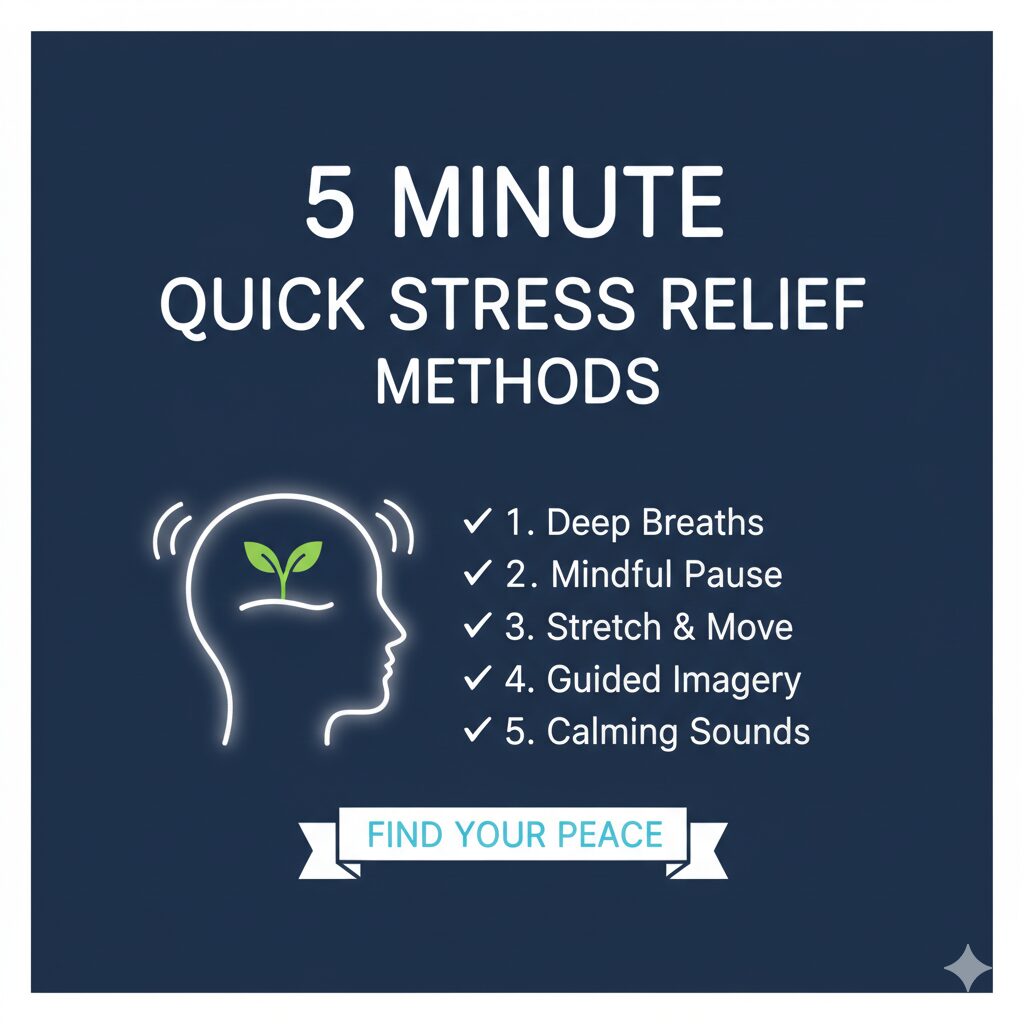
Discover simple 5 minute stress relief methods busy professionals can use at their desks to feel calm, focused and productive.
Busy professionals can use at their desks to feel calm, focused and productive. Stress and anxiety are more common in the workplace.
Stress builds fast when you work in a high pressure environment. Your mind moves from task to task without a break, and your body reacts with tension, shallow breathing, tight shoulders and racing thoughts.
Many professionals do not realize how much stress sits in the body until it interrupts their focus. The good news is that you can interrupt stress before it grows.
Five minute stress relief methods can calm your mind, relax your body and improve your productivity, even during a busy workday.
You do not need a long break to reset your thoughts. You only need the right techniques. These quick stress relief methods work at your desk, and they help you feel more centered.
They also support your emotional well being and help you stay grounded during long hours of work. These simple five minute routines can become a powerful part of your daily workflow.
Why Desk Stress Relief Matters for Busy Professionals
The Hidden Cost of Workplace Stress
Workplace stress affects your body, your thoughts and your behavior. Many people feel overwhelmed, but they ignore the warning signs.
You may notice headaches, tight shoulders, back pain, irritability or difficulty concentrating.
Stress can also affect your communication and your decision making. When your mind feels pressured, it becomes harder to think clearly.
Chronic stress also increases your risk of burnout. Burnout builds slowly. You start to feel tired, detached or emotionally drained. You may feel less motivated or less connected to your work.
These feelings can affect your performance over time. Quick stress relief techniques can help prevent this cycle by giving your body a moment to reset.
The Benefits of Quick Five Minute Stress Breaks
Short breaks help your brain recover. Even a few minutes of controlled breathing or stretching lowers stress hormones and calms the nervous system.
These small resets increase clarity, improve problem solving and help you regain energy. When you manage stress in short bursts, you protect your focus and your long term productivity.
Five minute breaks also support mental health. They bring you back into the present moment.
They help you regulate your emotions. They give your body a chance to relax so you can think with a calm mind.
How to Use These Five Minute Desk Stress Relief Methods
These stress relief methods work best when used consistently. Try one technique every hour or anytime you feel overwhelmed.
You can rotate different methods throughout the day so your mind and body stay refreshed. Choose the ones that feel natural and easy for you. Make them a simple part of your daily routine.
Five Minute Stress Relief Methods You Can Do at Your Desk
Breathing Techniques for Fast Stress Relief
Deep Belly Breathing
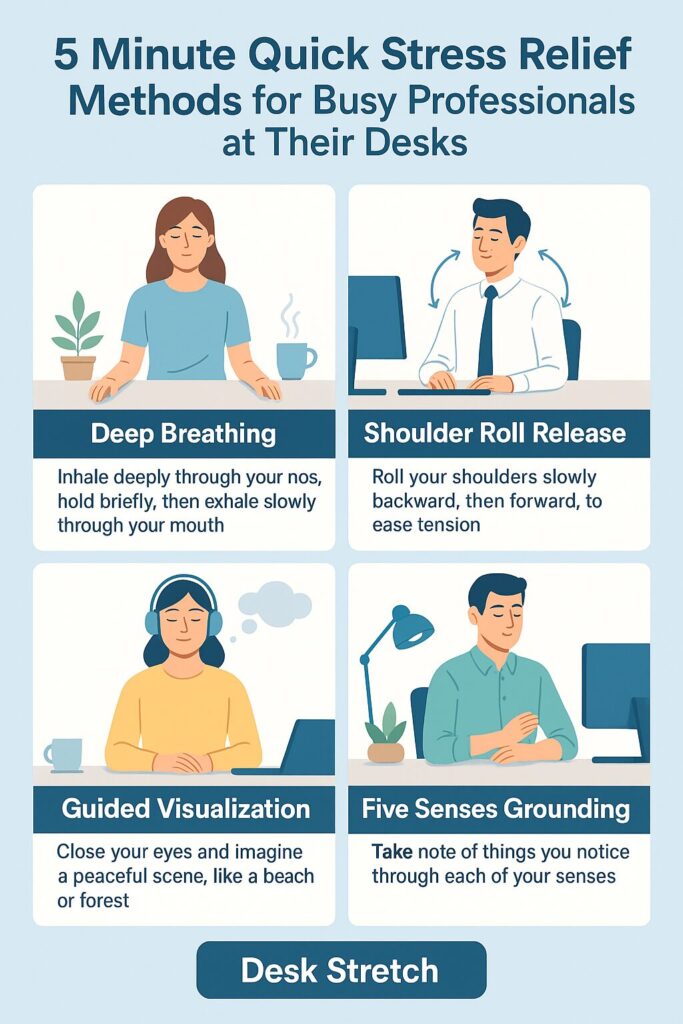
Deep belly breathing helps calm the nervous system. Sit upright, relax your shoulders and place one hand on your stomach.
Take a slow inhale through your nose and let your belly expand. Exhale through your mouth as your belly softens. Continue this for five minutes. This simple practice slows your heart rate and helps your body release tension.
Four Seven Eight Breathing
This technique resets your focus quickly. Inhale for four seconds, hold for seven seconds and exhale for eight seconds.
Repeat this routine five times. This breathing method is helpful before a meeting, during deadlines or anytime you need a mental reset.
Box Breathing
Box breathing uses a four part pattern. Inhale for four seconds, hold for four seconds, exhale for four seconds and hold again for four seconds.
Repeat this cycle for five minutes. This method lowers stress, improves focus and brings the body back into balance.
Extended Exhale Breathing
This technique focuses on longer exhales. Inhale for four seconds, then exhale for six or eight seconds. A slow exhale calms your system and reduces tension. It is effective during moments of anxiety or emotional overload.
Five Finger Breathing
Hold one hand out in front of you. Use your other hand to trace each finger as you breathe in and out.
When you reach the last finger, repeat the cycle again. This method creates a calming rhythm and helps your mind shift away from stress.
5 Minute Calming Breathwork Video
Learn the 5 minute Calming Breathwork For Stress Relief in the Video Below
Physical Relaxation Techniques at Your Desk
Shoulder Roll Release
Shoulder tension builds as you sit for long periods. Roll your shoulders forward for thirty seconds, then roll them backward for another thirty seconds.
Loosen your neck, arms and upper back. Repeat this for five minutes to release tightness and increase circulation.
Neck Reset Stretch
Drop your chin to your chest and take slow breaths. Tilt your head gently from side to side.
Turn your head to look over each shoulder. These simple movements relax the neck muscles and reduce tech neck pain.
Wrist and Hand Stretch Routine
Typing puts pressure on your hands and wrists. Extend your arms forward and gently flex your wrists downward.
Stretch your fingers wide and relax them. Rotate your wrists in slow circles. These stretches improve mobility and reduce tension.
Sit and Reach Stretch
Sit tall and slowly reach your hands toward the floor. Hold for a few breaths. This movement stretches your lower back, hips and hamstrings. It releases the pressure that builds from long periods of sitting.
Desk Posture Reset
Sit back in your chair, place your feet flat on the floor and relax your shoulders. Lengthen your spine with a slow breath.
Keep your neck aligned with your spine. Hold this posture for five minutes as you breathe deeply.
Seated Spinal Twist
Keep your feet flat on the floor. Twist your torso to one side and hold for three long breaths. Then twist to the other side. This movement releases tension in the spine and helps restore mobility.
Mental and Mindfulness Stress Relief Methods
Guided Visualization
Close your eyes for a moment. Picture a place that brings you peace. Imagine the sounds, the light, the air and the movement around you. This practice helps your mind shift away from stress and into a calmer mental space.
Five Senses Grounding
This technique brings your awareness back to the present moment. Notice five things you see, four things you feel, three things you hear, two things you smell and one thing you taste. It is a powerful grounding tool during moments of anxiety.
Micro Meditation
Sit quietly and close your eyes. Take slow breaths and repeat a calming word such as peaceful or relax. Let your thoughts move without holding onto them. This short meditation helps declutter the mind.
Mental Declutter
Take out a small sticky note. Write down everything on your mind. Sort the list into now, later and not important. This simple process reduces mental overload and improves clarity.
Gratitude Micro Reset
Think of three things that are going well today. They can be small moments or simple wins. Gratitude helps shift your mood, supports emotional well being and lowers stress.
Sensory Based Stress Relief Methods
Cold Touch Therapy
Place a cool water bottle or cold cloth on your hands or the back of your neck. The cold sensation activates the vagus nerve and helps your body relax quickly.
Warmth Comfort Method
Hold a warm mug of tea or place a warm compress on your hands. Warmth helps your muscles loosen and signals your mind to relax.
Desk Aromatherapy
Use a calming essential oil such as lavender, chamomile or eucalyptus. Place a small drop on your wrist or on a cotton pad. Inhale slowly to reduce tension. This works very well for stress and anxiety.
Five Minute Sound Therapy
Listen to soft music or gentle nature sounds. Choose sounds that calm your mind. This helps reduce stress and supports focus.
Productivity Based Stress Relief Methods
Desk Reset
A cluttered desk increases stress. Take five minutes to organize loose papers, wipe dust and clear space. A clean desk helps you think more clearly.
Micro Breaks
Take two minutes to close your eyes or look out the window. Repeat this twice. Short breaks protect your mental energy and help you stay productive.
Calendar Tidy Technique
Look at your schedule and shift items into simple priorities. A quick reset can help you regain structure and reduce overwhelm.
Emotional and Mental Self Support Methods
Positive Self Talk
Speak to yourself with kindness. Repeat calming statements such as I can handle this or I am doing my best today. Positive self talk helps shift your mindset and supports resilience.
Quick Laughter Reset
Find a short funny clip or a light moment that makes you smile. Laughter releases endorphins and helps reduce stress.
Expressive Writing
Take five minutes to write freely about your feelings. Do not judge the words. Let your thoughts move out of your mind and onto paper.
Desk Movement and Circulation Boosters
Seated March
Lift your knees one at a time as if you are marching in place. This helps improve circulation and wakes up tired muscles.
Foot Pump Exercise
Raise your heels, then raise your toes. Repeat this movement slowly. It helps blood flow and reduces lower leg tension.
Ankle Circles
Rotate your ankles in slow circles. This simple movement supports circulation and loosens stiff joints.
Quick Eye Strain and Mental Fatigue Relief
Eye Palming
Rub your hands together to create warmth. Place your palms over your closed eyes. This reduces digital eye strain and increases comfort.
Twenty Twenty Twenty Rule
Every twenty minutes, look at something twenty feet away for twenty seconds. You can repeat this several times during a five minute break. This simple practice helps your eyes relax.
Blinking Reset
Blink quickly, then slowly. Repeat this for one full minute. It helps hydrate your eyes and reduces tension from screen use.
Building a Five Minute Stress Relief Routine
How to Combine Methods
Create a simple routine. Start with breathing, add a stretch and finish with a mental or sensory technique. This combination resets both the mind and body.
Create a Personalized Desk Ritual
Choose one method for the morning, one for midday and one for the afternoon. Rotate these methods each day. A small routine builds long term stress resilience.
Conclusion
Life moves fast when you work in a busy environment. Stress can slip into your day without warning, but you can take control of your emotional health.
These five minute stress relief methods help you reset your mind, relax your body and protect your well being. Short breaks add energy, clarity and balance to your workday.
When you use these simple techniques often, you build a stronger routine that supports your mental health and your productivity.
Even a few minutes at your desk can help you feel calmer and more focused. Thank you for reading this article.
FAQ: Five Minute Stress Relief Methods for Busy Professionals
What are the best five minute stress relief methods for busy professionals at their desks?
The best five minute stress relief methods include deep belly breathing, shoulder rolls, guided visualization, gratitude resets and short desk stretches. These quick techniques calm the nervous system, relax tense muscles and help restore focus without leaving your workspace.
How can I reduce stress fast while sitting at my desk during work?
You can reduce stress fast by using simple breathing routines, short muscle stretches and grounding techniques. Deep breathing lowers your heart rate. Shoulder rolls loosen tension. The five senses grounding method pulls your mind back into the present moment. These methods work in five minutes or less.
What is the fastest way to calm down during a stressful workday?
The fastest way to calm down is to focus on controlled breathing. Try box breathing or four seven eight breathing. These breathing methods slow your heart rate and help your mind reset. You can also place a cool bottle on your hands or neck for a physical calming effect.
Which five minute desk exercises help relieve tension during work?
Desk friendly exercises like seated marches, neck stretches, wrist rotations and spinal twists help relax tense muscles. These movements increase circulation and reduce stiffness caused by long hours of sitting.
How can breathing exercises help with stress during work?
Breathing exercises activate the calming part of your nervous system. Slow inhales and long exhales signal your brain to relax. This reduces stress hormones and helps bring clarity and focus back into your day.
Are there quick mindfulness methods I can use at my desk?
Yes. Simple mindfulness practices like the five senses grounding method, short meditations and guided imagery can help you center your thoughts. These methods take only a few minutes and help reduce anxiety and mental overload.
How can I calm anxiety quickly during a busy workday?
You can calm anxiety by slowing your breathing, relaxing your shoulders and grounding yourself through sensory awareness. Cold touch therapy also helps by activating the vagus nerve, which lowers stress and brings your system back into balance.
Can quick stress relief methods improve productivity at work?
Yes. Short stress relief breaks improve mental clarity, increase focus and reduce fatigue. When your mind feels calm, you make better decisions and complete tasks more efficiently.
What is a simple five minute routine for stress relief at work?
A simple routine includes deep breathing, a quick shoulder stretch and one grounding technique. This combination relaxes your body and helps your mind feel centered.
How often should I take short stress relief breaks during the workday?
You should take a five minute break every hour or anytime you feel overwhelmed. Frequent micro breaks help prevent burnout, reduce mental fatigue and support long term well being.
Do sensory based stress relief methods work during a workday?
Yes. Sensory based techniques like aromatherapy, gentle sounds and warm or cool touch help calm your body fast. These methods create a soothing environment and reduce tension even when your schedule is busy.
Can eye strain increase stress during work and how do I fix it quickly?
Eye strain increases stress by causing headaches and fatigue. You can fix it quickly with the twenty twenty twenty rule, eye palming and blinking resets. These simple methods relax your eyes and reduce discomfort.
What are natural stress relief techniques I can use without leaving my desk?
Natural stress relief techniques include breathing routines, posture resets, gratitude lists, short meditations, warm touch therapy and calming sounds. These methods work quickly and require no equipment.
How can I support my emotional well being during stressful workdays?
You can support your emotional well being by practicing positive self talk, using mini gratitude exercises and writing down stressful thoughts. These small habits help regulate your emotions and build resilience.
Professional Website References for Quick 5 Minute Stress Relief Methods
1. American Psychological Association: Stress Management Resources
A trusted resource for evidence based stress relief methods, workplace stress information and mental health support.
2. Mayo Clinic: Stress Management and Relaxation Techniques
A medically reviewed guide on relaxation strategies, breathing exercises and simple ways to help relieve stress and anxiety at work.
3. Harvard Health: Mindfulness and Stress Reduction Tips
Harvard Health offers practical advice on mindfulness, quick meditation, emotional balance and stress reduction at work.