Contents
- 1 How Is ADHD Different in Adult Women? Understanding Key Symptoms and Challenges
- 2 Understanding ADHD in Adult Women
- 3 Why ADHD Often Goes Undiagnosed in Women
- 4 Emotional Impact of ADHD in Adult Women
- 5 Daily Challenges Faced by Women with ADHD
- 6 ADHD and Relationships
- 7 Diagnosis and Treatment for ADHD in Adult Women
- 8 Building a Supportive Environment
- 9 Conclusion
- 10 Final Thoughts
- 11 Frequently Asked Questions About How ADHD Differs in Adult Women
- 12 The Mental Health Blogger
- 13 References
How Is ADHD Different in Adult Women? Understanding Key Symptoms and Challenges
Introduction: How Is ADHD Different in Adult Women?
Discover how ADHD manifests differently in adult women. Learn about unique symptoms, emotional struggles, and diagnosis challenges to better understand women with ADHD.
Attention Deficit Hyperactivity Disorder, known as ADHD, affects both men and women. However, it often looks very different in adult women compared to men.
Many women grow up not realizing they have ADHD. They may think their struggles are due to stress, anxiety, or even personality flaws.
For years, ADHD research focused mainly on boys, which caused many women to go undiagnosed or misdiagnosed.
In this article, we will explore how ADHD appears in adult women, why it often goes unnoticed, and how it impacts daily life, emotions, and relationships.
We will also look at the signs, challenges, and treatment options that can help women manage ADHD and improve their quality of life.
Understanding ADHD in Adult Women
How ADHD Looks Different in Women
ADHD in women often shows up in subtle ways. Instead of hyperactivity, many women experience inner restlessness.
Their minds feel like they are always moving, even when they appear calm on the outside.
Women are more likely to have the inattentive type of ADHD, which means they may struggle with focus, memory, and organization rather than physical hyperactivity.
Common symptoms of ADHD in adult women include:
- Difficulty staying organized at home or at work
- Forgetting appointments, deadlines, or daily tasks
- Feeling mentally exhausted after simple tasks
- Struggling to complete projects or follow through with plans
- Constantly losing items such as keys or phones
- Trouble managing time or meeting commitments
- Feeling guilty or inadequate for not meeting expectations
Many women with ADHD describe living with constant mental noise. They may feel overwhelmed by the smallest details of daily life. This leads to frustration, self-doubt, and feelings of failure.
How ADHD Shows Up in Women and Why it’s Often Missed
Why ADHD Often Goes Undiagnosed in Women
Social and Cultural Expectations
From a young age, girls are often encouraged to behave quietly and follow rules.
They learn to hide behaviors that draw attention. Instead of showing hyperactivity, many women internalize their struggles.
They may become perfectionists or people-pleasers to cope. These coping habits make ADHD harder to detect.
Doctors and teachers may not recognize the signs because women often mask their symptoms.
A woman might appear organized on the outside while secretly struggling to stay on top of everything.
Over time, this constant masking can cause emotional burnout and mental fatigue.
Misdiagnosis and Overlooked Symptoms
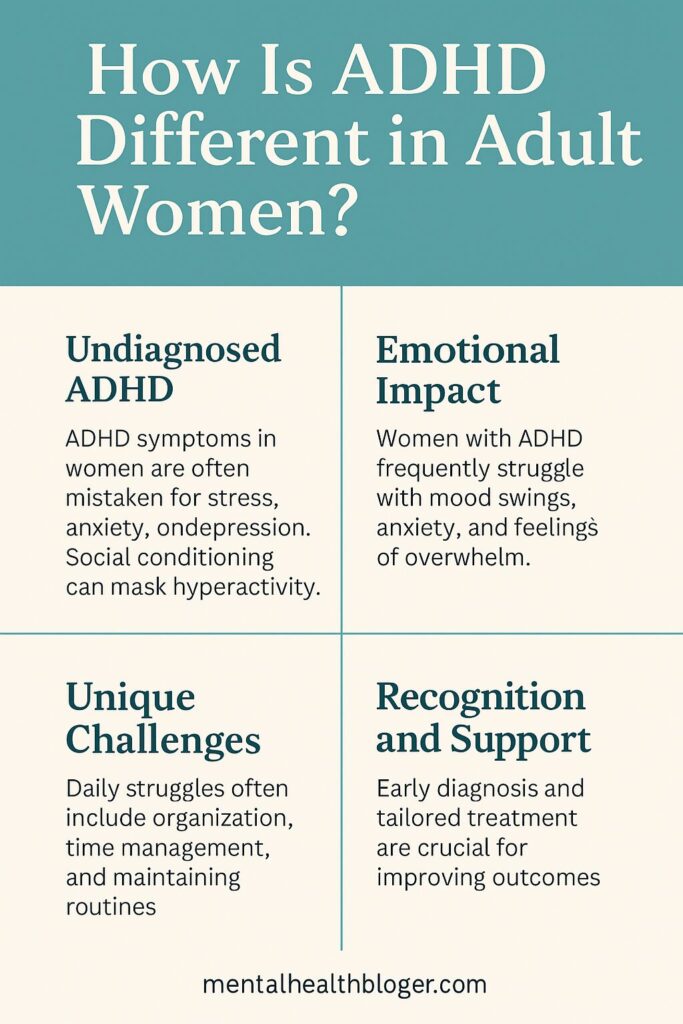
ADHD symptoms in women often overlap with conditions such as anxiety, depression, or mood disorders.
As a result, many women are treated for those issues instead of ADHD.
It is common for women to receive an ADHD diagnosis only after their children are diagnosed.
They begin to see similar symptoms in themselves and realize that ADHD may be the underlying cause of their struggles.
Emotional Impact of ADHD in Adult Women
Internalized Stress and Self-Blame
Women with ADHD often feel deep guilt or shame about their difficulties. They may blame themselves for being forgetful, unorganized, or inconsistent.
This constant self-criticism can lower self-esteem and increase anxiety.
Many women describe feeling like they are “always behind,” no matter how hard they try.
Emotional Regulation and Sensitivity
ADHD affects emotional regulation. Women with ADHD may experience strong emotions, such as frustration or sadness, that feel difficult to control.
They might cry easily, feel hurt by small comments, or become angry quickly.
These emotional reactions can strain relationships and lead to isolation if misunderstood.
Emotional symptoms may include:
- Frequent mood swings
- Difficulty calming down after emotional outbursts
- Sensitivity to criticism or rejection
- Overthinking past mistakes or conversations
- Feeling easily overwhelmed by responsibilities
The ADHD You Don’t See: The Truth About Women’s Struggles
Daily Challenges Faced by Women with ADHD
Work and Career Struggles
ADHD can make professional life difficult for many women.
They might struggle with deadlines, organization, or multitasking.
Even if they work hard, they may feel less productive than others.
This often leads to imposter syndrome, where they believe they are not good enough despite their achievements.
Common work challenges include:
- Trouble prioritizing tasks and managing time
- Difficulty following long meetings or instructions
- Losing focus during repetitive work
- Forgetting important details or appointments
- Procrastinating on large projects until the last minute
Home and Family Life
At home, ADHD symptoms can make managing daily tasks overwhelming.
Many women feel pressure to keep everything perfect while balancing work, family, and personal life.
The mental load can be heavy, leading to burnout and frustration.
Examples of challenges include:
- Forgetting chores, errands, or appointments
- Feeling disorganized or scattered
- Struggling to maintain routines
- Difficulty managing finances or household responsibilities
Family members may misunderstand these struggles, thinking the woman is lazy or careless. In reality, she is often trying harder than anyone else to stay afloat.
ADHD and Relationships
ADHD can influence relationships in complex ways.
Women with ADHD may struggle to remember important dates or have trouble focusing during conversations.
Partners may misinterpret these behaviors as lack of care or attention.
Communication problems can create emotional distance.
At the same time, many women with ADHD are compassionate, creative, and deeply empathetic.
When they understand their symptoms, they can learn to communicate better and strengthen their relationships.
Therapy and education can help both partners understand how ADHD affects daily life and emotional expression.
Diagnosis and Treatment for ADHD in Adult Women
Getting a Proper Diagnosis
If a woman suspects she may have ADHD, the first step is to talk to a qualified mental health professional.
The evaluation process usually includes a detailed discussion about symptoms, medical history, and life patterns.
Self-assessment questionnaires can also help identify symptoms.
It is important to be honest during the evaluation.
Describing real struggles and daily challenges helps the clinician see the full picture.
ADHD is not a character flaw, and getting diagnosed is the first step toward relief and understanding.
Treatment Options and Coping Strategies
Treatment for ADHD often includes medication, therapy, and lifestyle changes.
Each woman’s experience is unique, so treatment plans should be personalized.
Common treatment options include:
- Medication: Stimulant or non-stimulant medications can help improve focus and reduce impulsivity.
- Cognitive Behavioral Therapy (CBT): Helps women identify negative thinking patterns and create healthier coping habits.
- Coaching or Counseling: ADHD coaches help women build organization and time-management skills.
- Lifestyle Adjustments: Regular exercise, sleep, and nutrition support mental clarity and focus.
- Mindfulness Practices: Techniques such as meditation and deep breathing can help calm racing thoughts and improve emotional balance.
Support groups also play a valuable role. Talking with other women who understand ADHD can reduce feelings of isolation and provide motivation.
Building a Supportive Environment
At Home
Creating structure at home helps reduce overwhelm.
Using planners, reminders, and visual organization tools can make tasks easier to manage.
Dividing chores into smaller steps can prevent burnout.
At Work
Open communication with employers or supervisors can make a big difference.
Women with ADHD may benefit from flexible schedules, quiet workspaces, or short breaks to maintain focus.
Many companies now recognize the importance of supporting neurodiverse employees.
In Relationships
Understanding ADHD is the key to maintaining healthy relationships.
Partners, friends, and family members who educate themselves about ADHD can offer more empathy and patience.
When everyone understands that ADHD is a neurological condition, it becomes easier to find balance and connection.
Conclusion
ADHD in adult women is real, complex, and often misunderstood.
It does not always look like what people expect.
Many women silently struggle with feelings of inadequacy, guilt, and exhaustion because they do not realize that ADHD is behind their challenges.
Recognizing the signs and seeking a proper diagnosis can transform a woman’s life.
With the right combination of treatment, support, and self-awareness, women with ADHD can thrive in every area of life.
Final Thoughts
If you suspect you may have ADHD, remember that you are not alone.
Many women have walked the same path of confusion and discovery.
Understanding that ADHD presents differently in women is empowering.
It allows you to take control of your mental health and build a happier, more organized life.
With compassion, education, and support, every woman with ADHD can live a fulfilling and successful life.
Awareness is the first step, and from there, real change begins.
Frequently Asked Questions About How ADHD Differs in Adult Women
What are the main differences between ADHD in women and men?
ADHD in women often appears less hyperactive and more internal. Women tend to struggle with focus, organization, and emotional control, while men often show more visible hyperactivity. Because of this, ADHD in women is often overlooked or misdiagnosed as anxiety or depression.
Why do so many women get diagnosed with ADHD later in life?
Many women learn to mask their symptoms by becoming overly organized or people-pleasing. They often attribute their struggles to stress or hormones. As a result, doctors may miss the signs of ADHD. Many women only receive a diagnosis after their children are diagnosed and they notice similar patterns in themselves.
What are common signs of ADHD in adult women?
Common signs include chronic forgetfulness, difficulty staying organized, time blindness, impulsive decision-making, and emotional overwhelm. Women may also struggle with low self-esteem, burnout, and constant mental fatigue from trying to manage everything at once.
Can ADHD cause emotional problems in women?
Yes, ADHD can significantly affect emotional regulation. Many women with ADHD experience strong emotions, mood swings, and sensitivity to criticism. These emotional ups and downs often lead to anxiety, depression, or frustration if left untreated.
How can adult women manage ADHD symptoms?
Treatment for ADHD in women often includes medication, therapy, and lifestyle adjustments. Cognitive Behavioral Therapy helps with emotional control, while mindfulness, exercise, and good sleep improve focus. Support groups and ADHD coaching also help women manage daily life more effectively.
Why is recognizing ADHD in women so important?
Recognizing ADHD in women allows for better understanding, proper treatment, and emotional healing. Early diagnosis helps prevent burnout, anxiety, and depression. Awareness also reduces stigma, helping women live balanced, productive, and fulfilling lives.
The Mental Health Blogger
If you want to learn more about mental health topics and personal wellness, visit The Mental Health Blogger, your ultimate resource for understanding and improving mental well-being.
https://www.mentalhealthblogger.com
References
- ColumbiaDoctors – Is ADHD Different for Women? This article explains how women are more likely to have the inattentive subtype of ADHD and how their symptoms often go unrecognized.
Link: https://www.columbiadoctors.org/news/adhd-different-women - BMC Psychiatry – Females with ADHD: An Expert Consensus Statement. This paper provides a detailed overview of symptom presentation, comorbidities, and clinical considerations for females with ADHD across the lifespan.
Link: https://bmcpsychiatry.biomedcentral.com/articles/10.1186/s12888-020-02707-9 - Cleveland Clinic – ADHD in Women. The page offers a comprehensive look at symptoms, causes, diagnosis, and treatment of ADHD specifically for adult women, and highlights how symptoms may present differently than in men.
Link: https://my.clevelandclinic.org/health/diseases/24741-adhd-in-women