
Feeling constantly drained despite keeping up with work, responsibilities, and daily life? Explore the often-overlooked connection between fatigue, emotional load, stress, and mood.

By Kevin Mack | Updated June 15, 2026
Kevin Mack provides extensive research, personal observation, and practical experience exploring emotional wellness, stress management, and everyday energy patterns.
Contents
- 1 Key Takeaways
- 2 Introduction
- 3 Why Am I Always Tired But Functional
- 4 What Does It Mean to Be Tired But Fully Functional?
- 5 Why Does Fatigue and Mood Matter?
- 6 What Are the Main Signs of Fatigue Connected to Mood?
- 7 What Causes Someone to Feel Tired but Still Functional?
- 8 How to Understand Fatigue and Mood in Real Life
- 9 Common Myths and Misconceptions About Fatigue and Mood
- 10 Expert Insights About Fatigue and Mood
- 11 Fatigue vs Emotional Exhaustion Comparison
- 12 Best Practices and Practical Tips
- 13 People Also Ask
- 14 Conclusion
- 15 About the Author
- 16 Medical Disclaimer
- 17 Sources and References
Key Takeaways
- Feeling tired while remaining productive is more common than many people realize.
- Mood, stress, emotional load, and mental fatigue can influence energy levels even when daily responsibilities are still being met.
- Chronic tiredness does not always mean a person is physically exhausted.
- Emotional strain often builds gradually and can become normalized over time.
- Small daily habits, routines, and self-awareness practices can help uncover patterns behind persistent fatigue.
- Understanding the connection between fatigue and mood can help people make more informed decisions about their overall well-being.
Introduction
Are you constantly exhausted yet still managing to get everything done? Learn how high-functioning burnout connects chronic fatigue and mood issues, and discover actionable, non-medical strategies to reclaim your daily energy.
Have you ever wondered, “Why am I always tired but fully functional?” You get through work, complete responsibilities, answer messages, pay bills, and keep moving forward. Yet underneath it all, you feel exhausted.
I have experienced periods where I appeared completely fine on the outside while feeling mentally drained on the inside. I was productive, dependable, and meeting deadlines, but my energy felt permanently stuck in low gear.
Many people searching for answers discover that fatigue is not always about sleep alone. Mood, emotional stress, mental overload, and everyday life pressures can all influence how energized or depleted we feel throughout the day.
Understanding the connection between fatigue and mood can provide valuable insight into why you feel tired even when you are still functioning effectively.
Why Am I Always Tired But Functional
Why am I always tired but fully functional? In many cases, persistent tiredness can be connected to mood, stress, emotional demands, mental fatigue, lifestyle habits, or ongoing life pressures. A person may continue performing daily responsibilities successfully while experiencing a reduced sense of energy, motivation, or emotional vitality beneath the surface.
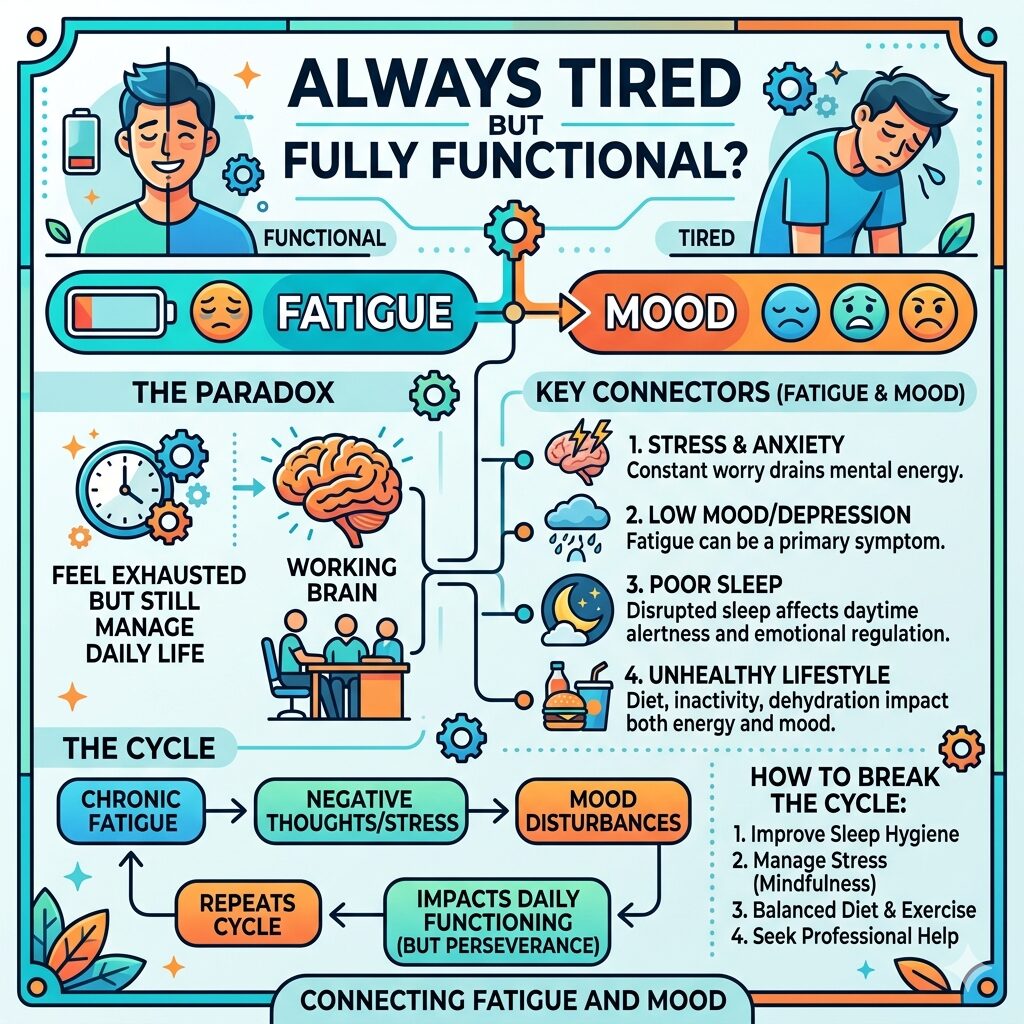
What Does It Mean to Be Tired But Fully Functional?
Being tired but fully functional describes a situation where someone continues to manage daily life despite feeling consistently fatigued.
This often includes:
- Going to work or school regularly
- Completing daily responsibilities
- Maintaining relationships
- Meeting deadlines
- Remaining productive
At the same time, they may experience:
- Low energy
- Emotional exhaustion
- Reduced motivation
- Difficulty feeling refreshed
- A sense of constantly “pushing through”
- Burnout
The confusion comes from the fact that outward performance and internal energy levels are not always the same thing.
Why Does Fatigue and Mood Matter?
Many people assume fatigue is only a physical issue.
In reality, emotional experiences can affect how energetic we feel.
When stress, frustration, worry, disappointment, overwhelm, or emotional pressure remain present for extended periods, the brain continues processing those experiences in the background.
I have noticed that during particularly stressful periods, I could still complete my responsibilities while feeling mentally drained by the end of every day.
My productivity remained intact, but my energy reserves felt noticeably lower.
Understanding this distinction helps explain why some people remain highly functional while feeling exhausted.
What Are the Main Signs of Fatigue Connected to Mood?
The signs are often subtle.
Constant Low-Level Exhaustion
You are not falling asleep at your desk, but you rarely feel truly energized.
Feeling Drained After Normal Activities
Tasks that once felt manageable may seem more demanding than before.
Difficulty Feeling Excited
You still participate in activities, but enthusiasm may feel muted.
Mental Fog
Concentration remains possible, yet it requires more effort than usual.
Increased Irritability
Low energy and emotional fatigue can sometimes shorten patience and increase frustration.
Weekend Recovery Cycles
Some people spend weekends recovering from the emotional demands of the week rather than genuinely recharging.
These indicators do not automatically prove a specific cause, but they can reveal important patterns worth noticing.
What Causes Someone to Feel Tired but Still Functional?
Several explanations may contribute.
Ongoing Stress
Stress consumes mental resources.
Even when stress does not stop productivity, it can gradually reduce overall energy levels.
Emotional Labor
Managing emotions throughout the day requires effort.
Customer service workers, caregivers, parents, teachers, and leaders often experience significant emotional demands.
Mental Overload
Constant notifications, decision-making, multitasking, and information consumption can create mental fatigue.
Poor Recovery Habits
Being busy is not the same as recovering.
Many people fill every free moment with stimulation instead of allowing genuine rest.
Habitual Overachievement
Some individuals become skilled at functioning despite exhaustion.
They normalize fatigue because productivity continues.
Lifestyle Imbalances
Sleep quality, movement, nutrition, hydration, work schedules, and screen time can all influence daily energy.
Related Video – Why Your Always Tired and How to Fix it
This video provides additional insights into the mental, emotional, and lifestyle factors that may contribute to persistent fatigue.
How to Understand Fatigue and Mood in Real Life
Step 1: Notice Patterns
Track when your energy feels lowest.
Ask yourself:
- Is fatigue worse after stressful days?
- Does it improve during vacations?
- Is it connected to specific situations?
Step 2: Separate Physical and Emotional Demands
Consider whether your exhaustion follows physical activity or emotional strain.
Many people discover emotional demands are contributing more than expected.
Step 3: Evaluate Recovery Time
Look honestly at how you spend downtime.
Scrolling social media and watching television may provide entertainment but not always genuine recovery.
Step 4: Identify Energy Drains
Pay attention to:
- Difficult relationships
- Constant obligations
- Work pressures
- Excessive multitasking
- Unrealistic expectations
Step 5: Build Better Awareness
Understanding your patterns often provides valuable insight before making major changes.
Common Myths and Misconceptions About Fatigue and Mood
Myth: If You Are Functioning, Nothing Is Wrong
Many people continue functioning while feeling depleted.
Performance alone does not always reflect energy levels.
Myth: Fatigue Is Always About Sleep
Sleep matters, but emotional and mental factors can also influence fatigue.
Myth: Being Busy Means Being Productive
Constant activity can sometimes create exhaustion without meaningful progress.
Myth: Everyone Feels This Way
Fatigue is common, but it should not automatically be accepted as normal.
Expert Insights About Fatigue and Mood
One pattern I repeatedly notice is that people often measure wellness by productivity alone.
However, energy, motivation, emotional resilience, and enthusiasm provide important clues too.
Someone may appear successful while quietly carrying a significant emotional load.
The most useful question is often not:
“Can I still function?”
Instead, ask:
“How much effort does functioning require right now?”
That distinction frequently reveals valuable insight.
Fatigue vs Emotional Exhaustion Comparison
| Fatigue Indicator | Possible Emotional Component |
|---|---|
| Low energy | Chronic stress |
| Feeling drained | Emotional overload |
| Lack of enthusiasm | Reduced emotional reserves |
| Difficulty focusing | Mental fatigue |
| Constant tiredness | Ongoing life pressures |
| Recovery challenges | Insufficient emotional downtime |
Best Practices and Practical Tips
- Prioritize consistent sleep routines.
- Schedule genuine recovery time.
- Reduce unnecessary multitasking.
- Take regular breaks during demanding days.
- Spend time outdoors when possible.
- Monitor emotional stress levels.
- Create boundaries around work and technology.
- Avoid assuming productivity equals wellness.
- Pay attention to recurring patterns.
- Seek credible information when concerns persist.
People Also Ask
Why am I exhausted but still able to function?
Many people adapt to ongoing fatigue and continue meeting responsibilities. Stress, emotional demands, lifestyle habits, and mental overload can all contribute to feeling exhausted while remaining productive.
Can mood affect energy levels?
Yes. Emotional experiences such as stress, frustration, worry, and overwhelm can influence perceived energy levels. Mental and emotional demands often consume resources that affect overall vitality.
Is mental fatigue different from physical fatigue?
Mental fatigue involves cognitive exhaustion, reduced focus, and feeling mentally drained. Physical fatigue typically relates more directly to bodily tiredness and exertion.
Why do I feel tired even after sleeping?
Sleep duration is only one factor. Sleep quality, stress levels, emotional demands, daily habits, and overall recovery patterns can all influence how rested you feel.
Can stress make you feel constantly tired?
Yes. Ongoing stress requires continuous mental processing, which may contribute to persistent feelings of tiredness even when responsibilities continue to be managed effectively.
What is emotional exhaustion?
Emotional exhaustion refers to feeling mentally and emotionally depleted after prolonged periods of stress, responsibility, or emotional demands.
Why do weekends not always help me recover?
Some people spend weekends catching up on responsibilities or recovering from accumulated stress rather than engaging in activities that genuinely restore energy.
How can I identify my biggest energy drains?
Tracking daily activities, emotional reactions, stress levels, and energy patterns can help reveal recurring sources of fatigue.
Conclusion
If you have been asking yourself, “Why am I always tired but fully functional?”, the answer may involve more than physical energy alone.
Fatigue and mood are often closely connected.
Stress, emotional demands, mental overload, and everyday pressures can quietly influence how energized you feel while still allowing you to meet your responsibilities.
The key is recognizing that productivity and well-being are not always the same thing.
Paying attention to your energy patterns, recovery habits, and emotional load can provide valuable insight into what may be contributing to your persistent tiredness.
Sometimes the most important question is not whether you can keep going. It is whether you are giving yourself enough opportunity to recharge along the way.
About the Author
Kevin Mack is a content creator and researcher who writes educational articles focused on mental wellness, personal growth, stress management, and everyday well-being. Through extensive research and practical insights, he helps readers better understand complex topics in a clear, approachable, and non-medical way.
Medical Disclaimer
Medical Disclaimer: This article is for educational and informational purposes only and is not intended as medical advice, diagnosis, or treatment. Always consult a qualified healthcare professional regarding any medical concerns, symptoms, or health-related decisions. Never disregard professional medical advice based on information found in this article.
Sources and References
- American Psychological Association (APA)
Stress and its impact on daily functioning and well-being.
https://www.apa.org - Mayo Clinic
Information about fatigue, stress, and lifestyle factors affecting energy.
https://www.mayoclinic.org - National Institute of Mental Health (NIMH)
Educational resources on stress, emotional well-being, and mental health.
https://www.nimh.nih.gov - Harvard Health Publishing
Articles covering stress, energy, sleep, and emotional wellness.
https://www.health.harvard.edu - Wikipedia: Fatigue
General overview and background information on fatigue.
https://en.wikipedia.org/wiki/Fatigue