Contents
- 1 Coping Strategies for Anxiety in Young Adults: Practical Tips That Work
- 2 Introduction to Coping Strategies for Anxiety in Young Adults
- 3 Understanding Anxiety in Young Adults
- 4 Why Coping Strategies Matter
- 5 Coping Strategies for Anxiety in Young Adults
- 6 1. Learning to Regulate the Nervous System
- 7 2. Changing Anxious Thought Patterns
- 8 3. Building Emotional Coping Skills
- 9 4. Creating Healthy Daily Routines
- 10 5. Strengthening Social Support
- 11 When to Seek Professional Help
- 12 Long Term Anxiety Management Tips
- 13 Conclusion and Final Thoughts
- 14 Frequently Asked Questions About Coping Strategies for Anxiety in Young Adults
- 15 Trusted References for Coping Strategies for Anxiety in Young Adults
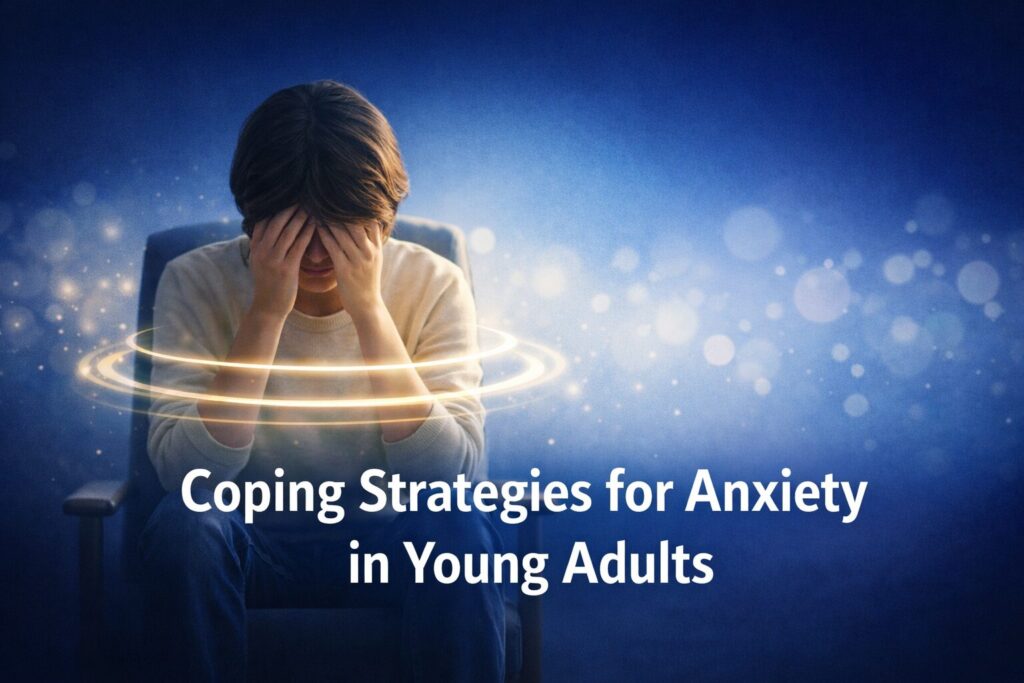
Coping Strategies for Anxiety in Young Adults: Practical Tips That Work
Practical Coping Strategies for Anxiety in Young Adults and College-Age Adults
Introduction to Coping Strategies for Anxiety in Young Adults
Discover effective coping strategies for anxiety in young adults. Learn practical techniques to manage stress, reduce anxious thoughts, and improve emotional wellbeing.
Anxiety is one of the most common mental health challenges facing young adults today.
Many people experience anxiety during major life transitions, such as starting college, entering the workforce, building relationships, or learning how to live independently.
These years often come with pressure, uncertainty, and high expectations.
When anxiety is left unmanaged, it can slowly affect sleep, focus, confidence, and emotional wellbeing.
The good news is that anxiety is manageable.
With the right coping strategies, young adults can learn how to reduce anxious thoughts, calm their nervous system, and feel more in control of daily life.
Coping skills are not about eliminating anxiety completely.
They are about understanding it, responding to it in healthier ways, and building resilience over time.
This guide is written for young adults who want practical, realistic tools that fit into real life.
It focuses on evidence based coping strategies that support emotional health, mental clarity, and long term wellbeing.
Each section breaks ideas into simple steps. Every strategy is explained in clear language that feels supportive, not overwhelming.
Understanding Anxiety in Young Adults
What Anxiety Really Feels Like
Anxiety is more than feeling nervous before a big moment.
For many young adults, anxiety can show up as constant worry, racing thoughts, or a tight feeling in the chest.
Some people experience physical symptoms like headaches, stomach issues, muscle tension, or fatigue.
Others notice emotional signs like irritability, fear of failure, or difficulty relaxing.
Anxiety often feels unpredictable. One day may feel manageable, while the next feels overwhelming.
This inconsistency can be frustrating and confusing. Understanding that anxiety is a natural response from the brain can help reduce shame and self blame.
Why Anxiety Is So Common in Young Adulthood
Young adulthood is a period of rapid change. Life decisions often feel permanent, even when they are not.
Social media comparison, academic pressure, financial stress, and uncertainty about the future all play a role.
The brain is also still developing emotional regulation skills during this stage of life.
When stress builds faster than coping skills, anxiety grows stronger. This does not mean someone is weak.
It means their nervous system is overwhelmed and asking for support.
Why Coping Strategies Matter
Coping strategies give young adults tools to respond to anxiety instead of feeling controlled by it.
Without coping skills, anxiety tends to loop.
Thoughts spiral, stress builds, and avoidance increases. Over time, this can affect mental health, physical health, and quality of life.
Healthy coping strategies help interrupt this cycle. These strategies support emotional balance.
They improve confidence and reduce the risk of anxiety becoming chronic or leading to burnout or depression.
Coping strategies work best when practiced consistently. They are skills that grow stronger with time and patience.
Coping Strategies for Anxiety in Young Adults
1. Learning to Regulate the Nervous System
Why Nervous System Regulation Is Important
Anxiety activates the body stress response. The nervous system shifts into survival mode.
This makes it harder to think clearly or feel calm. Regulating the nervous system helps the body return to a state of safety.
When the body feels safer, anxious thoughts naturally lose intensity.
This is why physical based coping strategies are often the most effective place to start.
Simple Nervous System Regulation Techniques
- Deep breathing exercises
Slow breathing sends a signal to the brain that danger has passed. Breathing in through the nose for four seconds and out through the mouth for six seconds can lower heart rate and reduce tension. Practicing this daily helps the body respond faster during anxious moments. - Grounding through the senses
Using the five senses brings attention back to the present moment. Noticing what you can see, hear, touch, smell, and taste helps stop anxious spirals. This technique works well during panic or intense worry. - Gentle movement
Walking, stretching, or light yoga helps release stored tension. Movement supports emotional regulation by lowering stress hormones. It also improves sleep and energy levels.
2. Changing Anxious Thought Patterns
How Thoughts Fuel Anxiety
Anxiety is often driven by unhelpful thought patterns.
These may include catastrophizing, overthinking, or assuming the worst outcome.
When these thoughts repeat, they feel true even when they are not.
Learning to notice and challenge anxious thoughts can reduce their power.
This does not mean forcing positive thinking. It means practicing balanced thinking.
Practical Thought Based Coping Strategies
- Thought awareness
Start by noticing anxious thoughts without judgment. Writing them down can help create distance. Seeing thoughts on paper makes them feel less overwhelming. - Reality checking
Ask simple questions. Is this thought based on facts or fear. What evidence supports it. What evidence does not. This helps reduce distorted thinking. - Replacing with balanced thoughts
Instead of saying something bad will happen, try saying something challenging may happen, but I can handle it. This keeps thoughts realistic and supportive.
3. Building Emotional Coping Skills
Why Emotional Skills Matter
Many young adults were never taught how to process emotions.
Anxiety often grows when emotions are ignored or pushed away.
Learning emotional coping skills helps reduce internal pressure.
Emotions are temporary signals. When they are acknowledged, they tend to pass more easily.
Emotional Coping Strategies to Practice
- Naming emotions
Simply naming feelings like anxious, overwhelmed, or frustrated can reduce their intensity. This activates areas of the brain linked to emotional regulation. - Journaling for emotional release
Writing freely about worries helps release mental clutter. Journaling does not need to be perfect. It just needs to be honest. - Self compassion practices
Speaking to yourself with kindness matters. Anxiety often comes with harsh self criticism. Replacing this with supportive language improves emotional resilience.
4. Creating Healthy Daily Routines
How Routine Supports Mental Health
Anxiety thrives in unpredictability. Routines provide structure and stability. They help the brain feel safe and organized.
Even small routines can have a big impact. Consistency matters more than perfection.
Anxiety Reducing Routine Habits
- Consistent sleep schedule
Poor sleep increases anxiety sensitivity. Going to bed and waking up at similar times supports emotional balance. - Balanced nutrition
Skipping meals or relying on caffeine can worsen anxiety symptoms. Eating regular meals with protein and complex carbohydrates supports nervous system health. - Limiting screen time before bed
Reducing stimulation at night improves sleep quality and reduces racing thoughts.
5. Strengthening Social Support
Why Connection Helps Anxiety
Anxiety often convinces people to isolate. This increases loneliness and fear.
Connection helps regulate emotions and reminds people they are not alone.
Support does not mean having all the answers. It means feeling understood.
Ways to Build Support Safely
- Talking to trusted people
Sharing anxiety with a friend, family member, or mentor can reduce shame and emotional burden. - Joining supportive communities
Online or in person groups focused on mental wellness can provide validation and shared understanding. - Setting boundaries
Protecting emotional energy is important. Learning to say no helps prevent overwhelm.
My System for Stopping Anxiety Attacks
This expert-led video walks through practical coping strategies for anxiety in young adults.
When to Seek Professional Help
Coping strategies are powerful, but sometimes anxiety needs additional support.
If anxiety interferes with daily life, relationships, or work, professional help can make a meaningful difference.
Therapy, counseling, and mental health services provide guidance tailored to individual needs.
Seeking help is a sign of strength, not failure.
Long Term Anxiety Management Tips
- Practice coping strategies daily, not only during anxious moments
- Be patient with progress and setbacks
- Celebrate small improvements
- Focus on growth, not perfection
- Remember that healing is not linear
Anxiety management is a lifelong skill. Each step builds confidence and resilience.
Conclusion and Final Thoughts
Coping with anxiety as a young adult can feel overwhelming, but it is possible to build a calmer, more balanced life.
Anxiety does not define who you are. It is a response to stress, change, and uncertainty.
With consistent coping strategies, young adults can learn how to regulate emotions, challenge anxious thoughts, and create routines that support mental wellbeing.
These tools empower individuals to move forward with confidence and self trust.
Progress may feel slow at times. That is normal.
What matters most is showing up for yourself with patience and compassion.
Every step taken toward emotional health matters.
Anxiety may be part of your story, but it does not get to write the ending.
✅ Reviewed by Doctor
Reviewed by: Dr. Amanda Reynolds, MD
Specialty: Psychiatry
Credentials: Board-Certified Psychiatrist, Fellow of the American Psychiatric Association (FAPA)
This article was medically reviewed to ensure accuracy, clarity, and alignment with current mental health care standards and insurance practices.
Frequently Asked Questions About Coping Strategies for Anxiety in Young Adults
What are the most effective coping strategies for anxiety in young adults?
The most effective coping strategies include nervous system regulation, cognitive coping skills, emotional awareness, healthy routines, and social support. Techniques such as deep breathing, grounding exercises, journaling, regular movement, consistent sleep, and balanced thinking help reduce anxiety symptoms over time. Combining physical and mental strategies works best because anxiety affects both the body and the mind.
How can young adults cope with anxiety without medication?
Many young adults manage anxiety without medication by using therapy based tools and lifestyle changes. Cognitive behavioral techniques, mindfulness practices, structured routines, physical activity, and emotional regulation skills can significantly reduce anxiety. Support from counseling or therapy can strengthen these coping skills even when medication is not used.
Why is anxiety so common in young adults?
Anxiety is common in young adults because this life stage involves constant change and pressure. Academic demands, career uncertainty, financial stress, social comparison, and identity development all increase emotional load. The brain is still developing coping and regulation systems, which makes anxiety more likely during this period.
Can anxiety coping strategies work long term?
Yes, coping strategies can be effective long term when practiced consistently. Skills like emotional regulation, balanced thinking, and nervous system calming improve with repetition. Over time, these strategies help reduce anxiety intensity, improve stress tolerance, and increase emotional resilience.
How do I calm anxiety quickly during a panic moment?
During intense anxiety or panic, focus on physical grounding first. Slow breathing, placing your feet firmly on the floor, naming objects around you, or holding something cold can calm the nervous system. Once the body begins to settle, anxious thoughts usually lose strength.
What coping strategies help anxiety at night?
Nighttime anxiety responds well to routines that signal safety to the brain. Reducing screen time, practicing slow breathing, gentle stretching, journaling worries before bed, and keeping a consistent sleep schedule can lower nighttime anxiety. Avoiding caffeine late in the day also helps improve sleep quality.
How can college students manage anxiety effectively?
College students can manage anxiety by creating structure, balancing workload, practicing self compassion, and using campus mental health resources. Time blocking, realistic expectations, movement, peer support, and counseling services are especially helpful during academic stress.
When should a young adult seek professional help for anxiety?
Professional help is recommended when anxiety interferes with daily functioning, relationships, work, or school. If anxiety causes panic attacks, avoidance behaviors, sleep problems, or persistent distress, a mental health professional can provide personalized support and evidence based treatment.
Are coping strategies different for generalized anxiety versus social anxiety?
Some coping strategies overlap, but certain techniques are more targeted. Social anxiety often benefits from gradual exposure and confidence building, while generalized anxiety responds well to worry management and cognitive techniques. A personalized approach works best for long term improvement.
Can anxiety coping strategies also help with depression?
Yes, many anxiety coping strategies also support depression management. Emotional regulation, routines, physical activity, social connection, and self compassion benefit overall mental health. Since anxiety and depression often occur together, these strategies can improve both conditions.
Trusted References for Coping Strategies for Anxiety in Young Adults
- National Institute of Mental Health (NIMH) — Anxiety Disorders
This page provides authoritative, research-based information on anxiety disorders, including symptoms, treatment options, and how anxiety affects adults. National Institute of Mental Health: Anxiety Disorders Overview - Anxiety and Depression Association of America (ADAA)
The ADAA offers practical coping strategies, expert mental health insights, and resources for managing anxiety and related conditions in teens and adults. Anxiety and Depression Association of America: Coping Tips and Tools
⚠️ Disclaimer
This content is for informational purposes only and is not intended as medical or mental health advice. Coping strategies for anxiety may not be suitable for everyone. Always consult a qualified healthcare or mental health professional for personalized guidance, diagnosis, or treatment.
-
 Fostering Well-being: A Comprehensive Guide to Understanding Mental Health in the Workplace
 -
Black Women's Mental Health Support Groups
-
LGBTQ Friendly Therapists Near Me
-
Coping Strategies for Managing Hallucinations and Distorted Thoughts in Daily Life
-
Anxiety vs Stress: How to Tell the Difference in Real Life Video