Contents
- 1 Early Signs of Dual Diagnosis in Adults, How to Recognize the Warning Signs Early
- 2 Introduction to Dual Diagnosis in Adults
- 3 What Is Dual Diagnosis
- 4 Why Early Detection Matters
- 5 Early Behavioral Signs of Dual Diagnosis
- 6 Mental and Emotional Red Flags
- 7 Physical Symptoms Linked to Dual Diagnosis
- 8 Substance Use Warning Signs
- 9 Long Detailed List of Dual Diagnosis Symptoms
- 10 Environmental and Social Signs
- 11 How Co Occurring Disorders Develop Over Time
- 12 When to Seek Professional Help
- 13 How Dual Diagnosis Is Treated
- 14 Conclusion
- 15 Questions and Answers for Early Signs of Dual Diagnosis in Adults
- 16 Reliable Website References About Early Signs of Dual Diagnosis in Adults
- 17 ✅ Related Articles from The Mental Health Blogger
Early Signs of Dual Diagnosis in Adults, How to Recognize the Warning Signs Early
Introduction to Dual Diagnosis in Adults
Learn the early signs of dual diagnosis in adults and how to spot mental health and substance use issues before they escalate. This guide explains symptoms, risk factors, and when to seek help.
Dual diagnosis affects many adults today, yet most people do not realize how early symptoms begin. A dual diagnosis happens when a person lives with both a mental health disorder and a substance use problem at the same time.
These conditions often feed into each other, and the earliest signs may appear long before anyone understands what is happening. Many adults hide their struggles because they want to appear strong, but early signs slowly surface in daily life.
Small emotional changes, new habits, and hidden behaviors are usually the first warnings. Recognizing these early red flags helps people find support before symptoms turn into crisis situations.
What Are Co-Occurring Disorders?
What Is Dual Diagnosis
The Relationship Between Substance Use and Mental Illness
Dual diagnosis involves more than simply dealing with two separate conditions. Substance use and mental health disorders influence each other in powerful ways.
When a person uses alcohol or drugs to cope with feelings of anxiety, depression, or trauma, the brain becomes more sensitive to stress. This cycle leads to stronger emotional reactions, higher cravings, and more unstable moods.
Over time, both conditions grow more severe. Untreated anxiety, trauma, or bipolar symptoms make substance use feel like an escape, and substance use makes emotional symptoms harder to manage. That is why both conditions must be treated at the same time.
Common Disorders Seen in Dual Diagnosis
Adults may experience different combinations of mental health and substance use symptoms.
The most common mental health disorders linked with dual diagnosis include major depression, generalized anxiety, trauma related disorders, panic attacks, bipolar disorder, ADHD, obsessive thoughts, and early symptoms of personality disorders.
Each condition affects the brain differently, and substance use changes the way the brain responds to stress and emotions. This mix creates unpredictable behavior, emotional instability, and long periods of overwhelm.
Why Early Detection Matters
The Consequences of Missing the Early Signs
Missing the early signs of dual diagnosis can create serious long term consequences. Many adults who develop co occurring disorders gradually lose control over daily responsibilities.
Work performance drops, relationships suffer, and the person may begin to isolate. Without support, substance use may increase and lead to physical health problems.
Untreated mental health symptoms also grow stronger, and people may experience panic attacks, depressive episodes, or impulsive behavior.
Delayed support increases the risk of overdose, hospitalization, and long term emotional harm.
Benefits of Identifying Symptoms Early
Early detection changes everything. When symptoms are identified early, treatment works faster and recovery becomes easier. Adults who get help early often experience fewer relapses and less emotional stress.
They gain better control over their feelings, they develop healthier coping skills, and they find a sense of stability that feels more manageable. Early recognition also prevents symptoms from turning into long term crises.
Screening and Treatment for Co-Occurring
Early Behavioral Signs of Dual Diagnosis
Sudden or Gradual Behavior Changes
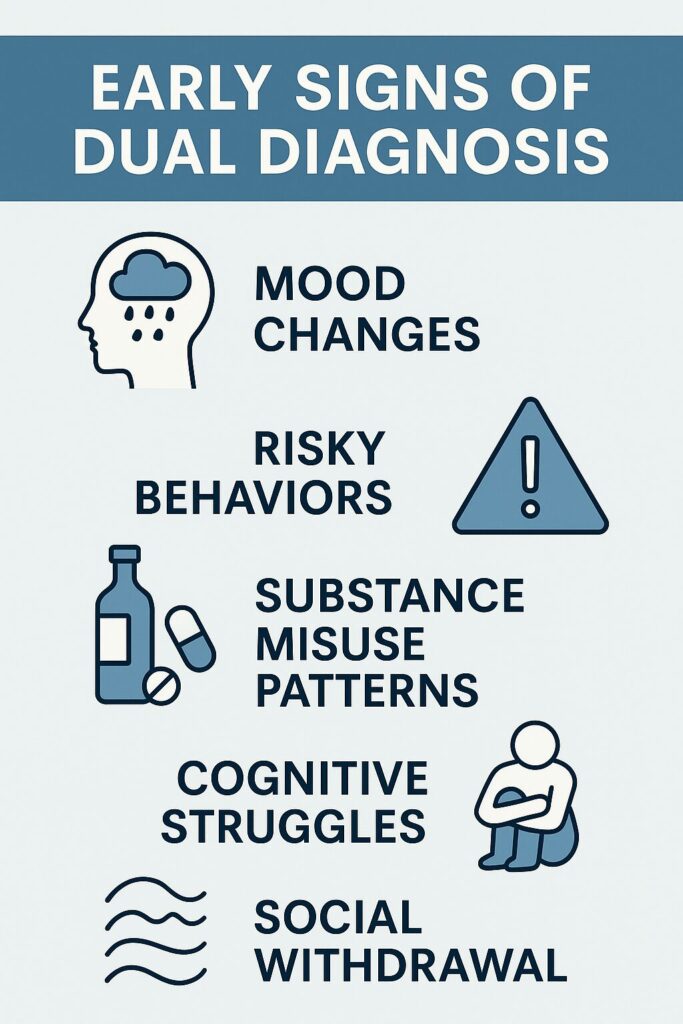
Behavior changes are often the first clues that something deeper is happening. The person may pull away from loved ones without clear reason. They may lose interest in activities they once enjoyed. Small daily routines begin to shift.
Sleep schedules change, appetite becomes irregular, and emotional reactions may feel unpredictable. Some people feel restless at night, while others sleep long hours during the day. These behavior changes often reflect underlying emotional distress that the person may not understand.
Hidden Behavioral Symptoms
Some symptoms stay hidden because the person tries to manage everything alone. Secretive behavior becomes more common. The person may lie about where they go or who they spend time with.
They may isolate during emotional episodes or avoid conversations about stress. Irritability increases, and the person may use substances more frequently to calm their mind. These early habits often grow stronger over time.
Mental and Emotional Red Flags
Cognitive and Emotional Symptoms
Dual diagnosis affects the way adults think and feel. Many people experience difficulty concentrating, racing thoughts, or persistent mental fog.
Mood swings appear without clear triggers. The person may feel hopeless or numb. Panic can come on suddenly, and emotions may feel overwhelming. When mental health symptoms increase, people often turn to substances for relief.
Mental Health Symptoms Made Worse by Substance Use
Substance use often intensifies anxiety and depression. Emotional lows feel deeper, and emotional highs feel unstable. Some adults begin to experience suicidal thoughts or intense fear.
Others lose impulse control and make choices they regret later. When emotional symptoms worsen after substance use, it is a strong sign of a co occurring disorder.
Physical Symptoms Linked to Dual Diagnosis
Body Changes and Physical Warning Signs
Dual diagnosis often affects the body. Some people experience sudden changes in weight. Others deal with persistent headaches or body aches.
Shaking hands or tremors appear after periods of substance use. Hygiene may decline, and the person may struggle to maintain daily routines. Low energy and sudden bursts of restlessness are also common.
Substance Use Warning Signs
Substance Related Behaviors
Some adults begin using substances more frequently. They may drink or use alone, or they may use larger amounts than before. Substances become a way to escape emotions.
Cravings increase, and tolerance rises. The person may mix substances or engage in risky behavior. They may feel unable to control their use even when they want to stop.
Long Detailed List of Dual Diagnosis Symptoms
Emotional Symptoms
- Intense anxiety
- Fear and panic during stressful moments
- Irritability triggered by minor problems
- Feeling hopeless
- Feeling empty or numb
Cognitive Symptoms
- Difficulty focusing
- Scattered thoughts
- Confusion
- Poor decision making
- Trouble remembering conversations
Behavioral Symptoms
- Impulsive actions
- Risk taking
- Isolation from friends
- Avoiding responsibilities
- Sleeping too much
- Insomnia
- Angry reactions
- Loss of interest in hobbies
Physical Symptoms
- Shaking hands
- Body aches
- Sudden weight gain
- Sudden weight loss
- Fatigue
- Red eyes
- Digestive issues
- Poor hygiene
Substance Related Symptoms
- Using to feel normal
- Drinking or using alone
- Hiding substances
- Frequent hangovers
- Withdrawal symptoms
- Cravings
- Mixing substances
Environmental and Social Signs
Relationship Changes
Dual diagnosis affects relationships in powerful ways. The person may argue more often or withdraw from family. Trust breaks down, and emotional distance grows. Loved ones may notice changes before the person admits anything is wrong.
Workplace or Financial Changes
Many adults with dual diagnosis struggle at work. They may show up late or miss days entirely. Their performance changes, and coworkers may notice shifts in mood or behavior. Financial stress becomes more common. Impulsive spending increases, and money may disappear quickly.
How Co Occurring Disorders Develop Over Time
Dual diagnosis usually starts with mild symptoms. Stress becomes difficult to handle, and substance use becomes a way to cope. Over time, emotional instability increases.
Small problems become overwhelming. Symptoms grow stronger as the person turns to substances more frequently. This slow progression often makes early detection difficult, but recognizing the patterns helps people get support before symptoms escalate.
When to Seek Professional Help
Warning Signs That Require Early Intervention
It is important to seek help when symptoms become severe. Warning signs include suicidal thoughts, loss of control with substances, dangerous behavior, or emotional instability that affects daily life. If a person becomes a danger to themselves or others, immediate support is necessary.
How Dual Diagnosis Is Treated
Integrated Care
Dual diagnosis treatment requires a combined approach. Therapy helps people understand their thoughts and emotions. Medication can stabilize mood or reduce symptoms.
Substance use treatment provides detox support, accountability, and relapse prevention. Long term support helps people stay stable and rebuild their lives. When both conditions are treated together, recovery becomes more effective.
Conclusion
Early signs of dual diagnosis often appear slowly, but recognizing them can change the path of a person’s life.
Adults who understand these signs can seek help before symptoms turn into crisis situations.
Recovery is possible with support, and early detection provides the strongest foundation for long term health and emotional stability.
Thank you for reading and please seek help if you need it.
Questions and Answers for Early Signs of Dual Diagnosis in Adults
What is dual diagnosis in adults?
Dual diagnosis in adults means a person is living with both a mental health disorder and a substance use disorder at the same time. The conditions influence each other and often make symptoms more intense. People may struggle with things like depression, anxiety, trauma, or bipolar symptoms while also using alcohol or drugs to cope.
What are the earliest signs of dual diagnosis in adults?
The first signs usually include sudden mood changes, unusual withdrawal from normal activities, rising stress, increased alcohol or drug use, and visible changes in energy levels. Early symptoms also appear as unexplained anxiety, irritability, sleep problems, secretive behavior, and strong emotional shifts that feel out of control.
What mental health symptoms often appear first in dual diagnosis?
Adults may first show signs of depression, panic, emotional numbness, racing thoughts, paranoia, or constant worry. Many also experience emotional overwhelm, difficulty concentrating, memory issues, and a loss of interest in daily life. These symptoms can come and go, which is a common pattern with a co occurring disorder.
What substance related signs suggest a dual diagnosis is developing?
Early substance related signs include drinking more than usual, misusing prescription medication, using drugs to relax, hiding substances, frequent hangovers, or constant cravings. Adults may also avoid loved ones, skip responsibilities, or take more risks than normal because of substance use.
How do dual diagnosis symptoms differ from regular addiction symptoms?
Dual diagnosis symptoms affect the mind and emotions on a deeper level. A person may feel depressed, anxious, angry, or emotionally unstable even when they are not using substances. Their moods may swing quickly. They may isolate, overthink, or feel overwhelmed long before a substance issue becomes obvious.
Can dual diagnosis symptoms look like normal stress?
Yes. Many early warning signs look like simple stress. Trouble sleeping, irritability, tension, or emotional exhaustion may appear harmless at first. When these symptoms combine with increased substance use, avoidance, or impulsive behaviors, it becomes more likely a dual diagnosis is forming.
Why is early detection of dual diagnosis so important?
Early detection prevents symptoms from becoming severe. Adults who receive support early have better recovery outcomes, lower relapse rates, and fewer health complications. Early treatment also helps rebuild daily routines, relationships, and emotional stability before major impairments set in.
What causes dual diagnosis in adults?
Dual diagnosis often develops from a mix of genetic risk, trauma, chronic stress, long term substance misuse, untreated mental health disorders, and environmental pressures. A family history of addiction or mental illness also raises risk. These factors interact and make symptoms more difficult to manage without support.
How does untreated mental illness increase the risk of addiction?
People may use alcohol or drugs to calm their mind, avoid uncomfortable emotions, or escape stress. This coping method works temporarily but creates chemical changes in the brain that lead to addiction. Untreated mental illness also increases impulsivity and lowers emotional resilience, which makes substance misuse more likely.
How does addiction make mental health symptoms worse?
Addiction increases anxiety, depression, mood swings, paranoia, and emotional instability. Substances interfere with brain chemistry and reduce a person’s ability to cope with stress. Over time, addiction intensifies mental health symptoms and makes treatment more challenging.
What are red flags that a loved one may have a dual diagnosis?
Common red flags include dramatic mood changes, social withdrawal, secretive behavior, skipping work, hiding alcohol or drugs, panic episodes, and emotional explosions. You may also notice weight changes, sleep problems, memory issues, financial struggles, or a loss of interest in hobbies.
How can you tell the difference between addiction and a mental disorder?
Addiction is primarily driven by cravings, tolerance, withdrawal, and compulsive use. Mental disorders are driven by emotional, cognitive, and behavioral symptoms like sadness, fear, irritability, or restlessness. When both sets of symptoms appear together, a dual diagnosis becomes more likely.
What mental health disorders are most common in dual diagnosis cases?
Depression, anxiety disorders, PTSD, bipolar disorder, personality disorders, eating disorders, and ADHD are among the most common. Many adults also experience chronic stress, unresolved trauma, or mood instability before substance use becomes a problem.
What substances are most commonly linked to dual diagnosis?
Alcohol, opioids, benzodiazepines, cocaine, methamphetamine, cannabis, and prescription stimulants are the most common substances involved. Many adults with anxiety or trauma rely on alcohol or sedatives to calm the mind, while those with depression or ADHD may misuse stimulants.
Does dual diagnosis always involve addiction?
Not always. Some adults misuse substances without meeting the full criteria for addiction. Even mild misuse mixed with untreated mental health symptoms can qualify as dual diagnosis. The key factor is that both conditions exist at the same time and influence each other.
How is dual diagnosis treated?
Treatment combines mental health therapy, addiction counseling, medication management, lifestyle support, and long term recovery planning. Integrated treatment programs work best because they address both conditions together. Therapy approaches like CBT, DBT, trauma therapy, and motivational interviewing are often used.
Can adults recover from dual diagnosis?
Yes. Recovery is possible with proper support. Many people rebuild their emotional health, restore balance, and return to stable routines. Early treatment leads to better results, but adults can recover at any stage when they have consistent care, community support, and healthy coping strategies.
What steps should someone take if they suspect they have a dual diagnosis?
Start with a mental health evaluation. Speak with a licensed therapist, addiction counselor, or primary care doctor. A professional can identify symptoms, diagnose conditions, and create a treatment plan. Early action reduces complications and increases the chance of long term recovery.
How do families support someone with a dual diagnosis?
Families can offer emotional support, encourage treatment, create structure, reduce triggers, and stay patient. They can also educate themselves about addiction and mental health, which helps reduce frustration and misunderstandings. Compassion and consistency make a major difference.
Are there self help strategies for managing early dual diagnosis symptoms?
Yes. Healthy routines, sleep, stress reduction, mindfulness, physical activity, peer support groups, and reducing substance use can help. However, these strategies work best when combined with professional treatment because dual diagnosis involves complex mental and physical symptoms.
Does dual diagnosis increase the risk of relapse?
Yes. When mental health symptoms go untreated, they increase cravings and emotional triggers that lead to relapse. Integrated treatment helps reduce the risk by addressing both the addiction and the underlying mental health condition.
Who is most at risk for developing a dual diagnosis?
Adults with a family history of addiction or mental illness, trauma survivors, people living with chronic stress, individuals with untreated depression or anxiety, and people who use substances to cope are the most at risk. Social isolation and unstable living conditions also increase risk.
Reliable Website References About Early Signs of Dual Diagnosis in Adults
1. Cleveland Clinic – Dual Diagnosis (Co Occurring Disorders)
A trusted medical resource explaining what dual diagnosis means, early symptoms, risk factors, and when to seek professional help.
2. SAMHSA – Co Occurring Disorders: Mental Health and Substance Use
The official Substance Abuse and Mental Health Services Administration guide covering signs, causes, screening tools, and treatment options.
3. NIMH – Substance Use and Co Occurring Mental Health Disorders
National Institute of Mental Health page outlining how mental illness and substance use overlap, with early warning signs and treatment insights.
4. HelpGuide – Dual Diagnosis: Substance Abuse and Mental Health
A reputable nonprofit resource explaining symptoms, emotional patterns, behavioral warning signs, and practical ways families can support loved ones.
✅ Related Articles from The Mental Health Blogger
⭐ Understanding the Link Between Mental Health and Addiction
This article explains how mental health disorders and substance misuse often interact, and why adults with untreated anxiety, depression, trauma, or mood disorders may turn to substances to cope.
⭐ How Is ADHD Different in Adult Women? Understanding Key Symptoms and Challenges
While focused on ADHD, this article includes overlapping mental health symptoms, emotional dysregulation, and lifestyle stressors that can contribute to undiagnosed dual diagnosis in adults.