Contents
- 1 Gender Identity Therapist Near Me: How to Find Affirming Local Support
- 2 What a Gender Identity Therapist Does
- 3 Why Someone Searches for a Gender Identity Therapist Near Me
- 4 How to Find a Gender Identity Therapist Near Me
- 5 Step 1: Start With LGBTQ Friendly Directories
- 6 Step 2: Look for Therapists Who Use Affirming Language
- 7 Step 3: Check for Specialized Training
- 8 Step 4: Read Reviews and Client Experiences
- 9 Step 5: Schedule a Consultation
- 10 What to Expect in Your First Session
- 11 Types of Therapy That Support Gender Identity
- 12 How Therapy Helps During Transition
- 13 How to Tell if a Therapist Is Truly LGBTQ Affirming
- 14 Local and Online Gender Identity Therapists
- 15 Cost, Insurance, and Accessibility
- 16 Additional Resources for Gender Identity Support
- 17 Conclusion
- 18 More Local Ways to Find a Gender Identity Therapist Near Me
- 19 More Online Gender Identity Therapists and Platforms
- 20 FAQ: Gender Identity Therapist Near Me | Questions and Answers for Gender Affirming Support
- 21 Important Website References
Gender Identity Therapist Near Me: How to Find Affirming Local Support
A Complete Guide to Finding Supportive, Gender Affirming Therapists in Your Area
Looking for a gender identity therapist near you? Discover trusted, LGBTQ friendly mental-health professionals who support gender exploration, identity questions, and transitioning. Get local help, safe guidance, and affirming care today.
Searching for a gender identity therapist near me is an important step for anyone who wants support during a personal journey of discovery and self understanding.
Many people start this search when they are exploring their identity, dealing with stress, or trying to understand feelings related to gender. This search can feel overwhelming in the beginning.
You want someone who listens, understands, and respects you. You want a therapist who offers a safe space where you can talk freely without judgment. This guide gives you everything you need to find real support, real answers, and real connection in your area.
A gender identity therapist provides emotional support and mental health guidance for people who want to explore gender, understand personal feelings, or move through a transition.
These therapists understand that every journey is different. They know each person has a unique story, unique background, and unique struggles.
When you find the right therapist, you also find someone who helps you move forward with clarity and confidence. This detailed guide will help you find the best options near you and understand what to expect every step of the way.
What a Gender Identity Therapist Does
A gender identity therapist does much more than answer questions about gender. They provide emotional support, mental health tools, and practical guidance for every stage of exploration or transition.
These therapists help people feel understood and supported. They work with people who are questioning their identity, dealing with dysphoria, experiencing social pressure, or considering social or medical transition.
Their role is to help you understand yourself and navigate your feelings in a safe and supportive environment.
A gender identity therapist works with people of all ages, including teens, adults, and older adults. They support the LGBTQ community, transgender people, nonbinary people, and anyone who feels uncertain about their identity.
They also work with families, partners, and caregivers. When loved ones want to learn how to support someone during transition, a therapist can help them understand what to expect.
A gender identity therapist may also help people manage anxiety, depression, stress, trauma, or emotional struggles that commonly appear during gender exploration.
These struggles can come from social pressure, family conflict, workplace issues, or internal confusion. A therapist helps you express your emotions in a healthy way and helps you find solutions that match your goals.
Key Responsibilities of a Gender Identity Therapist
- They create a safe and supportive environment where you can share anything without judgment.
- They help you understand gender dysphoria and explore identity questions with clarity.
- They support people during social or medical transition and help them navigate emotional challenges.
- They guide you through coming out to family, friends, or coworkers with confidence.
- They offer coping tools to manage anxiety, depression, and emotional distress.
- They connect you to local LGBTQ resources, support groups, and healthcare providers.
- They write letters for hormone therapy or surgical procedures when needed and allowed under local standards.
Each responsibility supports your mental health and emotional wellbeing. When you work with a gender identity therapist, you gain someone who understands the emotional challenges of exploring gender and someone who helps you build strength and resilience.
What is Gender Identity?
Why Someone Searches for a Gender Identity Therapist Near Me
People search for a gender identity therapist for many personal reasons. Some people want clarity during a confusing time. Others want emotional support while dealing with dysphoria or stress.
Some want someone who can help them understand whether transition feels right for them. Many people search because they want a therapist who truly understands LGBTQ experiences and offers a validating space where they can talk freely.
A gender identity therapist helps you explore your thoughts with honesty. They help you understand your emotions without fear of being misunderstood. They help you make decisions at your own pace. You never feel pressured, rushed, or judged during sessions.
People also search for a gender identity therapist near me because local therapists offer a deeper connection to community resources. Local support means you have access to real LGBTQ centers, clinics, and support groups. This makes it easier to find medical providers, legal support, and safe community spaces near you.
Common Reasons People Seek Support
- People who are questioning their gender identity and want a supportive environment to explore their feelings.
- People who experience gender dysphoria and want help understanding how to manage emotional discomfort.
- People who want to come out to loved ones but feel unsure how to start.
- People who are preparing for social transition or medical transition.
- People who need letters for hormone therapy or surgical procedures.
- People who experience anxiety, depression, stress, or trauma related to identity.
- People who face discrimination or fear and want coping tools to handle these experiences.
- Families or partners who want to learn how to support a loved one during transition.
Every story is different, and every reason is valid. When you work with the right therapist, you feel supported, seen, and understood.
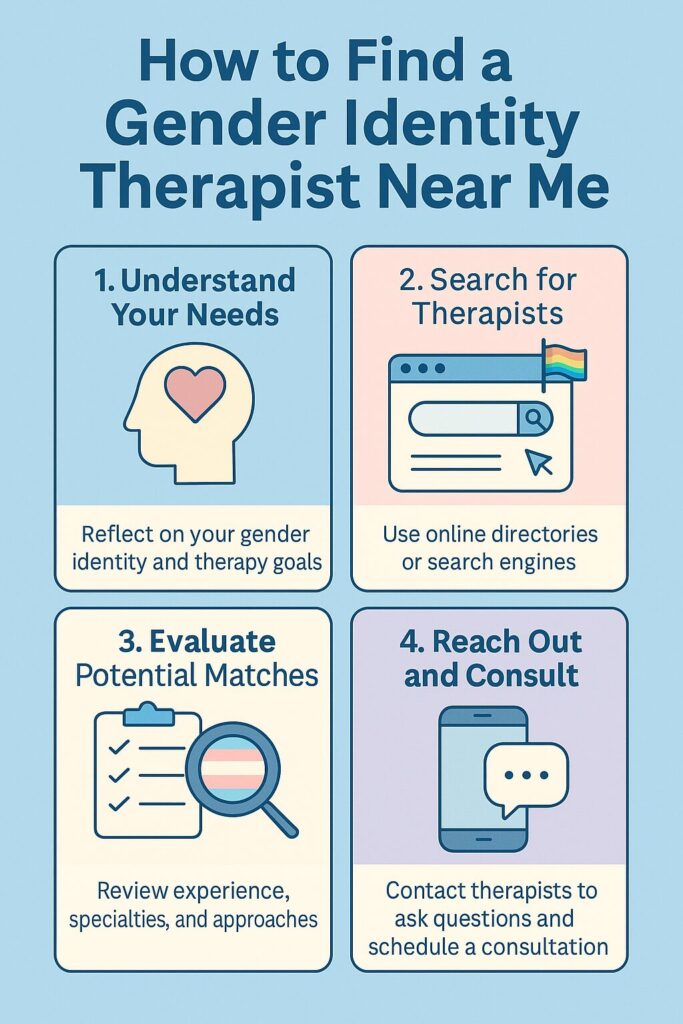
How to Find a Gender Identity Therapist Near Me

Finding the right therapist takes time, patience, and honest reflection. You want someone who makes you feel comfortable. You want someone who understands your experiences and respects your identity fully. A strong match creates trust and safety. These qualities make a major difference in your overall mental health journey.
The First Steps Are:
- Search for Gender Identity Therapist in Your Area, City, State.
- Search Online for Gender Identity Therapists in Your Area, City and State.
Therapists who specialize in gender identity often describe themselves as gender affirming, LGBTQ friendly, or trained in gender diverse care.
These descriptions matter because they show the therapist understands the emotional and social aspects of gender identity.
You want someone who uses inclusive language and understands your lived experiences. You want someone who sees gender diversity as a natural part of human life.
Below is a step by step guide that will help you find a therapist who meets your needs in your local area.
Step 1: Start With LGBTQ Friendly Directories
The quickest way to find a supportive therapist is to use trusted directories that list gender affirming providers. These directories allow you to filter therapists by location, specialty, insurance, and experience.
Many of these websites include detailed profiles that explain a therapist’s approach, training, and understanding of LGBTQ care. When you use these directories, you can narrow down your list to providers who align with your goals.
Directories to Check
- Psychology Today with the Gender Identity specialty filter
- LGBTQ Nation therapy and mental health resources
- Local Gender Identity Therapist in Your City or State.
- WPATH provider listings
- Local LGBTQ community center therapist listings
- The Trevor Project network of affirming mental health providers
- Insurance provider portals with LGBTQ affirming filters
These directories help you find therapists who have real world experience working with transgender and nonbinary clients. This creates a solid starting point for your search.
I have also include detailed lists of ways to find more local and online gender identity therapists below the conclusion.
Step 2: Look for Therapists Who Use Affirming Language
A therapist’s website or profile is a reflection of their approach. Pay attention to the language they use. Affirming language shows that the therapist respects all identities and understands gender diversity. You should look for signs of compassion, inclusivity, and respect.
When a therapist uses current language and avoids outdated or stigmatizing terms, they show that they understand the lived experiences of gender diverse people. Language matters in therapy, and the right language helps build trust and emotional safety.
Signs of Affirming Language
- Mention of gender affirming therapy
- Clear support for transgender, nonbinary, and gender questioning clients
- Use of correct pronouns in their biography or profile
- Mention of LGBTQ mental health training
- Inclusive phrasing that shows respect for every identity
- Explanation of transition support services
These signals show that the therapist is educated, compassionate, and prepared to support you during your journey.
Step 3: Check for Specialized Training
Experience matters when choosing a therapist. A gender identity therapist should have specialized training in LGBTQ mental health or gender diverse care.
Many therapists undergo continuing education to stay up to date with modern gender research and best practices. This training helps them understand complex emotional and social experiences that may not appear in general mental health training.
You should look for training that shows the therapist understands gender dysphoria, transition support, trauma care, and LGBTQ counseling.
Training to Look For
- WPATH Standards of Care training
- LGBTQ mental health certifications
- Trauma informed therapy training
- Experience with transgender youth or adults
- Gender diverse client experience that spans different ages
- College level or professional coursework on gender identity
Specialized training creates a deeper understanding of what clients need during gender exploration. It also builds confidence and shows a therapist is dedicated to providing inclusive care.
Step 4: Read Reviews and Client Experiences
Reviews offer insight into how a therapist treats their clients. They give you real feedback from people who have worked with the therapist. When reading reviews, look for comments about respect, safety, and emotional comfort.
Pay attention to reviews written by transgender or nonbinary clients, because these reviews offer the clearest picture of the therapist’s affirming style.
Reviews help you understand how the therapist communicates, how they support clients during transition, and how they handle sensitive topics.
Important Review Details
- Respect for pronouns
- Show of compassion and emotional support
- Experience supporting transgender and nonbinary clients
- Clear and honest communication
- Ability to create a safe environment
- Understanding of LGBTQ experiences
- No signs of judgment or negativity
A therapist with strong reviews creates a safer, more supportive environment for your mental health journey.
Step 5: Schedule a Consultation
A consultation is one of the most important steps in choosing a therapist. Many therapists offer free consultations to help you get a sense of their approach and personality. During this meeting, you can ask questions and see if you feel comfortable. A consultation helps you understand whether the therapist is a good match for your needs.
You can ask about their experience, their approach, and how they support clients during gender exploration. You can also ask about their comfort level with LGBTQ issues, their views on gender diversity, and how they help clients during transition.
Questions to Ask
- How long have you worked with transgender and nonbinary clients
- What is your approach to gender affirming therapy
- Do you assist with social or medical transition support
- Do you help clients manage dysphoria
- Do you have experience with trauma informed care
- How do you help clients handle discrimination or emotional stress
- What is your process for writing letters for medical procedures
A consultation gives you clarity and helps you decide whether you feel emotionally safe with the therapist.
What to Expect in Your First Session
The first session with a gender identity therapist focuses on understanding your story. You will talk about your goals, your feelings, your challenges, and your hopes.
The therapist will ask questions to understand who you are and what you want from therapy. This session is a chance for you to express yourself at your own pace.
You might talk about your gender identity, your emotional struggles, your family dynamics, or your social experiences. You may also discuss past therapy experiences, support from friends, or any concerns that feel important. This session sets the foundation for future meetings.
Common Topics in the First Session
- Your personal identity story
- Your emotional health and mental wellbeing
- Your support system, including friends and family
- Any stress or trauma related to identity
- Dysphoria and related triggers
- Goals for therapy and personal growth
- Social transition questions
- Questions about medical transition or change
The first session should leave you feeling supported, respected, and understood. A good therapist listens closely and gives you space to share your truth.
Types of Therapy That Support Gender Identity
Different therapy styles help people with different needs. A gender identity therapist uses a mix of methods to support you emotionally and mentally. Each approach offers something different, and the therapist chooses the best approach for your situation.
Therapy Methods Often Used
- Gender affirming therapy
- Cognitive Behavioral Therapy
- Trauma informed therapy
- Internal Family Systems
- Mindfulness based therapy
- Family therapy
- Couples therapy
Each method focuses on emotional strength, personal understanding, and resilience.
Gender affirming therapy helps you understand and express your identity. Cognitive Behavioral Therapy helps you challenge negative thoughts related to stigma or fear.
Trauma informed therapy helps people who have experienced discrimination or emotional harm. Internal Family Systems helps you understand different emotional parts inside yourself.
Mindfulness helps reduce stress and supports emotional balance. Family therapy supports loved ones who want to learn and grow. Couples therapy helps partners strengthen their relationship during transition.
How Therapy Helps During Transition
Transition is a deeply personal process. Therapy helps you move through this process with emotional support and clear guidance. A therapist helps you explore your readiness for transition, understand dysphoria, and build confidence. They also help you navigate conversations with family, friends, and coworkers.
If you are considering medical transition, a therapist can guide you toward resources and providers in your area. They can help you understand the emotional changes that come with transition. They can help you stay grounded and supported through every step.
Ways a Therapist Helps During Transition
- They guide you through emotional preparation for transition.
- IThey help you explore your identity with clarity and self compassion.
- They support conversations with loved ones about your identity.
- They help you manage stress or worry during social transition.
- They provide coping tools to handle discrimination or fear.
- They assist with letters for hormone therapy or surgical care.
Therapy creates a place where you can talk freely about your hopes and concerns during transition. It helps you feel understood and emotionally prepared.
How to Tell if a Therapist Is Truly LGBTQ Affirming
Not every therapist who claims to be LGBTQ friendly actually provides affirming care. Some may lack training. Others may use outdated language. It is important to know how to identify a therapist who supports your identity without judgment.
Signs of a Good Match
- The therapist uses correct pronouns without hesitation.
- They understand gender diversity beyond the male and female binary.
- They let you explore identity at your own pace.
- They never pressure you to make decisions.
- They have real experience with transgender and nonbinary clients.
- They use language that feels modern and respectful.
Red Flags to Watch For
- The therapist misgenders you repeatedly.
- They avoid using your pronouns.
- They suggest identity confusion as a problem instead of an experience.
- They lack understanding of dysphoria.
- They resist discussions about transition.
- They focus too heavily on diagnosis instead of support.
A truly affirming therapist creates emotional safety and supports you without judgment.
Local and Online Gender Identity Therapists
You can choose between local in person therapy and online therapy. Both options have benefits. Many people choose local therapists because they offer real world support and community connection. Others choose online therapy because it gives them access to more specialists.
Benefits of Local Therapy
- You meet face to face and build a personal connection.
- You gain access to local LGBTQ resources.
- You receive referrals to local clinics and support groups.
- You become part of a supportive community.
Benefits of Online Therapy
- You get access to therapists across the country.
- You avoid travel and save time.
- You get greater privacy if you need it.
- You have more flexibility in scheduling.
Both options are valid. Choose the option that feels right for your needs.
Cost, Insurance, and Accessibility
The cost of therapy depends on where you live, the therapist’s experience, and insurance coverage. Some therapists accept insurance. Others use private pay. Many LGBTQ centers offer sliding scale options or free counseling for those in need.
Cost Factors to Consider
- Insurance copays
- Out of pocket fees
- Sliding scale payment plans
- Free or low cost community support
Accessibility Considerations
If cost is a concern, LGBTQ centers and nonprofit clinics often provide financial support for therapy. Some online therapy platforms also offer low cost options. Many therapists work with clients who need financial flexibility. Do not hesitate to ask about payment options during your consultation.
Additional Resources for Gender Identity Support
Therapy is not the only form of support. Many people find comfort in community groups, educational websites, and support centers. These resources help you feel connected and informed. They also provide safe places where you can meet others who share similar experiences.
Helpful Resources
- Local LGBTQ community centers
- Online LGBTQ support groups
- Gender identity education websites
- Crisis hotlines for emotional support
- National LGBTQ organizations
- WPATH Standards of Care guides
- Youth and adult LGBTQ advocacy groups
These resources strengthen emotional health and help you find community support.
Conclusion
Finding a gender identity therapist near me helps you gain clarity, emotional support, and personal strength. The right therapist helps you explore your identity, build confidence, and navigate transition with care.
They guide you through challenges, help you find answers, and offer tools for emotional wellbeing. Whether you choose a local therapist or an online provider, you deserve support that helps you feel safe and validated.
You deserve a therapist who listens, respects you, and understands your journey. With this detailed guide, you can begin your search with confidence and find someone who supports your identity every step of the way.
Thank you for reading.
More Local Ways to Find a Gender Identity Therapist Near Me
1. Search Local LGBTQ Community Centers
Many LGBTQ community centers keep updated lists of gender affirming therapists. These centers often partner with local counselors, clinics, and mental health providers. When you contact them, you can ask about therapists who specialize in transgender counseling, nonbinary support, gender exploration, and transition guidance.
Why this works:
Community centers already understand the needs of LGBTQ people and connect you directly with trusted professionals.
2. Ask Local LGBTQ Advocacy Groups for Referrals
LGBTQ advocacy groups often maintain private referral networks for safe and affirming therapists. These lists are usually more accurate because they come from real people in your community who have worked with these therapists before.
Examples of good groups to contact:
- Local Pride organizations
- Transgender support groups
- Nonbinary community circles
- University LGBTQ student groups
- Queer wellness groups
3. Contact Local Universities or College Counseling Centers
Universities often employ therapists trained in gender identity and LGBTQ counseling. Even if you are not a student, counseling departments sometimes maintain public resource lists. You can request a local referral to a gender specialist.
Why this helps:
Universities stay up to date with modern research, gender studies, and inclusive care, which leads to strong therapist recommendations.
4. Check Local Health Clinics With LGBTQ Friendly Services
Some primary care clinics, walk in clinics, and general health centers keep lists of gender affirming mental health providers. This is especially common in cities that offer LGBTQ health programs or gender affirming medical care.
Look for:
- Family clinics with LGBTQ programs
- Gender health clinics
- Youth wellness clinics
- Reproductive health centers that support gender diverse people
5. Visit Online Therapy Platforms With Gender Filters
Some therapy platforms allow you to filter therapists by specialties related to transgender support or gender identity. These platforms often provide detailed therapist profiles, photos, and direct messaging options.
Examples of platforms that help you filter for:
- Gender identity support
- LGBTQ counseling
- Transgender therapy
- Queer mental health specialists
6. Ask Your Primary Care Provider for Recommendations
Sometimes your primary care doctor already knows mental health providers who specialize in gender identity. Doctors often network with therapists and can refer you to a gender affirming specialist who accepts your insurance.
Tip: Ask directly for someone with experience in transgender counseling or gender diverse care.
7. Search Local Mental Health Facebook Groups
Many cities and regions have local Facebook groups focused on mental health support. These groups often share recommendations, reviews, and personal experiences with specific therapists.
Try searching:
- Your city name plus the words mental health support
- Your city name plus LGBTQ support group
- Your city name plus gender identity group
These groups can provide honest feedback from real community members.
8. Use Local Subreddits and Online Forums
Online forums like Reddit have local subreddits where residents share helpful recommendations. You can ask for a gender identity therapist near you and get suggestions from people who live in your area.
Search terms to use:
- Gender identity therapy
- Transgender counseling
- Nonbinary support therapist
- LGBTQ affirming therapist
9. Ask for Recommendations in Queer Discord Servers
Many LGBTQ Discord communities have channels for mental health resources. Members often share therapist recommendations and reviews for local providers.
Why this works:
These communities are active, diverse, and very supportive. People openly share safe and affirming resources.
10. Check Insurance Provider Directories for LGBTQ Specialists
Your insurance provider may list therapists who specialize in gender identity, transgender mental health, or LGBTQ counseling. This can save money and help you find someone quickly.
Tip: Search specifically for therapists who list gender identity and LGBTQ support in their specialties.
11. Search for Gender Identity Workshops or Community Events
Local LGBTQ events often include mental health providers who host workshops or group discussions. Attending these events helps you meet therapists in a casual environment and learn about their experience.
Events to look for:
- Pride month workshops
- LGBTQ youth meetups
- Transgender day of visibility events
- Nonbinary support meetups
12. Visit Local Gender Support Groups
Support groups for transgender or gender questioning people often have therapist recommendations. Members of these groups can tell you which therapists are supportive, which ones accept insurance, and which ones truly understand gender identity.
13. Look for Gender Identity Specialists in Telehealth Networks
Telehealth has expanded access to specialized care. Many gender affirming therapists work exclusively online and accept clients from your area. Even though sessions are online, they still count as local support if the therapist is licensed in your state.
Search for therapists who specialize in:
- Gender identity exploration
- Dysphoria support
- Transition guidance
- LGBTQ mental health
14. Check Local Nonprofits That Support LGBTQ Youth and Adults
Nonprofits often work directly with therapists and counselors. They may offer free or low cost counseling programs or maintain lists of trusted providers in your area.
Examples:
- Transgender advocacy nonprofits
- Youth LGBTQ programs
- Community family service centers
- Crisis support organizations
15. Ask Friends in the LGBTQ Community for Suggestions
Word of mouth remains one of the strongest ways to find a good therapist. If you feel comfortable, ask trusted friends who identify as transgender, nonbinary, queer, or LGBTQ for recommendations.
Why this helps:
People in the community often know who the most supportive therapists are.
16. Search Google With Long Tail Keywords
You can find very specific results by searching with long tail keyword phrases that match gender identity support.
Try searching phrases like:
- gender identity therapist near me
- transgender counselor in my area
- nonbinary friendly therapist near me
- LGBTQ mental health therapist in my city
- gender affirming therapy near me
These detailed searches bring up targeted results more quickly.
17. Check Psychology Graduate Schools in Your Area
Graduate programs in counseling or psychology often run public clinics where supervised interns provide therapy at low cost. These interns sometimes specialize in gender identity or LGBTQ mental health.
Why this helps:
You get access to fresh training, modern gender research, and lower cost therapy.
18. Explore Holistic Wellness Centers With Counseling Services
Some wellness centers offer mental health services alongside holistic support. These centers sometimes employ gender affirming therapists who understand gender diversity and mental wellbeing.
Look for centers that offer:
- Mindfulness therapy
- Trauma informed counseling
- LGBTQ friendly mental health programs
19. Ask Local Social Workers or Case Managers
Social workers often know which therapists are supportive of gender diverse clients. If you work with a case manager or social service agency, ask them for a referral.
20. Check Local Hospital Behavioral Health Departments
Hospitals often partner with mental health providers. Many hospital behavioral health departments maintain referral lists for gender identity therapists.
Why it helps:
Hospitals stay updated with active providers and can direct you to someone licensed in your area.
More Online Gender Identity Therapists and Platforms
BetterHelp Online Therapy
BetterHelp offers a large network of licensed therapists, many of whom specialize in gender identity, transgender counseling, and LGBTQ mental health. You can choose therapists with gender affirming experience and filter your preferences during sign up. Sessions are available by video, phone, or messaging. Many users choose BetterHelp for long term emotional support during gender exploration and social transition.
Talkspace LGBTQ Therapy
https://www.talkspace.com/lgbtq
Talkspace offers a dedicated LGBTQ counseling program that connects you with therapists trained in gender identity and queer mental health care. You can choose providers who understand transgender support, nonbinary identities, and gender diverse experiences. Talkspace offers video sessions, text therapy, and flexible scheduling, which helps people who want privacy and convenience.
LGBTQ Therapy Space
https://www.lgbtqtherapyspace.com
LGBTQ Therapy Space is a fully online platform that focuses on inclusive mental health care for LGBTQ individuals. Many of their therapists specialize in gender identity support and transgender care. You can book sessions with therapists who understand gender diverse lives, dysphoria, coming out, and transition related emotional needs. This service offers video therapy from licensed clinicians who work exclusively with the LGBTQ community.
Amwell Behavioral Health
Amwell provides online therapy with licensed mental health providers. Many of their therapists specialize in LGBTQ counseling and gender identity support. You can choose therapists trained in transgender mental health, nonbinary support, and affirming care. Amwell is known for working with health insurance providers, which helps reduce costs for many clients.
PlushCare Online Therapy
PlushCare offers online therapy sessions with licensed mental health professionals. They have therapists who work with gender diverse clients, help with gender exploration, and provide emotional support during transition. PlushCare is popular for people who want medical and mental health support in one place because they also provide online primary care.
SonderMind Online Therapy
SonderMind connects clients to licensed therapists who specialize in gender identity, transgender support, and LGBTQ mental health. Their platform allows you to match with therapists who accept your health insurance. Many users choose SonderMind because it offers a blend of online and in person options depending on your location.
Thriveworks Online Counseling
Thriveworks offers online therapy with therapists trained in gender affirming care. They support transgender clients, nonbinary clients, and people questioning their gender. Thriveworks provides video sessions and works with many insurance providers. Their therapists often have clinical experience with gender dysphoria, identity development, and transition support.
MDLive Behavioral Health
MDLive offers virtual therapy sessions with licensed clinicians. Some of their therapists specialize in LGBTQ counseling and gender identity support. This service is useful for people who want fast scheduling, simple access, and therapist options across many states.
Folx Health Mental Health Services
Folx Health is a gender affirming healthcare platform created for transgender and nonbinary people. They offer medical services, hormone therapy, and mental health support in one place. Folx connects clients with therapists trained specifically in gender identity care and LGBTQ emotional support. This is one of the most affirming and inclusive platforms available today.
The Trevor Project Counseling Services
https://www.thetrevorproject.org
While The Trevor Project focuses mainly on crisis support, they also maintain a wide resource network that connects people to online gender affirming therapists. Their counselors are trained to support LGBTQ youth who are experiencing emotional distress, gender questioning, or identity challenges.
Gay Therapy Center
https://www.thegaytherapycenter.com
The Gay Therapy Center offers online therapy with licensed clinicians who specialize in LGBTQ and gender identity support. They work with transgender clients, nonbinary clients, and people exploring their identity. They provide emotional support, coping strategies, and guidance during social or medical transition stages.
MyTransHealth
MyTransHealth is a service built for transgender health support. They connect people with online and local gender affirming therapists. They verify each provider before listing them and ensure they have experience with transgender mental health care.
Pride Counseling at Teen Counseling
https://www.teencounseling.com
Teen Counseling offers therapy for young people and has gender affirming therapists who specialize in adolescent gender identity support. This service helps teens who are exploring gender, experiencing dysphoria, or dealing with family concerns.
FAQ: Gender Identity Therapist Near Me | Questions and Answers for Gender Affirming Support
What does a gender identity therapist do
A gender identity therapist helps people explore their gender, understand emotional struggles, and find confidence in their identity. They support transgender, nonbinary, and gender questioning individuals.
They create a safe place where you can talk openly about your feelings. They help you understand gender dysphoria and guide you through stress, anxiety, or personal confusion.
They also support people during social or medical transition. Some therapists help with letters for hormone therapy or gender affirming surgery. Their main goal is to offer emotional support and help you understand who you are.
How do I find a gender identity therapist near me
You can find a gender identity therapist near you by searching LGBTQ affirming directories, online therapy platforms, and local mental health listings.
You can contact LGBTQ community centers, Pride groups, and advocacy networks for referrals. You can also search Google for long tail keywords like gender affirming therapist in my area or transgender counselor near me.
Many people also use insurance provider directories, university counseling departments, or local support groups to find trusted therapists. Asking friends in the LGBTQ community can also help you find someone supportive and experienced.
What should I look for in a gender affirming therapist
Look for a therapist who uses inclusive language and respects your pronouns. They should have training in gender identity, transgender support, and LGBTQ mental health.
A good therapist understands gender diversity and makes you feel safe. They should never pressure you into decisions or use outdated language.
You should look for someone who has experience with gender dysphoria, transition guidance, and emotional support for gender diverse clients. Reading reviews can help you understand how the therapist treats their clients.
Do I need a therapist for hormone therapy or surgery
Some medical providers require a letter from a therapist for hormone therapy or certain gender affirming surgeries. This depends on your location and on the provider.
Many therapists are familiar with this process and help clients prepare for medical transition. Some clinics follow informed consent models, which means you may not need a letter.
A therapist can still help you understand your emotions, prepare for changes, and manage stress during transition.
What should I expect in my first therapy session
In your first session, the therapist will ask about your story, your emotional needs, and your goals for therapy. They may ask about your identity, dysphoria, family life, relationships, and personal stress.
They will not pressure you to label yourself or make decisions. The first session helps the therapist understand your needs so they can support you in a way that feels comfortable and respectful. You should leave feeling heard and understood.
How can therapy help with gender dysphoria
Therapy helps you understand and manage the emotional discomfort that comes from gender dysphoria. A therapist teaches coping skills, grounding exercises, and emotional tools.
They help you explore what triggers dysphoria and how to find comfort in daily life. They also guide you through identity questions, social transition steps, and conversations with loved ones. Therapy helps you feel more in control and supported.
Are gender identity therapists trained to support nonbinary people
Yes. Many gender identity therapists are trained to support nonbinary clients. They understand that gender is not only male or female. They help nonbinary individuals explore identity, find confidence, and build self acceptance.
A gender affirming therapist understands the unique emotional challenges that nonbinary people may face, including pronoun concerns, social misunderstanding, and identity questioning.
Can online therapy help with gender identity questions
Yes. Online therapy is very helpful for gender identity questions. Many online therapists specialize in LGBTQ mental health and gender diverse support.
Online therapy provides privacy, comfort, and access to specialists who may not be available locally.
It allows you to connect with trained therapists who understand transgender and nonbinary experiences. For many people, online therapy is easier to access and feels safer.
How do I know if a therapist is LGBTQ friendly
A therapist is LGBTQ friendly when they use affirming language, respect pronouns, and show understanding of gender diversity. Their profile or website often mentions gender identity support, transgender counseling, and LGBTQ mental health.
They should have training in gender affirming care. They may also list experience with transition support or gender dysphoria. Reading reviews from LGBTQ clients helps you determine if they provide real affirming care.
What questions should I ask before choosing a therapist
You can ask questions like:
- Do you work with transgender and nonbinary clients
- How do you support gender exploration
- What is your experience with gender dysphoria
- Do you help clients with transition support
- Do you provide letters for hormone therapy or surgery
- How do you handle pronouns and inclusive language
- What is your approach to trauma and emotional stress
These questions help you understand the therapist’s experience and confirm whether they are the right match for you.
How long does gender identity therapy take
The length of therapy varies from person to person. Some people attend therapy for a few months to explore identity questions. Others attend therapy long term for emotional support, transition guidance, and ongoing mental health care.
There is no set timeline. Your personal goals will guide your journey. You can talk with your therapist about how often you want to meet and how long you want to continue.
What if I do not feel comfortable with the therapist
It is completely normal to change therapists if you do not feel comfortable. Therapy works best when you feel safe and respected.
You are allowed to try different therapists until you find someone who understands your needs. A gender affirming therapist will respect your decision and support your comfort.
Is therapy confidential for gender identity questions
Yes. Therapy is confidential. Therapists are required to protect your privacy. They cannot share your information unless there is a safety concern.
You can talk openly about your identity, feelings, and experiences without fear. Confidentiality helps you explore your identity with honesty and trust.
Can a therapist help me talk to my family about my identity
Yes. Many therapists help clients prepare for conversations with family. They teach communication tools, emotional grounding skills, and ways to express your identity with clarity.
Some therapists offer family sessions to support loved ones during transition or identity changes. These sessions help families understand your experience and offer stronger support.
Important Website References
1. Mayo Clinic
https://www.mayoclinic.org
Mayo Clinic offers trusted information about mental health, gender dysphoria, emotional wellness, and counseling services. Their articles provide factual, evidence based information that supports readers who want to understand gender identity, mental health treatment, and professional therapy options.
2. The Trevor Project
https://www.thetrevorproject.org
The Trevor Project is a leading national organization that offers crisis support, LGBTQ resources, and mental health guidance. Their site includes detailed gender identity education, research reports, and professional support resources for transgender and nonbinary individuals.
3. Human Rights Campaign
https://www.hrc.org
The Human Rights Campaign provides comprehensive resources for transgender and gender diverse individuals. Their site includes guides on gender identity, mental health support, coming out, transition steps, and LGBTQ equal rights. It is a trusted high authority source for inclusive education and affirming care.
-
 Fostering Well-being: A Comprehensive Guide to Understanding Mental Health in the Workplace
 -
Black Women's Mental Health Support Groups
-
LGBTQ Friendly Therapists Near Me
-
Coping Strategies for Managing Hallucinations and Distorted Thoughts in Daily Life
-
Anxiety vs Stress: How to Tell the Difference in Real Life Video