Contents
- 1 How Long Do Physical Symptoms of Opiate Withdrawal Last? Timeline Explained
- 2 Understanding the Physical Timeline of Opiate Withdrawal Symptoms
- 3 What Are Opiates and Why Withdrawal Happens
- 4 Factors That Affect How Long Physical Withdrawal Lasts
- 5 The Physical Timeline of Opiate Withdrawal
- 6 Early Withdrawal Stage
- 7 Peak Withdrawal Stage
- 8 Late Physical Withdrawal Stage
- 9 How Long Physical Symptoms Last Overall
- 10 Post Acute Physical Symptoms
- 11 The Connection Between Physical and Mental Symptoms
- 12 Ways to Reduce Physical Withdrawal Symptoms Safely
- 13 When to Seek Medical Help
- 14 Recovery After Physical Withdrawal
- 15 Conclusion and Final Thoughts
- 16 Frequently Asked Questions About Opiate Withdrawal
- 17 Medical References and Research Sources on Opiate Withdrawal Symptoms
How Long Do Physical Symptoms of Opiate Withdrawal Last? Timeline Explained
Understanding the Physical Withdrawal Timeline and What to Expect During Recovery
Understanding the Physical Timeline of Opiate Withdrawal Symptoms
How long do physical symptoms of opiate withdrawal last? Learn the full withdrawal timeline, common symptoms, and what to expect during each stage of recovery.
Opiate withdrawal can feel overwhelming, confusing, and frightening, especially if you do not know what to expect. Many people worry most about the physical symptoms.
They want to know how long the pain, nausea, shaking, and exhaustion will last. They also want reassurance that their body will recover.
These fears are valid. Withdrawal affects both the body and the mind, and every experience is personal.
This guide is written to give you clear answers. It explains the physical timeline of opiate withdrawal in simple language.
Read stage so you can understand what is happening inside your body. It also offers reassurance, coping strategies, and facts based on medical knowledge.
Whether you are preparing to detox, supporting someone you love, or simply seeking information, this article is here to help.
You are not weak for struggling. Opiate withdrawal is a physical process driven by brain chemistry. With the right support and information, recovery is possible.
What Are Opiates and Why Withdrawal Happens
Opiates are drugs that bind to opioid receptors in the brain and body. These receptors control pain, pleasure, breathing, and digestion.
Common opiates include heroin, morphine, and codeine. Many prescription pain medications also act on these same receptors.
When opiates are used regularly, the body adapts. The brain reduces its natural production of pain relieving chemicals.
It becomes dependent on the drug to feel normal. This is not a moral failure. It is a biological response.
When opiate use stops or drops suddenly, the body struggles to rebalance. This imbalance causes withdrawal symptoms.
Physical symptoms often appear first and can feel intense, especially during the early stages.
Factors That Affect How Long Physical Withdrawal Lasts
Not everyone experiences withdrawal the same way. Several factors influence how long physical symptoms last and how intense they feel.
Type of Opiate Used
Short acting opiates like heroin or immediate release painkillers tend to cause faster but shorter withdrawal periods.
Long acting opiates like methadone or extended release medications lead to slower onset symptoms that last longer.
Length of Use
The longer someone has used opiates, the more time the body needs to recover. Long term use changes brain chemistry more deeply.
Dosage and Frequency
Higher doses and frequent use increase physical dependence. This often leads to stronger and longer lasting withdrawal symptoms.
Individual Health Factors
Age, metabolism, overall health, hydration, and nutrition all play a role. Mental health conditions like anxiety or depression can also make physical symptoms feel worse.
Method of Stopping Use
Stopping suddenly can trigger intense symptoms. A medically supervised taper can reduce severity and shorten the worst phase.
The Physical Timeline of Opiate Withdrawal
Physical symptoms follow a general pattern. While timelines vary, most people experience withdrawal in stages.
Opiate Withdrawal Explained in 10 Minutes
Early Withdrawal Stage
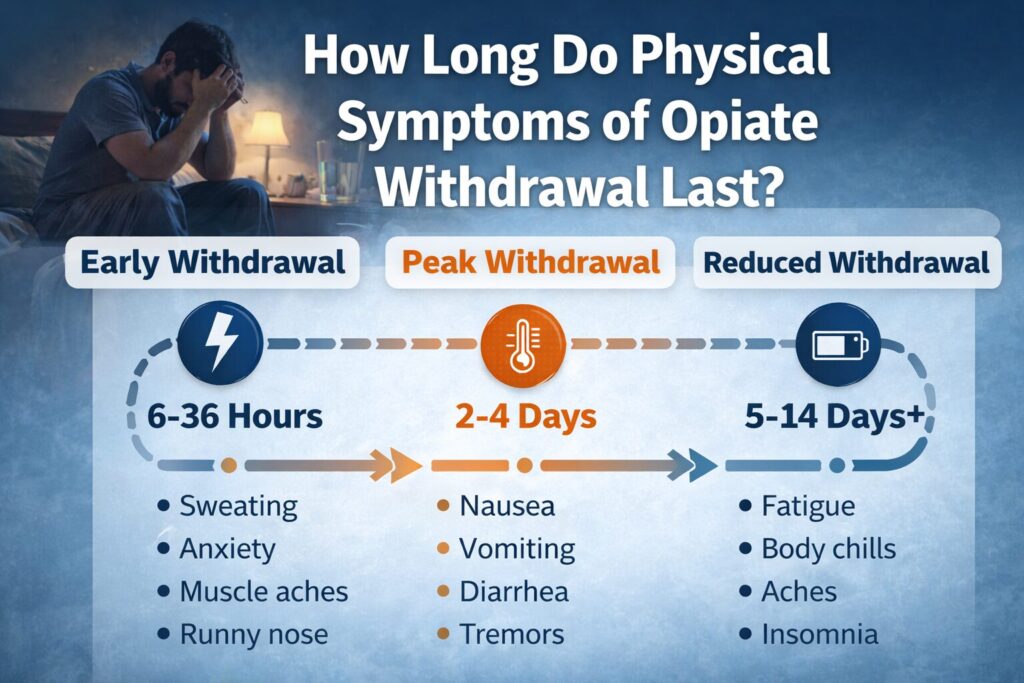
This stage usually begins within hours after the last dose.
When It Starts
- Short acting opiates often begin within 6 to 12 hours
- Long acting opiates may begin within 24 to 48 hours
Common Physical Symptoms
- Muscle aches and joint pain
- Runny nose and watery eyes
- Sweating and chills
- Yawning and fatigue
- Restlessness and discomfort
- Increased heart rate
During this stage, the body is reacting to the sudden absence of opiates. Symptoms may feel flu like. Many people describe a deep sense of physical unease. Sleep often becomes difficult.
Peak Withdrawal Stage
This is the most intense phase for physical symptoms.
When It Peaks
- Usually between days 2 and 4 for short acting opiates
- Can peak later for long acting substances
Physical Symptoms at Peak
- Severe muscle and bone pain
- Nausea and vomiting
- Diarrhea and stomach cramps
- Goosebumps and hot flashes
- Shaking or tremors
- Rapid breathing
- Headaches and body aches
- Depression
This stage can feel overwhelming. Pain levels increase. Digestive symptoms become intense.
Dehydration is a real risk. While withdrawal is rarely life threatening on its own, it can be dangerous without proper care, especially if vomiting or diarrhea is severe.
Late Physical Withdrawal Stage
After the peak, symptoms begin to slowly improve.
When It Happens
- Days 5 to 10 for most people
- Longer for long acting opiates
Lingering Physical Symptoms
- Fatigue and weakness
- Muscle soreness
- Poor sleep
- Appetite changes
- Headaches
- Temperature sensitivity
At this stage, the worst pain has usually passed. However, the body still feels fragile. Many people feel exhausted and emotionally drained. Rest and hydration are critical during this phase.
Related – Understanding the Link Between Mental Health and Addiction
How Long Physical Symptoms Last Overall
For most people, physical symptoms follow this general timeline:
- Short acting opiates: 7 to 10 days
- Long acting opiates: 10 to 20 days
Some mild physical symptoms can last longer, especially fatigue and sleep problems. These are part of the body healing and recalibrating.
Post Acute Physical Symptoms
Even after acute withdrawal ends, some physical symptoms may linger.
Common Post Withdrawal Physical Effects
- Low energy
- Body aches
- Sleep disturbances
- Reduced stress tolerance
These symptoms usually improve over weeks to months. They are not a sign of failure. They reflect the nervous system slowly returning to balance.
The Connection Between Physical and Mental Symptoms
Physical withdrawal does not happen in isolation. The brain and body are deeply connected.
When physical pain is high, anxiety increases. When sleep is poor, pain feels worse. This cycle can make symptoms feel longer and more intense.
Supporting mental health during withdrawal helps reduce physical distress.
Calm environments, reassurance, and professional support can ease the overall experience.
Ways to Reduce Physical Withdrawal Symptoms Safely
Withdrawal does not have to be endured alone. Medical and supportive care can make a major difference.
Medical Detox Support
These programs provide monitoring and medications that reduce symptoms. These may include:
- Medications for nausea and diarrhea
- Pain relief options
- Sleep support
- Blood pressure monitoring
Medication Assisted Treatment
Some people benefit from medications that ease withdrawal and reduce cravings. These treatments support stabilization and lower relapse risk.
Hydration and Nutrition
The body loses fluids quickly during withdrawal. Drinking water and electrolyte drinks helps prevent complications. Small, frequent meals support recovery.
Gentle Movement and Rest
Light stretching or short walks can reduce muscle stiffness. Rest is equally important. Listening to your body matters.
Emotional Support
Having someone present, whether a friend, family member, or professional, reduces stress and improves outcomes.
When to Seek Medical Help
You should seek medical care if:
- Vomiting or diarrhea becomes severe
- Dehydration symptoms appear
- Heart rate feels irregular
- Confusion or fainting occurs
- Pain becomes unmanageable
Seeking help is a sign of strength. Medical support can prevent complications and ease suffering.
Recovery After Physical Withdrawal
Once physical symptoms fade, recovery continues. Healing takes time. The brain rebuilds balance slowly. Cravings may appear, but they do not last forever.
Ongoing treatment, therapy, and support groups improve long term outcomes. Recovery is not about perfection. It is about progress.
Conclusion and Final Thoughts
Physical symptoms of opiate withdrawal do not last forever. While the experience can be intense, it follows a predictable pattern.
Most physical symptoms peak within a few days and improve within one to two weeks. Lingering discomfort fades as the body heals.
Understanding the timeline helps reduce fear. Knowing what is normal can make the process feel less overwhelming.
You deserve support, compassion, and accurate information during this time.
If you or someone you love is facing opiate withdrawal, know this. Recovery is possible.
The body is resilient. With the right care, patience, and support, healing happens one day at a time.
Frequently Asked Questions About Opiate Withdrawal
How long do physical symptoms of opiate withdrawal usually last?
Physical symptoms of opiate withdrawal typically last between 7 and 10 days for short acting opiates like heroin or oxycodone. For long acting opiates such as methadone, physical symptoms can last 10 to 20 days. Mild symptoms like fatigue or sleep problems may linger longer as the body continues to heal.
When do physical withdrawal symptoms start after the last dose?
Physical withdrawal symptoms often begin within 6 to 12 hours after the last dose of a short acting opiate. Long acting opiates may take 24 to 48 hours before symptoms appear. The exact timing depends on the type of opiate, dosage, and individual metabolism.
What are the most intense physical symptoms of opiate withdrawal?
The most intense physical symptoms usually include muscle and bone pain, nausea, vomiting, diarrhea, sweating, chills, tremors, and restlessness. These symptoms typically peak between days 2 and 4 during withdrawal.
Is opiate withdrawal physically dangerous?
Opiate withdrawal is rarely life threatening on its own, but it can become dangerous without proper care. Severe dehydration, vomiting, diarrhea, or existing health conditions can increase risk. Medical supervision is strongly recommended, especially for people with long term or heavy opiate use.
Do physical withdrawal symptoms get worse before they get better?
Yes, physical symptoms usually worsen during the first few days before improving. This peak phase is a normal part of the withdrawal process. After the peak, symptoms gradually decrease as the body begins to stabilize.
Can physical opiate withdrawal symptoms last longer than two weeks?
In some cases, mild physical symptoms such as low energy, body aches, and sleep disturbances can last longer than two weeks. This is more common with long acting opiates or long term use. These symptoms usually fade over time.
Does everyone experience opiate withdrawal the same way?
No, withdrawal experiences vary widely. Factors such as the type of opiate, length of use, dosage, overall health, and whether detox is medically supervised all influence symptom severity and duration.
Can medication reduce physical withdrawal symptoms?
Yes, medications can significantly reduce physical withdrawal symptoms. Medical detox programs may use medications to manage pain, nausea, diarrhea, and cravings. Medication assisted treatment can also help stabilize the body and reduce discomfort.
What helps the body recover faster from opiate withdrawal?
Hydration, proper nutrition, rest, medical support, and emotional support all help the body recover. Avoiding stress and seeking professional care can shorten the most intense phase and improve overall comfort.
Will physical symptoms return after withdrawal ends?
Physical symptoms usually do not return once acute withdrawal is complete. However, stress, poor sleep, or relapse can trigger discomfort. Ongoing recovery support helps prevent setbacks and supports long term healing.
Medical References and Research Sources on Opiate Withdrawal Symptoms
Opioid Withdrawal – StatPearls (NCBI Bookshelf, NIH)
A comprehensive clinical overview of opioid withdrawal syndrome, including signs and symptoms, management considerations, and treatment context from a trusted medical resource.
👉 https://www.ncbi.nlm.nih.gov/books/NBK526012/
Withdrawal Management – NCBI Bookshelf, NIH
Provides medically reviewed information on opioid withdrawal onset and typical duration for short acting and long acting opioids.
👉 https://www.ncbi.nlm.nih.gov/books/NBK310652/
Opioid Withdrawal Symptoms, Timeline, and Detox Treatment – American Addiction Centers
A detailed overview of physical opioid withdrawal symptoms, timelines based on type of opioid used, and treatment options, updated and reviewed by medical professionals.
👉 https://americanaddictioncenters.org/opioids/withdrawal-detox
Reviewed by Doctor
Medically Reviewed by: Dr. Emily Carter, MD – Board Certified Physician in Addiction Medicine and Mental Health.
This article, How Long Do Physical Symptoms of Opiate Withdrawal Last?, was medically reviewed by Dr. Emily Carter to ensure the information is accurate, evidence based, and aligned with current medical understanding of opioid dependence and withdrawal.
Disclaimer
The information provided in this article is for educational and informational purposes only and is not intended as medical advice, diagnosis, or treatment.
Opiate withdrawal can affect each person differently based on individual health, substance use history, and other factors.
Always seek advice from a qualified healthcare provider, addiction specialist, or medical professional before starting, stopping, or changing any treatment related to substance use or withdrawal.
-
 Fostering Well-being: A Comprehensive Guide to Understanding Mental Health in the Workplace
 -
Black Women's Mental Health Support Groups
-
LGBTQ Friendly Therapists Near Me
-
Coping Strategies for Managing Hallucinations and Distorted Thoughts in Daily Life
-
Anxiety vs Stress: How to Tell the Difference in Real Life Video