Contents
- 1 Online Therapy for Mental Health Issues | Benefits, Platforms, and How It Works
- 1.1 Introduction to Online Therapy and Modern Mental Health Support
- 1.2 What Is Online Therapy
- 1.3 Who Can Benefit From Online Therapy
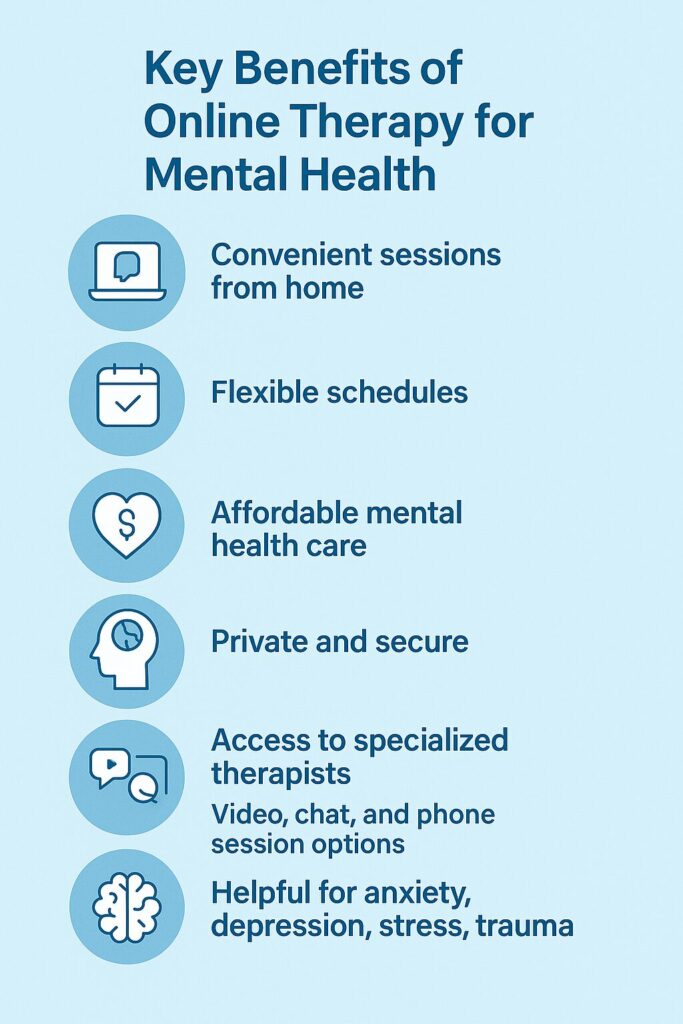
- 1.4 Benefits of Online Therapy
- 1.5 Types of Online Therapy
- 1.6 Step by Step Guide: How to Start Online Therapy
- 1.7 Online Therapy vs In Person Counseling
- 1.8 Evidence and Effectiveness of Online Therapy
- 1.9 Limitations of Online Therapy
- 1.10 Popular Online Therapy Platforms
- 1.11 BetterHelp
- 1.12 Talkspace
- 1.13 Online Therapy
- 1.14 Brightside
- 1.15 Amwell
- 1.16 Cerebral
- 1.17 ReGain for Couples
- 1.18 Faithful Counseling
- 1.19 Teen Counseling
- 1.20 Seven Cups
- 1.21 Thriveworks
- 1.22 Rethink My Therapy
- 1.23 MDLive
- 1.24 Monument
- 1.25 Lionrock
- 1.26 Is Online Therapy Right for You
- 1.27 Tips to Get the Most Out of Online Therapy
- 1.28 Conclusion
- 1.29 More Articles from The Mental Health Blogger
- 1.30 Frequently Asked Questions About Online Therapy
- 1.31 Related Website References
Online Therapy for Mental Health Issues | Benefits, Platforms, and How It Works
Introduction to Online Therapy and Modern Mental Health Support
Learn how online therapy supports anxiety, depression, stress, and trauma. Explore the benefits of virtual counseling, how to choose the right therapist, and why online mental health care is effective and affordable.
Online therapy has become one of the most trusted ways for people to get help for their mental health. Many people feel stressed, overwhelmed, or emotionally drained today, so they look for support that feels safe and accessible.
Online therapy gives people a private place to talk about their struggles without the pressure of walking into a clinic. It gives people a way to receive mental health support from their home, their car during lunch break, or even while traveling.
More people now choose online therapy because it fits into their daily life. It does not require a long commute or a waiting room. It also helps people who feel shy or nervous during face to face sessions. The rise of remote work has pushed mental health care into a digital space where people feel more comfortable.
Many individuals say they talk more freely in online sessions because they feel less judged. This has helped online therapy grow into a powerful tool for emotional support and mental wellness.
People with mental health challenges often feel alone. Online therapy makes the process easier by offering flexible sessions, supportive therapists, and simple ways to communicate.
These tools help people open up without fear, which leads to better healing and better mental health outcomes.
What Is Online Therapy
How Online Therapy Works and What to Expect Video
This is a real mental health education video that explains how online therapy works, what sessions look like, and why it helps people with anxiety, depression, and stress
Online therapy is a form of mental health treatment that takes place on a phone, computer, or tablet. It is also called teletherapy, virtual counseling, or online counseling.
The idea is simple. You talk with a licensed therapist through video, audio, messaging, live chat, phone calls, or emails. This allows people to receive professional support from a private space where they feel comfortable.
Online therapy works well for many people because it gives them more control over their environment and their schedule. Some people prefer video sessions because they feel more personal.
Others prefer texting because it is easier to share feelings through writing. Many platforms offer both options, which helps people choose the method that fits their needs.
Online therapists are trained professionals. They are licensed in their field and follow the same ethical guidelines required in traditional therapy. This gives clients confidence that they are receiving real mental health care and not just general advice.
Who Can Benefit From Online Therapy
Online therapy can help many different people. It works well for individuals who feel anxious or depressed. It helps busy parents, caregivers, students, and remote workers who cannot attend in person sessions.
It helps people who feel nervous about talking to someone face to face. It also supports people who struggle with transportation, mobility issues, or chronic health problems.
Mental Health Conditions Supported Through Online Therapy
Online therapists support a wide range of mental health concerns. Many people seek online therapy for:
- Anxiety disorders including social anxiety, panic attacks, and work anxiety
- Depression including mild depression, moderate depression, postpartum depression, and seasonal depression
- Stress and burnout from work, school, or personal responsibilities
- Trauma, childhood trauma, and post traumatic stress symptoms
- Relationship conflict and communication issues
- Marriage and couples therapy
- Grief and loss
- Fear and phobias
- Sleep issues caused by stress
- Anger management
- Emotional overwhelm
- Self esteem problems and lack of confidence
People facing major life changes also benefit from online support. These changes might include a breakup, job loss, relocation, parenthood, caregiving, or health challenges. Online therapy helps them adjust, cope, and stay grounded.
People Who Connect Well With Online Therapy
Some people feel more comfortable in online therapy because they feel safer behind a screen. This includes people with social anxiety, trauma triggers, or fear of judgment.
Many teens and young adults enjoy online therapy because it feels more natural than sitting in a quiet office. Many adults appreciate the privacy because they do not have to explain to others where they are going.
People in rural areas also choose online therapy because there are fewer therapists nearby.
Benefits of Online Therapy
Online therapy has many benefits that make it a strong choice for mental health support.
Convenience and Flexibility
One of the biggest benefits of online therapy is convenience. People can attend therapy from home, from a private room at work, or from anywhere with a stable connection.
This helps people stay consistent with their sessions. It also supports people with unpredictable schedules.
Comfort and Emotional Safety
Many people feel more relaxed when they receive therapy in a place they know. This helps them open up and talk honestly about their feelings.
Online therapy can be especially helpful for people with social anxiety or trauma history because the home environment feels safer.
Affordable Mental Health Care
Online therapy can cost less than traditional therapy. Many platforms use subscription models that give clients access to regular messaging, chat, or video sessions. This lowers the cost per session. Many platforms offer financial aid, discounted plans, or insurance coverage.
More Therapist Choices
When you use online therapy platforms, you are not limited to therapists who live close to you. You can find someone who specializes in exactly what you need.
You can find therapists who specialize in trauma, anxiety, depression, addiction, childhood emotional wounds, relationships, or identity related issues.
You can also request therapists based on gender preference, cultural background, communication style, or treatment style.
Types of Online Therapy
Online therapy offers many approaches. This helps people find a type of therapy that matches their personality and emotional needs.
Cognitive Behavioral Therapy
CBT is one of the most common therapy methods used online. CBT helps people identify negative thoughts and replace them with healthier ones. It works well for anxiety, stress, and depression. CBT is structured and practical, which makes it easy to use through video or chat sessions.
Dialectical Behavior Therapy
DBT helps people regulate emotions and manage overwhelming feelings. It works well for people with intense emotions or difficulty controlling reactions. Many online platforms provide DBT worksheets, skills training, and messaging support.
Trauma Focused Therapy
Trauma therapy helps people heal from painful experiences, childhood emotional wounds, and post traumatic stress. Many therapists use grounding exercises and talk therapy through video. Some use EMDR online.
Mindfulness Based Therapy
Mindfulness therapy helps people stay focused on the present moment. It helps with stress, anxiety, racing thoughts, and emotional overwhelm. Therapists may guide clients through breathing exercises, grounding techniques, and relaxation practices.
One on One Counseling and Couples Therapy
Online therapy also supports couples who want to improve communication. Family therapy is another option for parents and teens who need help navigating conflict.
Step by Step Guide: How to Start Online Therapy
Step 1: Understand Your Mental Health Needs
Take time to reflect on what you are experiencing. Think about your stress level, your emotional struggles, your triggers, and the situations that affect you. Make a list of your symptoms and your concerns. This helps you choose the right therapist and the right therapy style.
Step 2: Choose a Trusted Online Therapy Platform
There are many platforms that offer online therapy. Some focus on video sessions. Others focus on messaging or live chat. Think about your communication style. Some people only want video because they want a more personal connection. Others want text based sessions because they express emotions better in writing.
Step 3: Get Matched With a Therapist
Most platforms give you a questionnaire. This helps them match you with a therapist who fits your needs. You can request a therapist who specializes in anxiety, depression, trauma, grief, parenting, or other emotional challenges. You can also request a therapist who has a certain communication style or cultural background.
Step 4: Prepare for the First Session
Find a quiet place where you feel safe. Make sure your device works well. Bring headphones for privacy. Write down questions you want to ask. Take a moment to breathe and relax before the session starts.
Step 5: Begin the Session and Share Your Story
Your therapist will ask questions about your history, your symptoms, and your goals. This helps them create a treatment plan. The first session often feels emotional, but it also brings relief because you finally have a space to talk.
Step 6: Track Your Progress Over Time
Keep a journal of your sessions. Write about your improvements. Write about your triggers. Tell your therapist about changes you notice. This helps both of you understand what works well and what needs more attention.
Step 7: Adjust Your Therapy When Needed
If something feels off, you can switch therapists. Many platforms let you change therapists at any time. You can also change your session schedule, your therapy style, or the way you communicate.
Online Therapy vs In Person Counseling
Both options have strengths. Online therapy offers flexibility, privacy, comfort, and convenience. In person therapy offers face to face interaction that some people prefer. Many people use both during different phases of their healing journey. What matters most is finding a method that supports your emotional wellness.
Evidence and Effectiveness of Online Therapy
Studies show that online therapy is as effective as in person therapy for many conditions. This includes anxiety, depression, trauma, and stress.
Research from health organizations shows that online therapy can improve mood, reduce stress, and create long term positive change. Many clients say that they feel more open during online sessions because they feel safer in their own environment.
Limitations of Online Therapy
Online therapy does not replace emergency care. People who have active suicidal thoughts or severe psychosis need immediate in person support. Online therapy also requires a stable internet connection. Some people struggle with privacy if they live with others.
Popular Online Therapy Platforms
Below is a detailed section that expands your list of online therapy options.
These platforms are widely used and offer different features for anxiety, depression, trauma recovery, stress, and emotional support.
Each title includes a direct link so readers can explore the platforms on their own.
BetterHelp
BetterHelp is one of the largest online therapy platforms in the world. It offers video sessions, phone sessions, chat sessions, and unlimited messaging. Clients can match with licensed therapists who specialize in anxiety, depression, trauma, stress management, and relationship challenges. Many people choose BetterHelp because it is flexible, private, and easy to use. It also offers financial aid for those who qualify.
Talkspace
Talkspace is a trusted online therapy service that provides video sessions, messaging therapy, and psychiatry services. Clients can connect with therapists who support them through anxiety, depression, panic attacks, and emotional burnout. Talkspace also works with many insurance providers, which helps lower the cost of care. It is popular with people who want a structured online therapy experience.
Online Therapy
https://www.online-therapy.com
Online Therapy dot com provides structured CBT based programs that include worksheets, mood tracking tools, live chat sessions, and optional video sessions. It works very well for people who prefer a guided approach with practical steps and daily activities. This platform focuses heavily on cognitive behavioral tools that help people replace negative thinking patterns with healthier ones.
Brightside
Brightside is known for combining therapy and medication management in one place. It is highly effective for anxiety and depression. The platform uses evidence based tools, personalized treatment plans, and access to licensed clinicians. People who need both therapy and psychiatric support often choose Brightside because of its integrated approach.
Amwell
Amwell offers online therapy and psychiatry services through secure video visits. It connects clients with licensed therapists and medical professionals who treat anxiety, depression, stress, grief, and emotional overwhelm. Amwell works with many insurance plans, which makes it a convenient and affordable option for families and individuals.
Cerebral
Cerebral focuses on long term mental health support and medication management. Clients can work with care counselors, therapists, and medical professionals. It is a strong option for people dealing with depression, anxiety, insomnia, and trauma related concerns. The platform also offers monthly subscription plans that support ongoing progress.
ReGain for Couples
ReGain is a platform designed for couples therapy. Partners can join sessions together or individually. It helps couples improve communication, rebuild trust, and work through emotional challenges. ReGain is popular with people who want relationship support without attending in person counseling.
Faithful Counseling
https://www.faithfulcounseling.com
Faithful Counseling offers online therapy from a Christian perspective. Clients can work with licensed therapists who incorporate faith based approaches into their sessions. This platform supports people who want mental health care that aligns with their spiritual beliefs.
Teen Counseling
https://www.teencounseling.com
Teen Counseling connects young people with licensed therapists who specialize in teen development, anxiety, depression, school stress, peer pressure, and emotional struggles. Parents and teens each receive a private account for secure communication. It is a safe and supportive environment for teens who need guidance.
Seven Cups
Seven Cups provides emotional support through trained listeners, community groups, and online therapists. It is known for its supportive chat environment where people can express their feelings without judgment. It is ideal for people who want immediate emotional support before beginning formal therapy.
Thriveworks
Thriveworks offers online and in person therapy. It provides access to licensed professionals who work with anxiety, trauma, burnout, grief, depression, and relationship problems. Sessions are easy to schedule, and many locations accept insurance. Thriveworks is useful for people who want both virtual and traditional options.
Rethink My Therapy
https://www.rethinkmytherapy.com
Rethink My Therapy offers affordable therapy and psychiatry services with a simple subscription model. Clients receive unlimited sessions, which can help people who need frequent support. It is useful for individuals who want ongoing care without unpredictable costs.
MDLive
MDLive offers online therapy and psychiatry for stress, anxiety, depression, grief, and emotional imbalance. It connects individuals with licensed therapists and board certified psychiatrists. Many insurance companies work with MDLive, which lowers the cost for many clients.
Monument
Monument is a platform focused on alcohol reduction and recovery. It offers therapy, coaching, and medically supported treatment. Many people use Monument to manage drinking habits, emotional triggers, and stress related patterns. The community support on the platform also helps people stay consistent.
Lionrock
https://www.lionrockrecovery.com
Lionrock provides online addiction counseling with licensed specialists. It supports individuals and families dealing with substance use and recovery. Lionrock offers group therapy, individual therapy, and recovery coaching. The fully online format gives clients privacy and comfort during treatment.
Each platform offers different features, pricing, and specialties. People can choose the one that fits their emotional needs and personal comfort.
Is Online Therapy Right for You
Ask yourself a few questions. Do you feel more comfortable talking from home. Do you need flexible appointments. Do you prefer texting over talking. Do you feel nervous in a face to face setting. Do you need access to a specialist who does not live near you.
If you answered yes, online therapy might be a strong option for your mental health journey.
Tips to Get the Most Out of Online Therapy
- Be consistent with sessions
- Be honest with your therapist
- Practice the skills they teach you
- Journal each week to track your progress
- Use the messaging features to share updates
- Set clear goals for your emotional wellness
These steps help you get the best results.
Conclusion
Online therapy has changed the way people receive mental health support. It offers privacy, flexibility, and comfort for people who want real help without the stress of in person care.
It gives people a path to healing that feels safe, simple, and supportive. With the right therapist and the right platform, online therapy can guide people toward emotional balance, inner peace, and long term mental wellness.
Here are your same article titles and links, now with new short excerpts written in a natural human tone. Each excerpt is optimized for SEO and readability.
More Articles from The Mental Health Blogger
1. Panic Attack Treatment Options That Work Quickly
https://www.mentalhealthblogger.com/panic-attack-treatment-options-that-work-quickly/
This article explains simple and effective ways to calm a panic attack in the moment. It breaks down fast acting grounding exercises, breathing techniques, and mental focus strategies that help reduce fear and physical symptoms. It also covers when to seek long term support and how to build a plan that makes panic attacks feel less overwhelming.
2. How Social Media Affects Teen Mental Health: A Comprehensive Guide
This guide explores how social media shapes the emotional wellbeing of teenagers. It explains the impact of screen time, online comparison, cyberbullying, and constant notifications. The article also offers practical tips for parents and teens who want to create healthier digital habits and better emotional balance.
3. What Are the 10 Most Common Types of Mental Illness? A Beginner’s Guide with Examples
This beginner friendly guide breaks down the most common mental health conditions with simple explanations and real life examples. It covers anxiety disorders, depression, PTSD, bipolar disorder, and other conditions in a way that is easy to understand. The article also explains early warning signs and how to seek appropriate help.
Frequently Asked Questions About Online Therapy
What is online therapy and how does it work
Online therapy is a way to receive mental health support through your phone, tablet, or computer. You can talk with a licensed therapist through video sessions, phone calls, live chat, or private messaging.
It works by connecting you with a professional who guides you through your emotional concerns, your stress, or your mental health symptoms. Online therapy gives you a private space to open up without going to an office. Many people use it because it feels simple, safe, and flexible.
Is online therapy effective for anxiety
Yes. Online therapy is very effective for anxiety. Many people see improvements in their anxiety symptoms through video sessions, chat sessions, and cognitive behavioral therapy programs.
Therapists help clients manage racing thoughts, stress triggers, panic sensations, and constant fear. Research shows that online CBT can reduce anxiety just as well as in person therapy. Many clients also feel more relaxed at home, which helps them open up and learn calming skills faster.
How do virtual therapists support mental health
Virtual therapists support mental health by offering guidance, emotional tools, coping strategies, and personalized treatment plans. They help clients understand their symptoms, process feelings, and build healthier thought patterns.
Many therapists use structured techniques like CBT, mindfulness, and trauma informed therapy. Virtual therapists also provide worksheets, grounding exercises, and real time messaging support. This makes therapy feel more continuous and responsive, which improves mental wellness over time.
What are the benefits of online therapy for depression
Online therapy offers many benefits for people with depression. It gives clients a safe place to talk about sadness, low motivation, emotional numbness, and negative thoughts. Many people connect more easily from home, which helps them share honestly.
Online therapists use structured tools like CBT to challenge negative thinking and build healthier habits. The flexibility also helps clients stay consistent with sessions. Many platforms offer messaging support, which helps people who feel isolated or overwhelmed during the week.
Is online therapy affordable
Online therapy is often more affordable than in person therapy. Many platforms use subscription plans that lower the cost of each session. Some options include unlimited messaging or weekly video visits at a single monthly price.
Many online therapy platforms offer financial aid, discounts, or insurance coverage. This makes it easier for people on a budget to receive consistent mental health care.
What conditions can be treated with online therapy
Online therapy can treat a wide range of mental health conditions. These include anxiety, depression, stress, panic attacks, trauma, PTSD, relationship conflict, grief, low self esteem, anger issues, and emotional overwhelm.
It also supports people who struggle with social anxiety, sleep issues, work burnout, and life transitions. Many therapists specialize in specific concerns, which helps clients receive personalized care from the right professional.
Related Website References
1. National Alliance on Mental Illness (NAMI)
https://www.nami.org
NAMI provides clear, supportive information about mental health symptoms, treatment options, support groups, and crisis resources. It is one of the most recognized mental health organizations in the United States.
2. American Psychological Association Mental Health Resources
https://www.apa.org/topics
The APA offers evidence based information about mental health conditions, therapy methods, and telehealth practices. It is one of the strongest sources for educational and research backed content.
3. Anxiety and Depression Association of America (ADAA)
https://adaa.org
ADAA focuses on anxiety disorders, depression, stress, trauma, and related conditions. It offers helpful guides, treatment information, and research articles that support both clients and mental health professionals.
Check Out the Mental Health Blogger Below