Contents
- 1 Physical Symptoms of Anxiety Attack vs Heart Attack: Key Differences Explained
- 2 Introduction: Why This Comparison Matters More Than You Think
- 3 Understanding the Body’s Stress and Survival Response
- 4 Anxiety Attack Physical Symptoms Explained in Detail
- 5 Heart Attack Warning Signs Explained Clearly
- 6 Panic Attack vs Heart Attack: Side by Side Comparison
- 7 Risk Factors That Matter
- 8 When to Seek Emergency Care Immediately
- 9 How Doctors Tell the Difference
- 10 Managing Anxiety Attacks Safely Over Time
- 11 Conclusion and Final Thoughts
- 12 Anxiety Attack vs Heart Attack FAQs: Symptoms, Differences, and Safety Questions
- 13 Trusted Medical Sources and Evidence Based References
Physical Symptoms of Anxiety Attack vs Heart Attack: Key Differences Explained
How to Tell the Difference Between Anxiety Attack Symptoms and Heart Attack Warning Signs
Introduction: Why This Comparison Matters More Than You Think
Confused between anxiety attack symptoms and heart attack warning signs? Learn the key physical differences, red flags, and when to seek emergency care.
Chest pain is terrifying. A racing heart can make your thoughts spiral. Shortness of breath can convince you that something is seriously wrong.
For many people, the physical symptoms of an anxiety attack feel exactly like a heart attack. That fear is real. The confusion is real. And the panic that follows can be overwhelming.
This topic matters because anxiety attacks are common. Heart attacks are life threatening. The symptoms can overlap. The body reacts in powerful ways during stress. The mind fills in the gaps fast.
Many people end up in emergency rooms convinced they are having a heart attack, only to learn it was an anxiety attack.
Others ignore real heart attack warning signs because they assume it is anxiety. Both situations are dangerous in different ways.
This cornerstone guide breaks everything down clearly. We will compare anxiety attack physical symptoms vs heart attack symptoms in detail.
We will explain what happens in the body.
We will walk through warning signs, patterns, timelines, and risk factors.
We will also explain when to seek emergency care.
This article is written for real people.
It uses simple language. It respects fear without feeding it. It gives you knowledge, not panic.
Understanding the Body’s Stress and Survival Response
Before comparing symptoms, it helps to understand what the body is doing.
What Happens During an Anxiety Attack
An anxiety attack, also called a panic attack, is a surge of the body’s fight or flight response. The brain senses danger, even if no real threat exists. Stress hormones flood the body fast.
- Your heart beats harder to prepare for action.
- Your breathing speeds up to deliver more oxygen.
- Muscles tense
- Blood flow shifts.
- Your nervous system goes into high alert.
This reaction is uncomfortable, intense, and frightening. But it is not damaging to the heart itself.
What Happens During a Heart Attack
A heart attack occurs when blood flow to part of the heart muscle is blocked. This usually happens due to a clot in a coronary artery. The heart muscle begins to suffer from lack of oxygen.
- Pain signals are sent.
- The heart struggles to pump effectively.
- The body shows signs of distress.
- Damage can begin quickly.
Unlike anxiety, a heart attack is a medical emergency that requires immediate treatment.
Anxiety Attack Physical Symptoms Explained in Detail
Anxiety attacks affect the entire body. Symptoms often peak within minutes and then slowly fade. They can feel sudden and overwhelming.
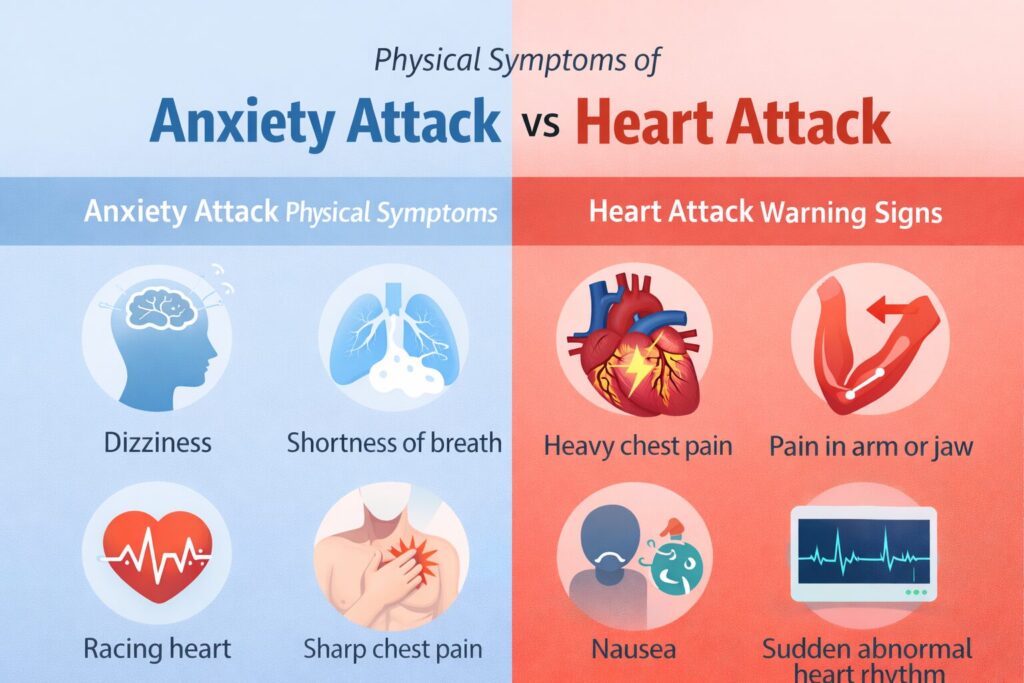
Common Physical Symptoms of an Anxiety Attack
- Chest pain or tightness
This pain is often sharp or stabbing. It may feel like pressure, squeezing, or burning. It can change with breathing or movement. Many people describe it as coming and going in waves. - Rapid heart rate or pounding heartbeat
The heart may feel like it is racing, skipping, or beating out of your chest. This sensation can be alarming but is usually harmless in healthy individuals. - Shortness of breath
Breathing may feel shallow or fast. Some people feel like they cannot get enough air, even though oxygen levels are normal. - Dizziness or lightheadedness
Rapid breathing can lower carbon dioxide levels, leading to feeling faint or unsteady. - Sweating or chills
The body reacts as if facing danger. This can cause sudden sweating, cold flashes, or temperature changes. - Nausea or stomach discomfort
Anxiety often affects digestion. You may feel queasy, bloated, or have stomach cramps. - Tingling or numbness
Hands, feet, lips, or face may tingle. This is linked to changes in breathing and circulation. - Feeling detached or unreal
Some people experience depersonalization or derealization. The world may feel distant or strange.
Key Pattern of Anxiety Attack Symptoms
Anxiety attack symptoms often:
- Come on suddenly
- Peak within 10 to 20 minutes
- Improve with calming techniques
- Occur during stress, fear, or exhaustion
- Repeat in similar patterns over time
Heart Attack Warning Signs Explained Clearly
Heart attack symptoms can vary. They are not always dramatic. Some are subtle. Some feel like pressure rather than pain.
Common Heart Attack Warning Signs
- Chest pressure or heaviness
This is often described as a crushing, squeezing, or full sensation in the center or left side of the chest. It does not usually change with breathing. - Pain spreading to other areas
Pain may radiate to the left arm, shoulder, neck, jaw, back, or upper stomach. This spreading pain is a key red flag. - Shortness of breath with exertion or rest
Breathing difficulty may occur with chest discomfort or on its own. - Cold sweats
Sudden sweating without obvious cause is common during a heart attack. - Nausea or vomiting
Especially common in women. This can feel like indigestion but does not improve. - Fatigue or weakness
Some people feel extreme tiredness days before a heart attack. - Sense of doom
A deep feeling that something is very wrong is often reported.
Key Pattern of Heart Attack Symptoms
Heart attack symptoms often:
- Build gradually or suddenly
- Worsen over time
- Do not improve with rest or calming
- Occur during physical exertion or stress
- Feel different from past anxiety episodes
Panic Attack vs Heart Attack: Side by Side Comparison
Understanding the differences can reduce fear while increasing safety.
Chest Pain Anxiety vs Heart Attack
Anxiety chest pain
- Sharp or stabbing
- Changes with breathing or position
- Comes and goes
- Improves with relaxation
Heart attack chest pain
- Heavy or crushing
- Constant or worsening
- Spreads to other areas
- Does not improve with calming
Anxiety Attack Symptoms vs Cardiac Symptoms
More common with anxiety
- Tingling fingers
- Rapid breathing
- Feeling detached
- Sudden onset during fear
More common with heart attack
- Radiating pain
- Persistent pressure
- Cold sweats
- Physical weakness
Heart Attack vs Panic Attack: Know the Difference – Video Below
If you prefer a visual explanation, this short video breaks down the key differences in a clear and reassuring way.
Risk Factors That Matter
Anxiety Attack Risk Factors
Heart Attack Risk Factors
- High blood pressure
- High cholesterol
- Diabetes
- Smoking
- Family history
- Age over 45 for men, over 55 for women
Risk factors help guide decisions but do not replace medical evaluation.
When to Seek Emergency Care Immediately
Always seek emergency help if:
- Chest pain is new or severe
- Pain spreads to the arm, jaw, or back
- Symptoms last longer than 15 minutes
- You have known heart risk factors
- You are unsure and feel unsafe
It is always better to be evaluated and reassured than to wait.
How Doctors Tell the Difference
Medical professionals use:
- Electrocardiograms
- Blood tests for heart enzymes
- Physical exams
- Medical history
- Symptom timing and pattern
These tools quickly identify heart related issues.
Managing Anxiety Attacks Safely Over Time
Once heart issues are ruled out, anxiety can be treated effectively.
Helpful strategies include:
- Breathing exercises
- Cognitive behavioral therapy
- Mindfulness practices
- Medication when appropriate
- Reducing caffeine
- Improving sleep routines
Anxiety is treatable. You are not broken. Your nervous system can learn safety again.
Conclusion and Final Thoughts
The physical symptoms of anxiety attack vs heart attack can feel nearly identical. That reality causes fear.
It causes confusion. It causes many people to doubt their own bodies.
- Understanding the differences gives you power.
- Knowing the warning signs gives you safety.
- Recognizing your patterns gives you confidence.
Anxiety attacks are intense but not dangerous to the heart. Heart attacks are dangerous and require immediate care.
If you are unsure, always choose safety.
Seek medical help when needed. There is no shame in asking for reassurance.
Your body is communicating with you.
Learning its language takes time.
Support makes that journey easier.
If this article helped you, consider sharing it. Someone else may need this clarity today.
Anxiety Attack vs Heart Attack FAQs: Symptoms, Differences, and Safety Questions
What is the main difference between an anxiety attack and a heart attack?
An anxiety attack is caused by the body’s stress response, while a heart attack is caused by blocked blood flow to the heart muscle.
Can anxiety attack symptoms feel exactly like a heart attack?
Yes. Anxiety attack physical symptoms can closely mimic heart attack warning signs, including chest pain, shortness of breath, and a racing heart.
How can I tell if chest pain is anxiety or a heart attack?
Anxiety chest pain often feels sharp and comes and goes, while heart attack pain usually feels heavy, constant, and may spread to the arm or jaw.
Do anxiety attacks damage the heart?
No. Anxiety attacks do not damage the heart, even though the symptoms feel intense and frightening.
How long do anxiety attack symptoms usually last?
Most anxiety attacks peak within 10 to 20 minutes and gradually improve as the nervous system calms down.
Do heart attack symptoms go away on their own?
Heart attack symptoms usually worsen over time and do not improve with rest or calming techniques.
Can shortness of breath happen with anxiety attacks?
Yes. Shortness of breath is very common during anxiety attacks due to rapid or shallow breathing.
Is a racing heart more common in anxiety or heart attacks?
A racing or pounding heart is more common with anxiety attacks, while heart attacks often cause pressure or discomfort rather than rapid pounding.
Should I go to the emergency room if I am unsure?
Yes. If you are unsure whether symptoms are anxiety or a heart attack, it is always safest to seek emergency medical care.
Can panic attacks happen without emotional stress?
Yes. Panic attacks can occur suddenly without an obvious trigger, even when you feel calm beforehand.
Are heart attack symptoms the same for everyone?
No. Heart attack symptoms can vary by person, age, and sex, and may be more subtle in women.
Can anxiety make heart attack symptoms feel worse?
Yes. Anxiety can intensify physical sensations and make heart related symptoms feel more severe.
Trusted Medical Sources and Evidence Based References
- American Heart Association
https://www.heart.org
A trusted medical authority that provides detailed, evidence based information on heart attack warning signs, chest pain, and when to seek emergency care. - National Institute of Mental Health (NIMH)
https://www.nimh.nih.gov
A reliable government resource offering clear, research backed information on anxiety disorders, panic attacks, physical anxiety symptoms, and treatment options.
-
 Fostering Well-being: A Comprehensive Guide to Understanding Mental Health in the Workplace
 -
Black Women's Mental Health Support Groups
-
LGBTQ Friendly Therapists Near Me
-
Coping Strategies for Managing Hallucinations and Distorted Thoughts in Daily Life
-
Anxiety vs Stress: How to Tell the Difference in Real Life Video