By Kevin Mack, Mental Health Blogger and Wellness Content Writer
Date: June 27, 2026
Kevin Mack writes educational, non-medical mental wellness content from a lived-experience perspective. His work focuses on mental wellness, emotional behavioral, and sleep-related topics.
Contents
- 1 What Is Parasomnia?
- 2 Key Takeaways
- 3 Introduction
- 4 What Is Parasomnia? The Complete Guide
- 5 Why Understanding Abnormal Behaviors During Sleep Matters
- 6 What Are the Main Signs of Parasomnia?
- 7 What Causes Parasomnia?
- 8 Parasomnia Types Compared
- 9 How to Understand Parasomnia in Real Life
- 10 Common Myths and Misconceptions About Parasomnia
- 11 Expert Insights About Abnormal Sleep Behaviors
- 12 Best Practices and Practical Tips for Managing Parasomnia Triggers
- 13 People Also Ask:
- 14 Conclusion
- 15 Non-Clinical Disclaimer
- 16 About the Author
- 17 Sources and References
What Is Parasomnia?
Parasomnias are abnormal behaviors, movements, or experiences that disrupt your sleep cycle. While they can look or feel alarming, most unwanted nighttime behaviors can be managed by tracking triggers like stress and improving overall bedroom safety.
Key Takeaways
- Parasomnias are abnormal behaviors, movements, emotions, or experiences that happen while falling asleep, sleeping, or waking up.
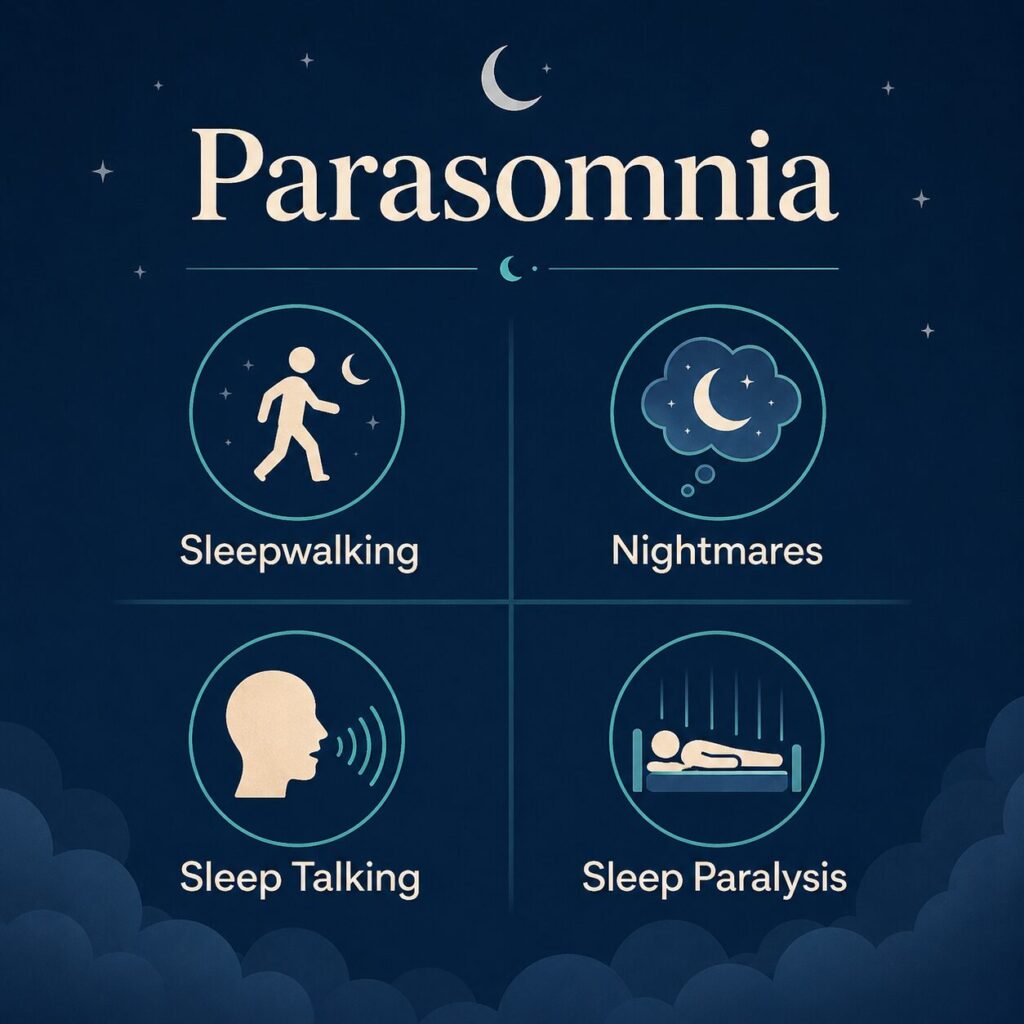
- Common examples include sleepwalking, sleep talking, night terrors, nightmares, sleep paralysis, and REM sleep behavior disorder.
- Many parasomnia episodes are linked to stress, poor sleep, irregular sleep schedules, alcohol use, certain medications, or disrupted sleep.
- Most occasional parasomnias are not automatically a sign of something dangerous, but repeated, intense, or risky episodes deserve closer attention.
- Keeping a sleep log, improving bedroom safety, reducing triggers, and building a steady sleep routine can help many people better understand what is happening.
- This article is educational and non-clinical. It does not diagnose, treat, or replace guidance from a qualified sleep professional.
Introduction
Understanding abnormal behaviors during sleep starts with learning how parasomnia can affect movement, emotions, dreams, and awareness at night. This guide explains common parasomnia types, signs, causes, myths, safety tips, and when unusual sleep behaviors may need closer attention.
Waking up confused, hearing that you talked in your sleep, or finding out you walked around the house at night can feel unsettling. Understanding abnormal behaviors during sleep matters because parasomnias can look scary from the outside, even when the person experiencing them may remember very little.
I have written about sleep, stress, mental wellness, and nighttime experiences long enough to know that people often search this topic with real worry. They want to know, “Is this normal?” “Why did this happen?” and “Should I be concerned?”
Parasomnias are abnormal behaviors, movements, emotions, or experiences that happen during sleep or during the transition between sleep and wakefulness. Some are common and occasional.
Others may become disruptive or unsafe. The goal of this guide is to explain parasomnia in simple, practical, non-medical language so you can better understand what may be happening and what smart next steps may look like.
What Is Parasomnia? The Complete Guide
Parasomnia is a broad term for unusual or unwanted behaviors and experiences that happen around sleep.
These events can occur while a person is falling asleep, during deep sleep, during dream sleep, or while waking up.
In plain language, parasomnia means the brain and body are not moving smoothly through sleep stages.
Part of the brain may be asleep while another part acts alert enough to move, speak, react, or experience fear.
Common parasomnia examples include:
- Sleepwalking
- Sleep talking
- Night terrors
- Nightmares
- Sleep paralysis
- Confusional arousals
- REM sleep behavior disorder
- Bedwetting during sleep
- Groaning, shouting, or unusual vocal sounds
- Repetitive movements during sleep
The important thing to understand is that parasomnia is not one single behavior. It is a category.
Two people can both have parasomnia but experience completely different symptoms.
One person may sit up and scream during a night terror. Another may wake up unable to move during sleep paralysis.
Another may act out a vivid dream. These can all fall under the larger parasomnia umbrella.
Watch This Related Video:
Why Understanding Abnormal Behaviors During Sleep Matters
Understanding abnormal behaviors during sleep matters because these episodes can affect safety, rest, relationships, and peace of mind.
When I look at this topic from a content and lived-experience perspective, I notice one major pattern.
People are often not just searching for definitions. They are searching for reassurance and clarity.
They want to know whether their experience is common, whether stress could be involved, and whether they need to take it seriously.
Parasomnias matter because they can:
- Interrupt sleep quality
- Frighten the person or their bed partner
- Cause confusion in the morning
- Create safety risks if walking, falling, or leaving the room happens
- Be triggered by lifestyle patterns, stress, or poor sleep
- Overlap with other sleep concerns
- Become more concerning when episodes are frequent, violent, or new in adulthood
Not every unusual nighttime event is an emergency. But repeated or dangerous episodes should not be ignored.
What Are the Main Signs of Parasomnia?
Parasomnia signs can look different depending on the sleep stage involved. Some are obvious. Others are only noticed because a partner, roommate, or family member reports them.
Sleepwalking
Sleepwalking happens when a person gets up and moves around while not fully awake. It may involve simple walking, opening doors, moving objects, or appearing awake while acting confused.
Why it matters: sleepwalking can create safety risks. A person may trip, leave the house, or handle objects without full awareness.
What it does not prove: sleepwalking does not automatically mean a person has a serious condition. It can happen occasionally, especially with sleep loss or stress.
Sleep Talking
Sleep talking can involve mumbling, short phrases, emotional words, or full sentences during sleep.
Why it matters: it may disturb a partner or raise concern, but it is often harmless when occasional.
What it does not prove: sleep talking does not always reveal hidden thoughts, secrets, or emotional truth. Sleep speech can be random, fragmented, and disconnected from waking reality.
Night Terrors
Night terrors can involve screaming, panic, sweating, sitting up, or appearing terrified while still asleep. The person may be hard to wake and may not remember the event clearly.
Why it matters: night terrors can be frightening for witnesses and may be linked to stress, sleep disruption, or deep sleep arousal patterns.
What it does not prove: a night terror is not the same as a nightmare. Night terrors often happen during non-dream deep sleep, while nightmares are usually remembered as vivid dreams.
Nightmares
Nightmares are disturbing dreams that usually wake the person and leave a clear memory of fear, sadness, danger, or distress.
Why it matters: frequent nightmares can affect sleep quality and emotional well-being.
What it does not prove: occasional nightmares are common and do not always point to a deeper problem.
Sleep Paralysis
Sleep paralysis happens when a person wakes up or falls asleep and feels temporarily unable to move.
Some people also report pressure, fear, or a sense that someone is nearby.
Why it matters: sleep paralysis can feel terrifying, especially when a person does not understand what is happening.
What it does not prove: sleep paralysis is often explained as a temporary mismatch between waking awareness and the body’s normal sleep-related muscle relaxation.
Dream Enactment
Dream enactment can involve moving, shouting, punching, kicking, or acting out dream content.
Why it matters: this can create injury risks for the person or a bed partner. New or intense dream enactment in adults should be discussed with a qualified professional.
What it does not prove: one restless dream does not automatically mean a person has a serious disorder. Pattern, frequency, age, and risk level matter.
What Causes Parasomnia?
Parasomnia can have many possible triggers and explanations. In many cases, there is not one single cause.
It is often a mix of sleep stage disruption, stress, lifestyle patterns, environment, and individual vulnerability.
Common factors linked with parasomnias include:
- Sleep deprivation
- Irregular sleep schedule
- Stress or emotional overload
- Fever or illness
- Alcohol use
- Certain medications
- Sleep apnea or disrupted breathing during sleep
- Family history
- Anxiety or high nighttime arousal
- New sleeping environment
- Noise, light, or interruptions during sleep
NREM Parasomnias
NREM parasomnias usually happen during non-rapid eye movement sleep, especially deeper sleep. Sleepwalking, confusional arousals, and night terrors often fit here.
These episodes may happen when the brain partially wakes from deep sleep but does not fully reach alert awareness. That is why the person may seem awake but act confused.
REM Parasomnias
REM parasomnias are connected to dream sleep. Nightmares and REM sleep behavior disorder are common examples.
During normal REM sleep, the body is mostly relaxed so people do not act out dreams.
In REM sleep behavior disorder, that normal muscle quieting is reduced, which may allow dream enactment behaviors.
Stress and Sleep Disruption
Stress is not the only explanation, but it can be a major trigger. I think of stress as a pressure amplifier.
It may not create every sleep issue by itself, but it can make existing patterns more likely to show up.
Poor sleep also matters. When sleep becomes fragmented, the brain may shift between stages less smoothly. That can increase the chance of unusual arousals or nighttime behaviors.
Parasomnia Types Compared
| Parasomnia Type | Common Sleep Stage | What It May Look Like | Usually Remembered? | Main Concern |
|---|---|---|---|---|
| Sleepwalking | NREM sleep | Walking or moving while not fully awake | Often no | Safety risk |
| Night terrors | NREM sleep | Screaming, panic, sweating, confusion | Usually little memory | Fear and disruption |
| Nightmares | REM sleep | Disturbing dream that wakes the person | Usually yes | Sleep quality |
| Sleep paralysis | Sleep transition or REM related | Awake but unable to move | Yes | Fear and confusion |
| REM sleep behavior disorder | REM sleep | Acting out dreams | Sometimes | Injury risk |
| Sleep talking | NREM or REM sleep | Talking, mumbling, sounds | Usually no | Sleep disruption |
How to Understand Parasomnia in Real Life
Step 1: Write Down What Happened
Start with a simple sleep log. Record the date, bedtime, wake time, what happened, what you remember, and what someone else noticed.
This helps separate one unusual night from a repeated pattern.
Include:
- Time of night
- Behavior noticed
- Stress level that day
- Alcohol or caffeine use
- Medication changes
- Sleep schedule changes
- Whether anyone felt unsafe
Step 2: Look for Triggers
Many people notice parasomnia episodes after poor sleep, emotional stress, illness, late nights, or schedule changes.
Look for patterns instead of trying to explain everything from one episode.
Ask:
- Did I sleep less than usual?
- Was I under more stress?
- Did I drink alcohol before bed?
- Did I change medication or routine?
- Was the room noisy, hot, or uncomfortable?
Step 3: Improve Bedroom Safety
Safety matters most when movement is involved.
Helpful steps may include:
- Clear clutter from the floor
- Move sharp objects away from the bed
- Lock doors and windows when needed
- Use soft lighting for nighttime visibility
- Place padding near hard furniture if falls are a concern
- Avoid sleeping on a top bunk if sleepwalking happens
Step 4: Build a More Predictable Sleep Routine
A steady routine helps the brain expect sleep at the same time each night.
Helpful habits include:
- Keeping a consistent bedtime
- Reducing screen stimulation close to bed
- Creating a calm wind-down routine
- Avoiding heavy alcohol use before sleep
- Keeping the bedroom cool, dark, and quiet
- Giving yourself enough time to sleep
Step 5: Know When to Seek Professional Guidance
This article is not medical advice, but some patterns deserve professional attention.
Consider talking with a qualified sleep professional if episodes:
- Cause injury or near injury
- Involve violent movements
- Begin suddenly in adulthood
- Happen often
- Affect daytime functioning
- Involve breathing pauses, choking, or loud snoring
- Create serious fear or relationship strain
Common Myths and Misconceptions About Parasomnia
Myth 1: Parasomnia Always Means Something Is Seriously Wrong
Parasomnia can be scary, but occasional episodes are not always a sign of something severe. Context matters. Frequency, safety risk, age of onset, and other sleep symptoms all matter.
Myth 2: You Should Always Wake a Sleepwalker Suddenly
Waking someone abruptly may confuse or frighten them. A calmer approach is usually safer. Guide them gently away from danger and back to bed when possible.
Myth 3: Sleep Talking Reveals the Truth
Sleep talking can sound meaningful, but it is often fragmented and unreliable. It should not be treated like a confession or hidden message.
Myth 4: Night Terrors and Nightmares Are the Same
They are different. Nightmares are usually remembered as dreams. Night terrors often involve intense fear with little or no memory afterward.
Myth 5: Parasomnia Only Happens to Children
Some parasomnias are more common in children, but adults can experience them too. New or risky adult sleep behaviors should be taken seriously.
Expert Insights About Abnormal Sleep Behaviors
One of the most useful ways to understand parasomnia is to think of sleep as active, not passive.
The brain does not simply turn off at night. It cycles through different stages, each with different levels of awareness, muscle activity, memory, emotion, and dreaming.
Parasomnia often happens in the messy border zones between those states.
Here is the distinction I find most helpful:
- NREM parasomnias often look like the body is awake but the person is not fully aware.
- REM parasomnias often involve dream content, fear, or dream enactment.
- Sleep transition events happen while falling asleep or waking up, when the brain is shifting states.
This helps explain why parasomnias can look strange but still have a sleep-based explanation.
It also helps reduce shame. Many people feel embarrassed when they learn they talked, shouted, walked, or moved strangely during sleep.
But these behaviors are not character flaws. They are nighttime events that can often be tracked, understood, and made safer.
Best Practices and Practical Tips for Managing Parasomnia Triggers
These tips are not treatment. They are practical, non-medical steps that may help you better understand and reduce common triggers.
- Keep a consistent sleep schedule. Irregular sleep can make sleep transitions less stable.
- Prioritize enough sleep. Sleep loss is a common trigger for unusual nighttime behaviors.
- Reduce alcohol before bed. Alcohol can fragment sleep and worsen nighttime disruptions.
- Create a calming wind-down routine. Stress and overstimulation can carry into sleep.
- Make the room safer. This is especially important for sleepwalking or dream enactment.
- Ask a bed partner what they notice. Outside observations can be useful because the person may not remember.
- Avoid blaming yourself. Parasomnias are sleep events, not moral failures.
- Track patterns before jumping to conclusions. One episode is different from a repeated trend.
- Seek help if safety becomes a concern. Injury risk is one of the clearest reasons to get professional input.
People Also Ask:
What is parasomnia in simple terms?
Parasomnia means unusual or unwanted behaviors, movements, emotions, or experiences that happen during sleep or around the time of falling asleep or waking up. Examples include sleepwalking, sleep talking, night terrors, nightmares, sleep paralysis, and acting out dreams. It is a broad category, not one single condition.
What causes abnormal behaviors during sleep?
Abnormal behaviors during sleep can be linked to sleep deprivation, stress, irregular sleep schedules, alcohol use, fever, certain medications, family history, or other sleep disruptions. Sometimes the brain partially wakes from deep sleep or dream sleep without fully reaching normal awareness. The exact reason can vary from person to person.
Is parasomnia dangerous?
Parasomnia is not always dangerous, especially when episodes are rare and mild. The main concern is safety. Sleepwalking, falling, leaving the room, or acting out dreams can create injury risks. Frequent, intense, violent, or new adult sleep behaviors should be discussed with a qualified sleep professional.
What is the difference between night terrors and nightmares?
Nightmares are disturbing dreams that usually wake the person and are often remembered. Night terrors usually happen during deep non-REM sleep and may involve screaming, panic, sweating, or confusion with little memory afterward. Nightmares are dream centered. Night terrors are more like intense partial arousals from deep sleep.
Can stress trigger parasomnia?
Stress can contribute to parasomnia in some people. It may increase nighttime arousal, disturb sleep quality, and make unusual sleep behaviors more likely. Stress is not the only cause, but it is a common pattern people notice when tracking episodes. Better sleep habits and stress reduction may help some people reduce triggers.
Should I wake someone who is sleepwalking?
It is usually better to stay calm, guide the person away from danger, and help them return to bed rather than startling them. A sleepwalking person may be confused and not fully aware. Safety should come first. If sleepwalking is frequent or risky, professional guidance may be helpful.
Is sleep paralysis a type of parasomnia?
Yes, sleep paralysis is often grouped with parasomnias. It happens when a person becomes aware while the body is still in a temporary sleep-related state of muscle immobility. It can feel frightening, especially if it includes pressure, fear, or vivid sensations, but it is commonly explained through sleep-stage transition biology.
When should someone be concerned about parasomnia?
Concern increases when episodes cause injury, involve violent movement, happen often, begin suddenly in adulthood, disturb daytime functioning, or include signs of another sleep issue such as choking, gasping, or loud snoring. A qualified sleep professional can help evaluate patterns and rule out other sleep-related concerns.
Conclusion
Understanding abnormal behaviors during sleep starts with recognizing that parasomnias are sleep-related events, not personal failures or automatic signs of danger.
They can include sleepwalking, night terrors, nightmares, sleep paralysis, sleep talking, and dream enactment.
The most helpful first step is to observe patterns with curiosity instead of fear. Track what happened, look for triggers, improve bedroom safety, and build a steadier sleep routine.
If episodes become frequent, risky, intense, or new in adulthood, it is wise to seek qualified sleep guidance.
Parasomnia can feel strange, but understanding it clearly can make it less frightening and easier to manage safely.
Non-Clinical Disclaimer
This article is for educational and informational purposes only. It is not medical advice, a diagnosis, or a substitute for professional care. If sleep behaviors become frequent, intense, unsafe, or distressing, consider speaking with a qualified healthcare or sleep professional.
About the Author
Kevin Mack is a mental wellness writer, blogger, and founder of The Mental Health Blogger. He writes educational, non-medical content about mental wellness, sleep, emotional health, and everyday coping tools. His work focuses on making complex topics easier to understand through lived experience, research-based insight, and a supportive, people-first writing style.
Sources and References
Cleveland Clinic
Helpful overview of parasomnias, including common types, symptoms, causes, and when sleep behaviors may need professional attention.
https://my.clevelandclinic.org/health/diseases/12133-parasomnias–disruptive-sleep-disorders
National Library of Medicine, PMC
Peer-reviewed overview explaining parasomnias as abnormal behaviors, movements, emotions, or experiences that occur during sleep or sleep-wake transitions.
https://pmc.ncbi.nlm.nih.gov/articles/PMC6402728/
National Library of Medicine, PMC
Review article covering NREM disorders of arousal, including sleepwalking, confusional arousals, and sleep terrors.
https://pmc.ncbi.nlm.nih.gov/articles/PMC8116392/
National Library of Medicine, PMC
Review of REM sleep behavior disorder, including dream enactment behaviors and REM sleep-related mechanisms.
https://pmc.ncbi.nlm.nih.gov/articles/PMC10756822/
Centers for Disease Control and Prevention
General sleep health resource explaining why good sleep quality is important for overall health and well-being.
https://www.cdc.gov/sleep/about/index.html