Contents
Physical Symptoms of Generalized Anxiety Disorder Explained
Learn the most common physical symptoms of Generalized Anxiety Disorder. Understand how GAD affects the body, why these symptoms appear, and when to seek support. Clear, helpful, and optimized for readers searching for real answers.
Generalized Anxiety Disorder creates ongoing worry that affects both the mind and the body. Many people think anxiety only happens in thoughts, but GAD shows up through a wide range of physical symptoms.
These physical changes often appear before someone even realizes they are anxious.
The body reacts to long periods of stress by staying alert. Muscles stay tense.
Breathing changes. Heart rate rises. Sleep becomes harder. Daily tasks may feel more draining because the body is always on edge.
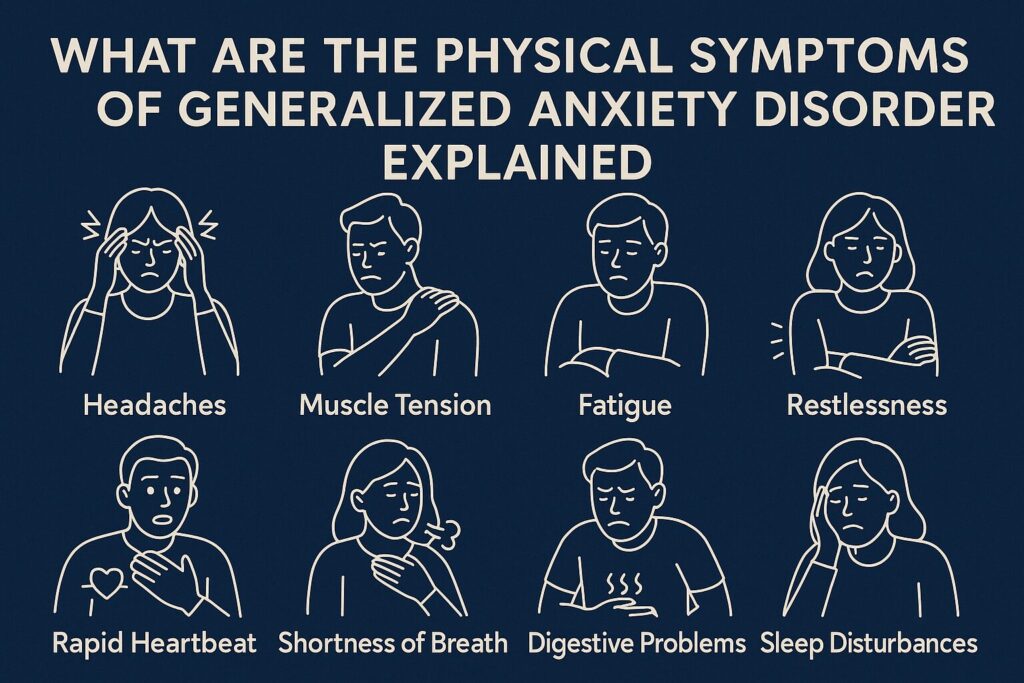
People with Generalized Anxiety Disorder often feel constant tension in the neck, shoulders, or back.
This tension can cause headaches that return often. Some feel tightness in their chest or have trouble taking a deep breath.
Others struggle with stomach issues such as nausea, cramps, bloating, or digestive discomfort.
These symptoms happen because anxiety activates the body’s stress response. When that stress response stays active for too long, the body becomes exhausted.
Many people with GAD notice that their heart beats faster when they worry. They may feel lightheaded or shaky.
Some experience sweating even in calm settings. Others deal with fatigue and low energy throughout the day.
These symptoms can make life feel unpredictable. They may come and go without warning.
Small stressors can trigger big physical reactions because the body is already sensitive from chronic anxiety.
Sleep problems are also common. Many people with GAD have trouble falling asleep because their mind will not quiet down.
They may wake up feeling unrested or tense. This lack of sleep makes physical symptoms stronger. It also raises stress levels, which continues the cycle.
These physical symptoms are real. They are not imagined. They can disrupt work, relationships, and daily routines.
Understanding how GAD affects the body helps people recognize that their symptoms have a cause.
It also helps them seek support sooner. Treatment can reduce both the physical and emotional impact of anxiety and bring the body back into balance.
🎯 Physical Symptoms of Generalized Anxiety Disorder Video
This video guides you through the physical, emotional, and behavioral symptoms of Generalized Anxiety Disorder (GAD).
It explains how GAD can manifest beyond worry, from racing heart and muscle tension, to sleep problems, digestive trouble, fatigue, and more.
The presentation is clear, concise, and helpful for anyone trying to understand how anxiety can affect daily life.
You’ll learn:
- What kinds of physical symptoms are common with GAD.
- How persistent anxiety can impact the body and daily functioning.
- Why recognizing these signs early can help you or loved ones seek support.
Whether you suspect you might have GAD or simply want to know more, this video offers an accessible overview of how anxiety can show up — and why it matters.
Symptoms of Generalized Anxiety Disorder
Generalized Anxiety Disorder Causes and Symptoms
About The Mental Health Blogger
The Mental Health Blogger helps people understand their emotions, their stress, and their personal challenges through clear and compassionate education.
The goal is to make mental health information easy to understand so anyone can use it in daily life.
The content focuses on real experiences, practical steps, and supportive guidance. Each article is written to help readers feel less alone and more informed.
The Mental Health Blogger creates a safe space where people can learn, grow, and find hope. Visit below.