Contents
- 1 What Are the Symptoms of Postpartum Depression? A Complete Guide for New Mothers and Families
- 2 Introduction to Postpartum Depression and Why Early Symptoms Matter
- 3 Understanding the Difference Between Baby Blues and Postpartum Depression
- 4 Complete List of Symptoms of Postpartum Depression
- 5 Risk Factors That Increase the Chances of Postpartum Depression
- 6 When to Seek Help For Postpartum Depression
- 7 How Postpartum Depression Is Diagnosed
- 8 Treatment Options For Postpartum Depression
- 9 Final Thoughts on Recognizing Symptoms Early
- 10 Frequently Asked Questions About the Symptoms of Postpartum Depression
- 11 References for Symptoms of Postpartum Depression?
What Are the Symptoms of Postpartum Depression? A Complete Guide for New Mothers and Families
A Complete Guide to Understanding the Emotional, Physical, and Behavioral Signs New Mothers Should Not Ignore
Introduction to Postpartum Depression and Why Early Symptoms Matter
Learn the most common symptoms of postpartum depression, how they affect new mothers, and when to seek help. This guide explains emotional, physical, and behavioral signs with clear, supportive information.
Postpartum depression is a difficult and often misunderstood experience for many new mothers. The weeks after birth bring major life changes, new routines, and powerful emotions.
Some feelings are joyful, while others are heavy and overwhelming. Many mothers expect happiness to come naturally after having a baby, but the reality can feel very different.
Postpartum depression shows up when emotional discomfort becomes constant. It affects mood, energy, sleep, and daily tasks. These symptoms can appear slowly or suddenly, and they often get worse when a mother feels alone or unsupported.
Postpartum depression is not a sign of weakness. It is not a failure or a flaw. It is a medical condition that affects mental health. It disrupts emotional balance and makes it hard to feel joy or peace.
Many mothers hide their symptoms because they fear judgment. Some feel guilty for not feeling happy enough. Others do not recognize the signs until the symptoms grow stronger.
Learning how postpartum depression works helps mothers understand that they are not alone and that healing is possible. Recognizing symptoms early always leads to better outcomes.
Families, friends, and partners play an important role in identifying symptoms. When people understand what postpartum depression looks like, they can offer support that is patient, compassionate, and nonjudgmental.
This guide explains every common symptom in detail. It helps you understand emotional, physical, and behavioral signs. The goal is simple.
Give mothers, families, and caregivers the information they need to recognize the symptoms and get professional help when needed.
Understanding the Difference Between Baby Blues and Postpartum Depression
Postpartum Depression: What Every New Mother Needs to Know
Most new mothers experience the baby blues during the first few days after childbirth. These feelings usually include brief periods of sadness, uneasiness, or irritability. Baby blues last a few days and disappear without treatment.
Postpartum depression is different. The symptoms are stronger, last longer, and interfere with daily life. Many mothers struggle to understand why their mood feels heavy, even weeks after birth, and that confusion can create more stress.
Baby blues often come with tearfulness and mild mood swings. Postpartum depression comes with deeper emotional distress. A mother may feel overwhelmed, disconnected, or unable to cope.
Baby blues do not interfere with functioning. Postpartum depression affects sleep, appetite, energy, and concentration. Understanding these differences helps mothers know when to ask for help.
Key Differences to Look For
- Baby blues last a few days, while postpartum depression lasts weeks or months.
- Baby blues are mild. Postpartum depression symptoms feel heavy and disruptive.
- Baby blues do not affect daily functioning. Postpartum depression does.
- Baby blues do not require treatment. Postpartum depression benefits from support, therapy, or medical care.
Complete List of Symptoms of Postpartum Depression
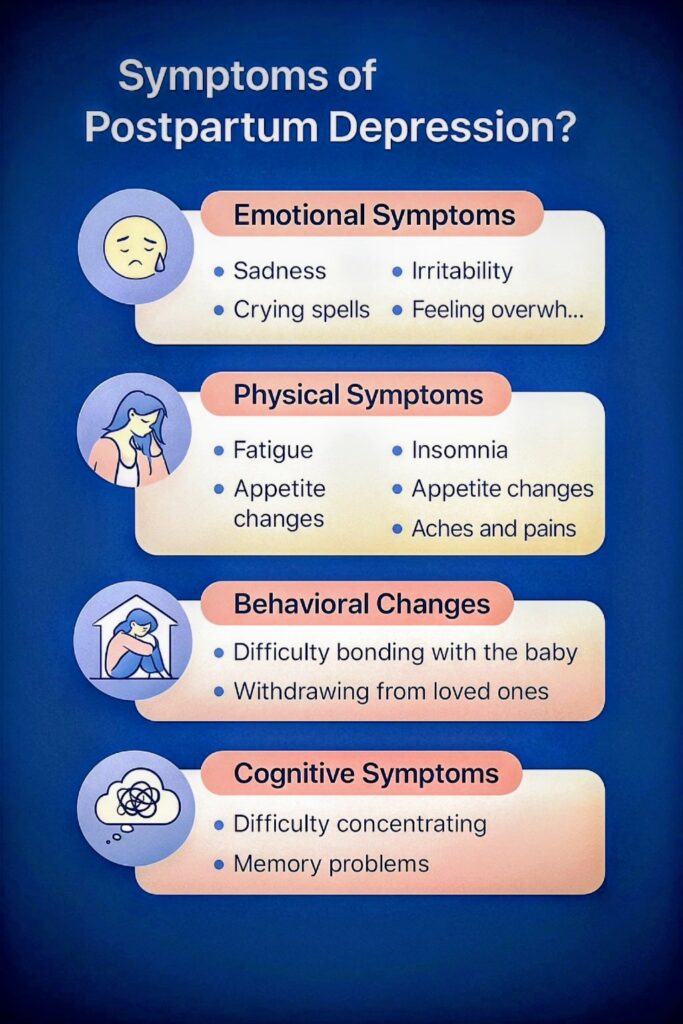
The symptoms below are the most common signs of postpartum depression. Each symptom varies in intensity. Some mothers experience only a few symptoms. Others experience many.
These symptoms often overlap with anxiety, mood disorders, and emotional distress. The details below help you understand each symptom in a clear and supportive way.
Persistent Sadness or Hopelessness
Many mothers describe a deep sadness that lingers throughout the day. This sadness often feels heavy and constant. It does not improve with rest or reassurance. Even positive moments do not lift the mood for long.
Some mothers cry often. Others feel like they want to cry but cannot. Hopelessness can follow this sadness. A mother may feel like things will never get better and she cannot see a path forward. These feelings can grow stronger when she tries to hide them or handle them alone.
What This Looks Like
- Feeling sad most of the day, almost every day
- Crying without a clear reason
- Feeling emotionally flat
- Feeling hopeless about the future
Loss of Interest or Pleasure in Activities
Postpartum depression often steals the joy from everyday life. Activities that once felt enjoyable may no longer bring happiness. Even simple routines like watching a favorite show or spending time with loved ones may feel empty.
Some mothers withdraw from friends and family because social interaction feels draining. This loss of interest can make motherhood feel even more overwhelming.
Signs to Notice
- No interest in hobbies
- Avoiding social situations
- Feeling emotionally disconnected
- Feeling numb or uninterested in daily life
Extreme Fatigue and Low Energy
Fatigue is common after childbirth, but postpartum depression causes a deeper type of exhaustion. This fatigue lingers even when the baby sleeps well.
Mothers often describe feeling tired from morning to night. This exhaustion can make simple tasks feel like major challenges. It becomes hard to cook, clean, or get dressed. This fatigue comes from emotional strain as well as physical changes.
Details to Look For
- Tiredness that never improves
- Feeling drained even after rest
- Trouble completing daily tasks
- Feeling like every action requires extra effort
Difficulty Sleeping Even When the Baby Sleeps
Many mothers with postpartum depression struggle with sleep problems. Some cannot fall asleep. Others wake up often. Some feel tired all day but still cannot sleep at night. Anxiety can worsen sleep issues, which then worsens depression. Sleep becomes a cycle of exhaustion and emotional strain.
Common Sleep Problems
- Insomnia
- Restless sleep
- Racing thoughts at bedtime
- Waking up tired every morning
Irritability or Anger
Postpartum depression can cause intense irritability. Small frustrations can create strong emotional reactions. A mother may become easily overwhelmed by noise, clutter, or everyday stress. Anger may feel sharp and sudden. After an emotional outburst, many mothers feel guilty or ashamed. This guilt then adds more emotional pressure.
Examples
- Anger over small issues
- Feeling tense or easily annoyed
- Snapping at others without meaning to
- Feeling regret after outbursts
Anxiety, Excessive Worry, or Panic Attacks
Anxiety is one of the most common postpartum symptoms. Some mothers feel constant fear about their baby’s health. Others worry about their ability to care for their child. The mind may race with fear and intrusive thoughts. In some cases, mothers experience panic attacks.
Anxiety Symptoms
- Constant worry about the baby
- Fear that something bad will happen
- Difficulty relaxing
- Physical signs like shaking, sweating, or rapid heartbeat
Guilt, Shame, or Feelings of Inadequacy
Mothers often feel guilty for not feeling happy. They may think they are failing even when they are doing well. Some feel ashamed of needing help. Others believe they are not bonding fast enough. These emotions create a painful cycle that deepens depression.
Emotional Signs
- Feeling like a bad mother
- Repeating negative thoughts
- Feeling guilty for resting
- Feeling unworthy or inadequate
Difficulty Bonding With the Baby
Not all mothers feel an instant bond. Postpartum depression can make bonding harder. Some mothers feel emotionally disconnected. This lack of connection can be confusing and painful. It can also create guilt that intensifies the depression.
Bonding Challenges
- Feeling distant from the baby
- Going through the motions without emotional connection
- Feeling unsure how to interact or respond
- Worrying that the bond will never form
Appetite Changes
Postpartum depression often disrupts appetite. Some mothers lose interest in food. Others eat more than usual to ease stress. Both changes can affect physical health.
What to Look For
- Eating very little
- Overeating due to stress
- Sudden weight loss or gain
- Lack of interest in meals
Trouble Concentrating or Brain Fog
Many mothers describe postpartum brain fog. It becomes hard to focus or remember things. Decision making feels stressful. Even small tasks take more time and effort.
Types of Cognitive Difficulties
- Forgetfulness
- Slow thinking
- Difficulty staying focused
- Struggling with simple decisions
Feeling Overwhelmed or Unable to Cope
Motherhood brings stress, but postpartum depression intensifies it. Mothers may feel like they cannot handle anything. Simple tasks can feel impossible. This feeling often leads to emotional shutdowns or crying spells.
Signs
- Feeling like everything is too much
- Difficulty completing basic tasks
- Emotional breakdowns
- Feeling stuck or paralyzed
Withdrawal From Loved Ones
Isolation is common in postpartum depression. Some mothers stop responding to messages. Others avoid visitors. Isolation makes depression feel heavier and increases emotional distance.
Behavioral Signs
- Avoiding friends and family
- Staying home more often
- Feeling disconnected from others
- Not wanting to talk or share feelings
Low Self Esteem or Loss of Confidence
Postpartum depression makes mothers doubt themselves. They may feel unsure, insecure, or incapable. Confidence fades as negative thoughts grow stronger.
Examples
- Feeling unqualified to care for the baby
- Believing others can do a better job
- Comparing themselves to others
- Negative self-image
Physical Symptoms Like Headaches or Stomach Pain
Emotional distress often appears through physical symptoms. Stress affects the body, causing discomfort and pain.
Common Physical Symptoms
- Headaches
- Stomach pain
- Nausea
- Muscle tension
Thoughts of Self Harm or Harm Toward the Baby
These thoughts are intrusive and unwanted. Mothers often feel terrified of them. These thoughts do not mean a mother wants to act on them. They are a sign that immediate help is needed.
Important Warning Signs
- Intrusive scary thoughts
- Fear of being alone with the baby
- Thinking the baby is unsafe
- Thoughts of wanting to disappear or escape
If you or someone you know is experiencing these thoughts, seek emergency support right away.
Risk Factors That Increase the Chances of Postpartum Depression
Certain factors can make postpartum depression more likely. These factors do not guarantee depression, but they increase vulnerability.
Risk Factors
- Family history of depression
- Hormonal imbalance after birth
- Traumatic or difficult labor
- Limited social support
- Financial or relationship stress
- Lack of sleep
- History of anxiety or trauma
When to Seek Help For Postpartum Depression
Early help makes a significant difference. Many mothers delay treatment because they expect to feel better on their own. Some fear judgment. Others do not realize their symptoms are severe. Reaching out for support is a sign of strength.
Seek Help If
- Symptoms last more than two weeks
- Symptoms affect daily life
- You feel disconnected from your baby
- You experience harmful thoughts
How Postpartum Depression Is Diagnosed
Healthcare professionals diagnose postpartum depression through conversation and screening tools. They assess emotional, physical, and behavioral symptoms. They also look at sleep habits, mood patterns, and hormonal changes.
Diagnosis Steps
- Mental health screening
- Review of symptoms
- Discussion about daily functioning
- Blood tests when needed
Treatment Options For Postpartum Depression
Treatment depends on the severity of symptoms. Many mothers find relief through therapy, support groups, or medication. Self care practices and social support also help healing.
Treatment Approaches
- Therapy
- Medication
- Support groups
- Lifestyle changes
- Partner and family support
- Stress management techniques
Mom’s Discuss Postpartum Depression
Final Thoughts on Recognizing Symptoms Early
Postpartum depression is common and treatable. Recognizing the symptoms early helps mothers get the support they deserve.
With the right care, mothers can heal, regain confidence, and feel like themselves again. No one should face postpartum depression alone. Support, understanding, and professional care create a path toward recovery.
Recognizing the symptoms of postpartum depression early helps mothers avoid months of silent suffering and confusion. Many women try to push through the emotions on their own because they expect motherhood to feel joyful all the time.
When their feelings do not match what they expected, they may feel guilt or shame. Early awareness removes that fear. It helps mothers see that postpartum depression is a real medical condition, not a personal failure.
When families understand the symptoms, they can step in with patience, reassurance, and support that makes mothers feel safe and understood. This early recognition can prevent the condition from growing stronger and can make recovery easier to manage.
With the right support, mothers can rebuild confidence, rediscover joy, and regain a sense of control in their new role. Healing is possible. Recovery is real.
Mothers deserve to know that asking for help is a sign of strength, and early awareness is the first step toward a healthier future.
Postpartum depression is a very real condition and should be treated as such. It is very important to know the symptoms in order to get help immediately.
The End
Frequently Asked Questions About the Symptoms of Postpartum Depression
What are the first signs of postpartum depression?
Early signs often include persistent sadness, frequent crying, irritability, anxiety, low energy, and trouble sleeping. Many mothers also feel overwhelmed, disconnected, or guilty. These symptoms last longer than two weeks and interfere with daily life.
How do I know if my sadness is postpartum depression or the baby blues?
Baby blues usually fade within a few days, while postpartum depression lasts much longer and feels stronger. If sadness continues for more than two weeks, affects daily functioning, or makes you feel hopeless, it is more likely postpartum depression.
Can postpartum depression cause physical symptoms?
Yes. Postpartum depression can cause headaches, stomach pain, nausea, appetite changes, and body tension. These physical symptoms often appear along with emotional discomfort and fatigue.
Does postpartum depression always start right after childbirth?
No. Some mothers develop symptoms within a few days, while others experience postpartum depression weeks or even months after giving birth. The timing varies for each person.
Can postpartum depression affect bonding with the baby?
Yes. Many mothers with postpartum depression feel emotionally distant or disconnected. Bonding may feel slow or difficult. These feelings are common and improve with treatment and support.
Is anxiety a symptom of postpartum depression?
Yes. Anxiety is one of the most common symptoms. It may include constant worry, racing thoughts, fear about the baby’s safety, or panic attacks. Anxiety and depression often occur together after childbirth.
When should I seek help for postpartum depression symptoms?
Seek help if symptoms last more than two weeks, interfere with daily tasks, affect your bonding with the baby, or cause fear or distress. Immediate help is needed if you experience self harm or harmful thoughts.
Can postpartum depression get better without treatment?
Some mild cases improve over time, but most mothers benefit from treatment and support. Therapy, medication, support groups, and lifestyle changes help reduce symptoms and speed up recovery.
What causes postpartum depression symptoms to appear?
Postpartum depression can result from hormonal shifts, emotional stress, lack of sleep, difficult birth experiences, or a history of depression or anxiety. It often develops from a combination of biological and emotional factors.
Can partners or family members notice symptoms before the mother does?
Yes. Loved ones often notice changes in mood, energy, or behavior before the mother recognizes the symptoms herself. Early support helps mothers feel safe and understood.
References for Symptoms of Postpartum Depression?
Authoritative Medical Sources
1. Mayo Clinic – Postpartum Depression Overview
Use for symptoms, causes, diagnosis, and treatment.
2. American Psychological Association – Postpartum Mental Health Guide
Use for emotional health, mental wellness, and postpartum psychology.
3. Cleveland Clinic – Postpartum Depression Information
Use for physical symptoms, emotional changes, and postpartum risk factors.
Bonus: Parenting and Wellness Sources
March of Dimes – Postpartum Depression Guide. Use for family friendly explanations and new parent support.
Read More From Mental Health Blogger Below:
- Natural Ways to Fight Depression.
- How Does Teen Pregnancy Cause Depression and Anxiety in Young Mothers.