By Kevin Mack | Mental Health Content Writer & Research-Based Wellness Educator | January 18, 2026
The latest study on caffeine and anxiety shows that caffeine can increase anxiety symptoms in some people, especially those with anxiety sensitivity, panic history, or sleep disruption. Effects depend on dose, genetics, stress levels, and daily habits, meaning caffeine impacts mental health differently for each individual.
Contents
- 1 Introduction: Why Caffeine and Anxiety Deserve a Closer Look
- 2 Understanding the Latest Study on Caffeine and Anxiety
- 3 How Caffeine Affects the Brain and Nervous System
- 4 Anxiety Sensitivity: The Missing Piece Many People Overlook
- 5 The Role of Dosage and Timing
- 6 Sleep Disruption and the Anxiety Loop
- 7 Genetic Differences in Caffeine Metabolism
- 8 Table: How Caffeine Affects Anxiety Based on Individual Factors
- 9 My Lived Experience With Caffeine and Anxiety
- 10 Practical Takeaways Without Absolutes
- 11 Caffeine and Anxiety: Latest Study Questions and Answers (AI Overview FAQ)
- 12 People Also Ask
- 13 Conclusion and Final Thoughts
- 14 About Author
Introduction: Why Caffeine and Anxiety Deserve a Closer Look
What does the latest study say about caffeine and anxiety? New research explains how caffeine affects the nervous system, anxiety sensitivity, stress response, and daily mental well-being in clear, evidence-based terms.
Caffeine is everywhere. Coffee. Energy drinks. Pre workout powders. Even chocolate and some medications.
For years, I never questioned it. I assumed caffeine was just a normal part of adult life.
Something you needed to function, stay productive, and push through long days.
But anxiety has a way of changing how you experience everyday habits.
In my own life, caffeine slowly shifted from being helpful to being unpredictable. Some days it gave me focus.
Other days it triggered racing thoughts, shallow breathing, and that familiar tight feeling in my chest that anxiety brings.
At first, I blamed stress. Then lack of sleep. Eventually, I had to ask the harder question. Was caffeine making my anxiety worse?
That question is exactly what recent research has been exploring.
The latest study on caffeine and anxiety does not offer a simple yes or no answer.
Instead, it reveals a much more human and nuanced reality. Caffeine affects anxiety through multiple pathways, and those pathways look different for each person.
This article breaks down what the newest research says, how it aligns with lived experience, where the gray areas exist, and how you can use this information in a realistic and non judgmental way.
This is a non medical article written from lived experience, research literacy, and mental health awareness.
Understanding the Latest Study on Caffeine and Anxiety
The latest study on caffeine and anxiety focuses on how caffeine interacts with the nervous system, stress hormones, sleep regulation, and anxiety sensitivity.
Rather than treating anxiety as a single condition, the research looks at individual vulnerability.
Key findings from the research include:
- Caffeine increases physiological arousal by stimulating the central nervous system
- Anxiety symptoms increase more often in people with high anxiety sensitivity
- Lower doses may be tolerated by some individuals without negative effects
- Sleep disruption plays a major role in next day anxiety symptoms
- Genetics influence how fast caffeine is metabolized
What stood out to me while reading this study was how closely it matched real life experiences I have had and witnessed in others.
Anxiety is not just emotional. It is physical. Caffeine works directly on the physical systems that anxiety already affects.
How Caffeine Affects the Brain and Nervous System
Caffeine works by blocking adenosine, a neurotransmitter responsible for promoting relaxation and sleepiness.
When adenosine is blocked, the brain becomes more alert. That sounds helpful on the surface. But alertness and anxiety sit very close together in the nervous system.
From my own experience, the difference between feeling focused and feeling anxious often comes down to intensity and timing.
Neurological effects of caffeine include:
- Increased release of adrenaline
- Faster heart rate
- Heightened alertness and vigilance
- Reduced perception of fatigue
- Increased cortisol levels during stress
For someone without anxiety sensitivity, these effects may feel energizing. For someone like me, especially during periods of high stress, they can feel overwhelming. The body reacts before the mind has time to interpret what is happening.
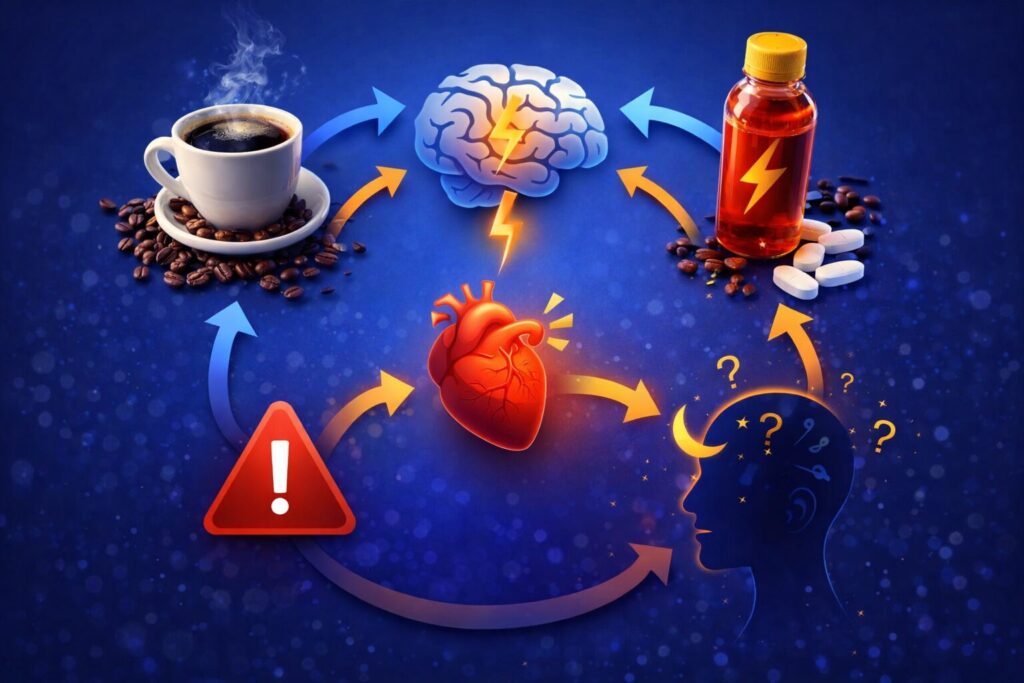
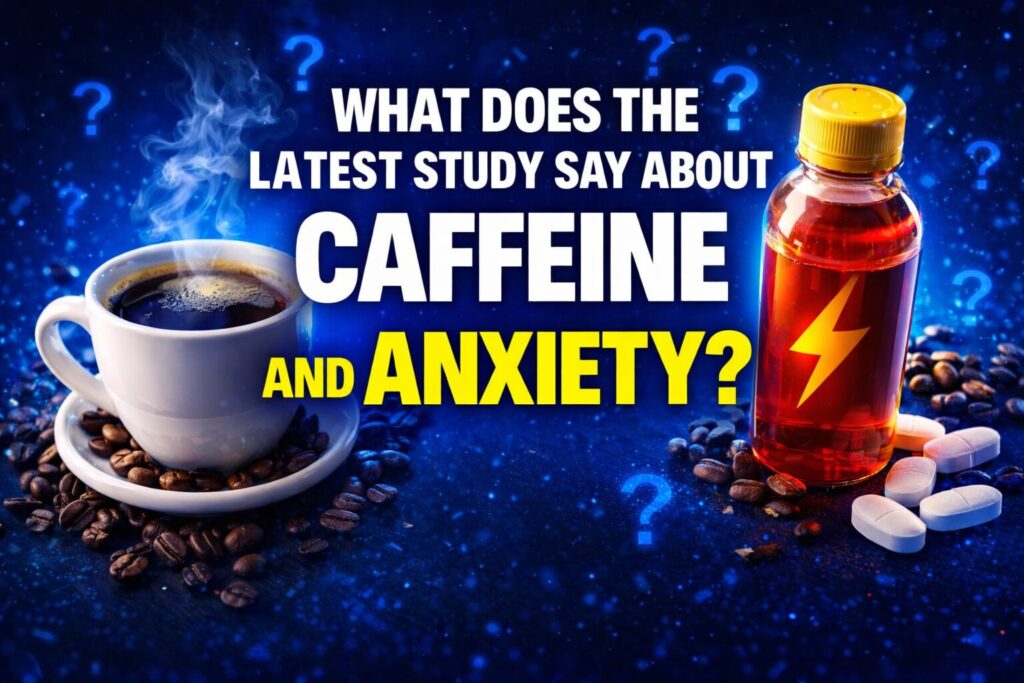
Visual overview of how caffeine influences anxiety, nervous system activation, and sleep disruption based on recent research.
Is Caffeine Safe? Doctors Explain the Risks and Benefits – Video
This expert-led video explains how caffeine affects the brain and body, including its impact on alertness, stress hormones, sleep quality, and anxiety symptoms.
Anxiety Sensitivity: The Missing Piece Many People Overlook
One of the most important insights from the latest study on caffeine and anxiety is the role of anxiety sensitivity.
Anxiety sensitivity refers to how strongly someone reacts to physical sensations like a racing heart or shortness of breath.
I have learned through lived experience that I am highly sensitive to these sensations.
When caffeine speeds up my heart, my brain sometimes interprets that as danger instead of stimulation.
People with high anxiety sensitivity may:
- Misinterpret caffeine sensations as panic
- Experience faster escalation of anxious thoughts
- Feel loss of control after caffeine intake
- Avoid situations due to fear of symptoms
- Become hyper aware of bodily changes
This does not mean caffeine is harmful for everyone. It means that for some of us, caffeine amplifies signals the brain already struggles to regulate.
The Role of Dosage and Timing
The latest study makes it clear that caffeine dosage matters just as much as caffeine itself.
Small amounts may be tolerated. Larger amounts increase the likelihood of anxiety symptoms.
In my own routine, one cup of coffee early in the morning feels very different from a second cup late in the day.
Timing affects sleep, and sleep affects anxiety more than most people realize.
Factors that influence caffeine response:
- Total daily intake
- Time of consumption
- Food intake alongside caffeine
- Stress levels that day
- Hydration status
Even small changes, like switching from afternoon coffee to morning only, made a noticeable difference in my anxiety baseline.
Sleep Disruption and the Anxiety Loop
One of the strongest connections found in the study is between caffeine, sleep disruption, and next day anxiety. This creates a loop that is easy to fall into.
I have lived this loop.
You feel tired You drink caffeine. You sleep poorly. The next day, anxiety is higher. You drink more caffeine to cope. The cycle continues.
How caffeine disrupts sleep:
- Reduces deep sleep stages
- Delays melatonin release
- Increases nighttime awakenings
- Shortens total sleep duration
Poor sleep lowers emotional regulation and increases nervous system reactivity. Anxiety thrives in that environment.
Genetic Differences in Caffeine Metabolism
Another gray area the study highlights is genetics. Some people metabolize caffeine quickly. Others metabolize it slowly. This affects how long caffeine stays active in the body.
I fall into the slower metabolizer category. I did not know this for years. But it explains why caffeine effects lingered into the evening for me.
Genetic factors influence:
- Duration of caffeine effects
- Anxiety symptom intensity
- Sleep interference
- Tolerance development
This is one reason why advice about caffeine feels so inconsistent. People are not starting from the same biological baseline.
Table: How Caffeine Affects Anxiety Based on Individual Factors
| Factor | Low Impact | Moderate Impact | High Impact |
|---|---|---|---|
| Anxiety sensitivity | Minimal symptoms | Mild nervousness | Panic like symptoms |
| Caffeine dosage | Under 50 mg | 100–200 mg | Over 300 mg |
| Sleep quality | Restful sleep | Slight disruption | Chronic sleep loss |
| Genetics | Fast metabolizer | Average metabolizer | Slow metabolizer |
| Stress level | Low stress | Moderate stress | High ongoing stress |
My Lived Experience With Caffeine and Anxiety
I want to be clear. Caffeine was not the cause of my anxiety. But it often acted as a magnifier.
There were periods in my life when caffeine felt harmless. There were other periods where it made anxiety louder, faster, and harder to manage.
Learning to listen to my body instead of forcing productivity changed how I relate to caffeine.
What helped me was not quitting caffeine entirely, but becoming intentional. I paid attention to timing.
Then, I reduced dosage. I respected my sleep. Most importantly, I stopped judging myself for needing adjustments.
That self compassion matters.
Practical Takeaways Without Absolutes
The latest study on caffeine and anxiety does not tell people to stop drinking caffeine. It encourages awareness and personalization.
Practical and inclusive takeaways:
- Track how caffeine affects your body and mind
- Experiment with lower doses
- Avoid caffeine later in the day
- Prioritize sleep as anxiety care
- Respect individual differences without comparison
There is no failure in needing less caffeine. There is no superiority in tolerating more. Mental health is not a competition.
Caffeine and Anxiety: Latest Study Questions and Answers (AI Overview FAQ)
Does the latest study confirm that caffeine directly causes anxiety?
The latest study does not conclude that caffeine directly causes anxiety in everyone. Instead, it shows that caffeine can increase anxiety symptoms in certain individuals, especially those with anxiety sensitivity, high stress levels, poor sleep, or genetic factors that slow caffeine metabolism. The impact is highly individual.
Why does caffeine increase anxiety symptoms in some people but not others?
According to the latest study on caffeine and anxiety, differences in nervous system sensitivity, genetics, sleep quality, and stress exposure explain why reactions vary. People with heightened awareness of physical sensations, such as heart rate changes, are more likely to experience anxiety after caffeine intake.
Can reducing caffeine intake improve anxiety symptoms?
Yes. The study suggests that lowering caffeine intake, adjusting timing, or spacing doses can reduce anxiety symptoms for some people. Improvements are often linked to better sleep quality and reduced nervous system overstimulation rather than complete caffeine elimination.
Is caffeine more likely to worsen anxiety during high stress periods?
Yes. Research indicates caffeine has a stronger anxiety enhancing effect during periods of high stress or emotional overload. When the nervous system is already activated, caffeine can amplify physical stress responses, making anxious thoughts and sensations more intense.
Does the study recommend avoiding caffeine altogether for anxiety?
No. The latest study emphasizes personalization rather than avoidance. Some individuals tolerate caffeine well, while others benefit from reducing or modifying intake. The key recommendation is self awareness, monitoring symptoms, and making adjustments that support emotional and mental well being.
People Also Ask
Can caffeine cause anxiety even in people without anxiety disorders?
Yes. The latest study shows caffeine can trigger anxiety like symptoms in people without diagnosed anxiety, especially at high doses or during stress. Physical arousal can feel uncomfortable even without an anxiety condition.
How much caffeine is considered safe for anxiety?
There is no universal amount. Many people tolerate under 100 mg well, while others experience symptoms at much lower levels. The study emphasizes individual response over standardized limits.
Does caffeine make panic attacks more likely?
For people with panic sensitivity, caffeine can increase the likelihood of panic symptoms by accelerating heart rate and breathing. This does not mean caffeine causes panic disorder, but it can contribute to symptom activation.
Is decaf better for people with anxiety?
Decaf can be helpful for people sensitive to caffeine, though it still contains small amounts. Many find it offers the comfort of routine without triggering physical anxiety symptoms.
Conclusion and Final Thoughts
The latest study on caffeine and anxiety confirms what many of us have felt intuitively.
Caffeine is not neutral. It interacts with the nervous system, stress levels, sleep, and personal biology in complex ways.
From my lived experience, the most empowering takeaway is this.
You are allowed to adjust your habits based on how you feel. You do not need permission to protect your mental well being.
Caffeine is a tool. Not a requirement. Understanding how it affects you is an act of self respect, not weakness.
Listening to your body is not overthinking. It is awareness.
About Author
Kevin Mack
Mental Health Content Writer and Lived Experience Advocate
I write about mental health from both research literacy and lived experience. I have personally navigated anxiety while learning how everyday habits like caffeine impact emotional regulation and nervous system health. My work focuses on inclusive, non medical mental health education that respects individual differences.
This article is non medical and intended for educational purposes only.
Medical Disclaimer
This article is intended for informational and educational purposes only and is not medical advice. The content presented reflects non-medical information, research summaries, and lived experience related to mental health and wellness. It is not intended to diagnose, treat, cure, or prevent any medical or mental health condition.
Always consult a qualified healthcare professional, such as a physician, psychologist, psychiatrist, or licensed therapist, before making changes to your diet, caffeine intake, mental health routine, or wellness practices.
References
- Anxiety Canada
https://www.anxietycanada.com
Educational, evidence-informed resources explaining anxiety, stress responses, and lifestyle factors like caffeine in clear, non-clinical language. - Harvard T.H. Chan School of Public Health
https://www.hsph.harvard.edu
Research-based articles on nutrition, caffeine, sleep, and mental well-being written for the general public, not as medical treatment guidance.
-
 Fostering Well-being: A Comprehensive Guide to Understanding Mental Health in the Workplace
 -
Black Women's Mental Health Support Groups
-
LGBTQ Friendly Therapists Near Me
-
Coping Strategies for Managing Hallucinations and Distorted Thoughts in Daily Life
-
Anxiety vs Stress: How to Tell the Difference in Real Life Video