
By Kevin Mack | Mental Health Blogger and SEO Content Writer | May 15, 2026
As someone who has spent years writing about emotional wellness, overthinking, and real-life mental health struggles, I understand how exhausting it can feel when your mind keeps replaying conversations you wish you could let go of.
Introduction
Why can’t my brain let go of conversations I keep replaying? Learn why your mind replays past conversations, what it may mean emotionally, and how to gently stop the cycle without judging yourself.
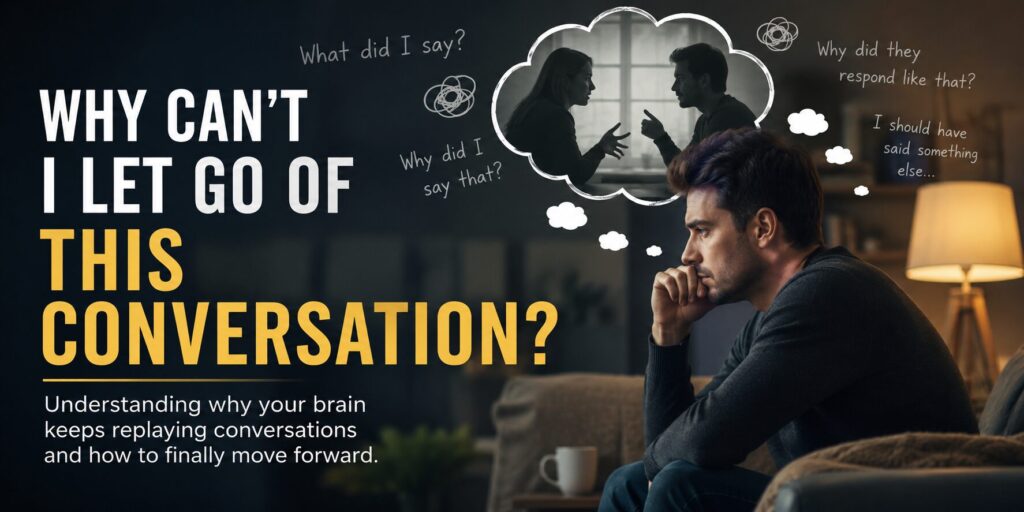
Have you ever walked away from a conversation, only to replay it in your mind over and over again?
Maybe you keep thinking about what you said. Maybe you wish you had responded differently. Maybe one small comment keeps bothering you, even though the conversation is already over.
You may find yourself lying in bed, driving, working, or trying to relax while your brain keeps pulling you back into the same moment.
This can feel frustrating, confusing, and exhausting.
You might ask yourself, “Why can’t my brain let go of conversations I keep replaying?”
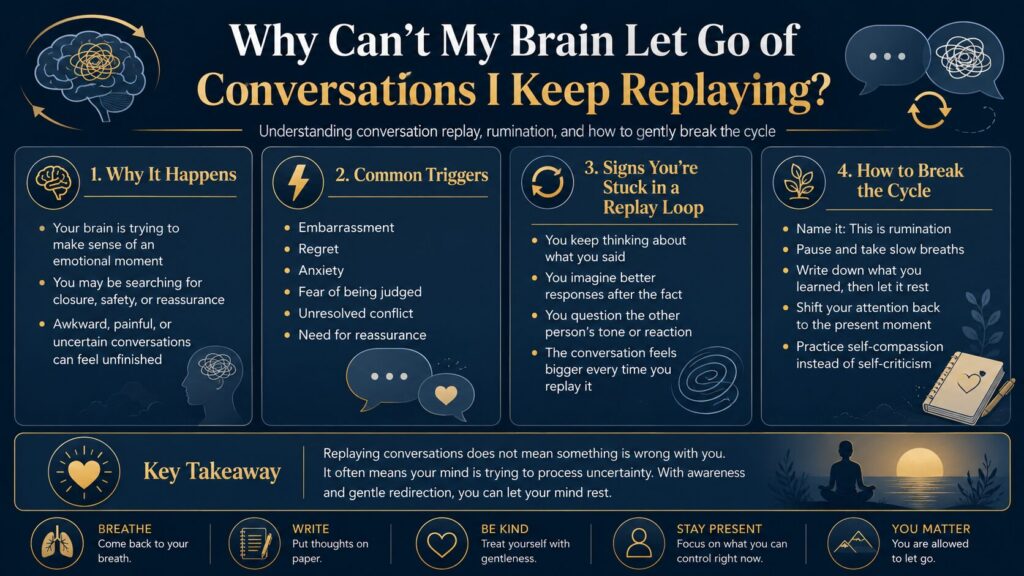
The answer is often connected to emotional processing, anxiety, self-protection, regret, embarrassment, or the need for closure.
Your brain may be trying to understand what happened, protect you from future discomfort, or make sense of something that felt awkward, painful, uncertain, or unresolved.
Why You Can’t Stop Replaying Conversations in Your Head
The problem is that replaying conversations does not always bring peace. Sometimes it creates a mental loop.
You analyze your tone. You question their reaction. You wonder if you sounded rude, strange, awkward, needy, too quiet, too honest, or not honest enough.
Before long, a simple conversation can feel much bigger than it really was.
This does not mean something is wrong with you.
Many people replay conversations because the brain naturally tries to solve emotional uncertainty.
When a conversation feels unfinished or uncomfortable, your mind may treat it like an open tab that refuses to close. It keeps searching for meaning, answers, safety, or reassurance.
In this article, we will look at why your brain keeps replaying conversations, what this mental habit may be trying to tell you, and how to gently break the cycle without blaming yourself.
Also, use trusted mental health research and emotional well-being information from reputable sources.
2 Things You Can Do to Stop Ruminating
In this video, “Two Things You Can Do To Stop Ruminating,” you’ll learn simple ways to interrupt the mental loop of replaying thoughts, conversations, worries, and past moments. You will also find out why people ruminate and overthink everything.
The video explains how rumination can keep your brain stuck in overthinking mode and offers practical steps to help you slow down the cycle, refocus your attention, and create more mental space.
This is a helpful video to include in an article about replaying conversations, emotional overthinking, anxiety, and learning how to let go of thoughts that keep coming back.
Conclusion
If your brain keeps replaying conversations, it does not mean something is wrong with you.
It often means your mind is trying to process uncertainty, embarrassment, regret, or something that felt emotionally unfinished.
The problem is that replaying the same conversation rarely brings real closure. It can make a small moment feel bigger, heavier, and more stressful than it truly was.
Try to remind yourself that not every awkward pause, strange tone, or imperfect response means you did something wrong. Sometimes your brain is simply looking for safety and reassurance.
You can begin to break the cycle by noticing the replay, naming it as rumination, and gently bringing yourself back to the present. You do not have to solve every conversation to move forward.
The conversation is over. You are safe now. And you are allowed to let your mind rest.
There are solutions to this problem. You just have to find the one that best works for you.
Author Box
Kevin Mack is a mental health blogger and SEO content writer who creates helpful, non-medical articles about emotional wellness, overthinking, stress, self-awareness, and everyday mental health struggles. Through his writing, Kevin focuses on making difficult emotional topics easier to understand with a calm, human, and practical approach.
Medical Disclaimer
This article is for educational and informational purposes only. It is not medical advice, mental health treatment, diagnosis, or therapy. If replaying conversations, anxiety, or distress feels overwhelming or affects your daily life, consider speaking with a licensed mental health professional.
Sources and References
- American Psychiatric Association: Rumination, A Cycle of Negative Thinking
This reference explains rumination as repetitive thinking or dwelling on negative feelings, distress, causes, and consequences. It is useful for supporting sections about why the brain keeps replaying past conversations and how rumination can affect emotional well-being. - Harvard Health Publishing: Break the Cycle
This reference discusses how rumination often involves replaying past situations or conversations in the mind. It is a strong source to support tips about recognizing thought loops and gently breaking the cycle.