
A practical workplace anxiety guide with simple, non-medication steps to calm panic attacks, regain control, and feel safer during stressful workdays.
By Kevin Mack, Founder of The Mental Health Blogger. Updated: May 30, 2026Kevin Mack writes practical, easy to understand mental health content focused on anxiety, depression, stress, emotional wellness, and everyday coping strategies for real life situations.
Contents
- 1 Key Takeaways
- 2 Introduction
- 3 What Is a Panic Attack at Work?
- 4 Why Learning How to Manage Panic Attacks at Work Without Medication Matters
- 5 What Causes Panic Attacks at Work?
- 6 What Are the Main Signs of a Panic Attack at Work?
- 7 Step-by-Step Guide: How to Manage Panic Attacks at Work Without Medication
- 8 What Should You Keep in a Workplace Panic Attack Toolkit?
- 9 How Can You Prevent Panic Attacks at Work Naturally?
- 10 Panic Attack at Work vs Everyday Work Stress: What Is the Difference?
- 11 Common Mistakes and Myths About Panic Attacks at Work
- 12 Expert Insights: What Most People Get Wrong About Workplace Panic
- 13 Best Practices for Managing Panic Attacks at Work Without Medication
- 14 People Also Ask:
- 15 Conclusion
- 16 Sources and References
- 17 Author Box
- 18 Medical Disclaimer
Key Takeaways
- Panic attacks at work can feel frightening, but they are often temporary waves of intense fear and physical symptoms that rise, peak, and pass.
- You can manage a panic attack at work without medication by using breathing control, grounding, body relaxation, self talk, and a simple workplace exit plan.
- The goal is not to “fight” the panic attack. The goal is to reduce fear, stay safe, and help your nervous system settle.
- Common panic attack symptoms may include a racing heart, sweating, trembling, shortness of breath, dizziness, nausea, chest tightness, and fear of losing control.
- If panic attacks happen often, interfere with your job, or feel unmanageable, it is wise to talk with a licensed mental health professional or healthcare provider.
- A workplace panic plan can help you feel more prepared before symptoms happen.
Introduction
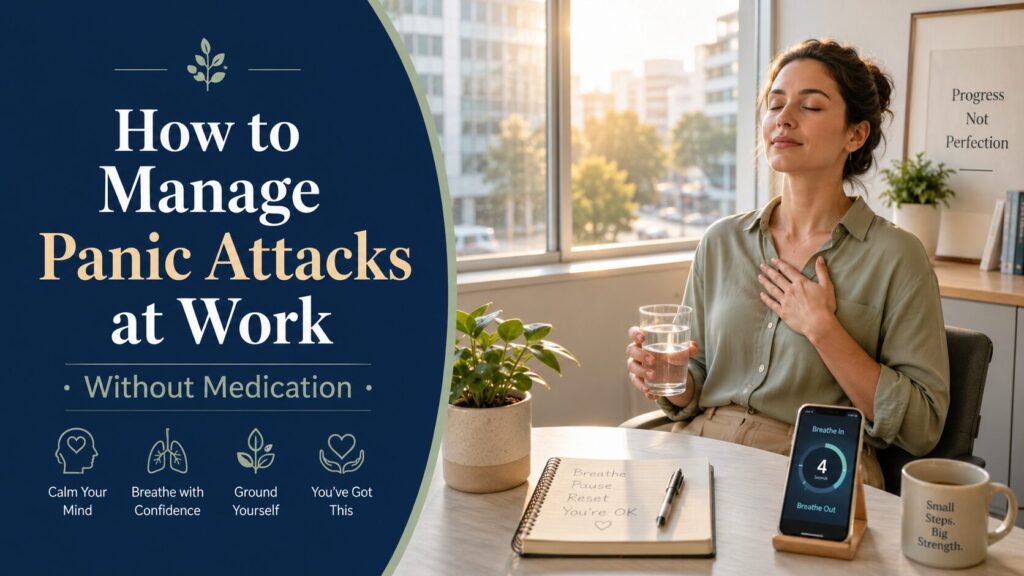
How to manage panic attacks at work without medication starts with breathing, grounding, calming self-talk, and a simple workplace panic plan. Learn practical steps to stay calm, recover faster, and manage workplace anxiety safely.
A panic attack at work can make an ordinary day feel terrifying in seconds. One moment, you may be answering emails, helping a customer, sitting in a meeting, or trying to finish a deadline.
The next moment, your heart is racing, your chest feels tight, your hands may shake, and your mind may tell you that something is seriously wrong.
Learning how to manage panic attacks at work without medication can help you feel more prepared, more confident, and less afraid of the next episode.
This guide is not medical advice, and it does not replace care from a licensed professional.
But it can give you practical, non medication coping tools that many people use to calm the body, steady the mind, and get through a panic attack in a safer, more manageable way.
I have seen how panic can make people feel trapped in public places, especially at work where they feel watched, judged, or unable to step away.
The truth is, panic attacks are scary, but they are also manageable. With a plan, you can learn what is happening in your body, what to do first, and how to recover afterward without making the fear worse.
You can manage panic attacks at work without medication by recognizing the symptoms early, slowing your breathing, grounding yourself in the present moment, relaxing tense muscles, using calming self talk, stepping away when possible, and creating a simple workplace panic plan before symptoms happen.
What Is a Panic Attack at Work?
A panic attack at work is a sudden surge of intense fear, discomfort, or alarm that happens while you are in a work setting. It can come on during a meeting, phone call, customer interaction, lunch break, commute, deadline, or even during a calm moment when nothing obvious seems wrong.
A panic attack is not just “feeling stressed.” It is a strong nervous system response that can cause real physical sensations.
These sensations may feel so intense that a person may worry they are having a heart attack, fainting, losing control, or about to embarrass themselves in front of coworkers.
Common symptoms may include:
- Racing or pounding heart
- Shortness of breath
- Tight chest or throat
- Sweating
- Shaking or trembling
- Dizziness or lightheadedness
- Nausea or stomach discomfort
- Hot flashes or chills
- Tingling or numbness
- Feeling detached from reality
- Fear of losing control
- Fear of dying
- A strong urge to escape
A panic attack at work can feel especially hard because the person may feel pressure to keep performing.
They may not want anyone to notice. They may fear being judged as weak, unreliable, dramatic, or unprofessional. That fear can make the panic feel even stronger.
The important thing to understand is this: panic attacks are real, but they are not a personal failure.
They are not a sign that you are broken. They are a body alarm response that has become too intense for the situation.
Why Learning How to Manage Panic Attacks at Work Without Medication Matters
Learning how to manage panic attacks at work without medication matters because work is one of the most common places where people feel pressure to hide anxiety.
Many workers do not have the option to leave immediately, take a long break, or explain what is happening in the moment.
A good non medication panic plan can help you:
- Stay calmer during the first wave of symptoms
- Reduce fear of the symptoms
- Avoid making the attack worse by fighting it
- Know where to go if you need privacy
- Return to work more smoothly after the episode
- Reduce avoidance of meetings, calls, customers, or workplace tasks
- Feel more in control of your response
This does not mean medication is bad. Medication can be helpful for some people, and a healthcare provider can explain those options.
But many people also want practical coping skills they can use immediately at work. These tools can be useful whether someone uses medication or not.
The deeper goal is to teach your brain, “I can handle this.” When you repeatedly respond to panic with steady actions instead of fear based reactions, the panic cycle may become less intimidating over time.
What Causes Panic Attacks at Work?
Panic attacks at work can happen for many reasons. Sometimes there is a clear trigger. Other times, the attack seems to come out of nowhere.
Work Stress and Pressure
Workplace stress can build up quietly. Deadlines, performance pressure, conflict with coworkers, difficult customers, long hours, job insecurity, and constant interruptions can keep the body in a tense state. Over time, the nervous system may become more sensitive.
A panic attack may happen when the body finally reaches a stress overload point.
Fear of Being Judged
Many people with workplace panic are not only afraid of the symptoms. They are afraid of having symptoms in front of other people. They may worry about sweating, shaking, stumbling over words, leaving a meeting, or needing help.
This fear can create a second layer of panic.
The thought may sound like:
- “Everyone will notice.”
- “I am going to embarrass myself.”
- “My boss will think I cannot do my job.”
- “I have to get out of here right now.”
- “What if this happens again tomorrow?”
These thoughts can increase adrenaline and make the symptoms stronger.
Physical Triggers
Sometimes panic symptoms are triggered by physical factors that make the body feel unsettled.
Possible triggers include:
- Too much caffeine
- Poor sleep
- Skipping meals
- Dehydration
- Overwork
- Hormonal changes
- Fast breathing
- High stress levels
- Certain medications or substances
- Health worries
- Heat, crowded rooms, or feeling trapped
These triggers do not always cause panic by themselves. But they can make the body more vulnerable.
Panic About Panic
One of the most powerful causes is fear of the panic attack itself. After someone has a scary panic attack at work, they may start scanning their body for signs that another one is coming.
They may notice a small heartbeat change and think, “Here it comes again.”
That fear can trigger the same stress response they were trying to avoid.
What Are the Main Signs of a Panic Attack at Work?
A panic attack at work often has physical, mental, emotional, and behavioral signs. Knowing these signs can help you respond earlier.
Physical Signs
Physical symptoms are usually the most frightening part. You may feel your body shift into emergency mode.
Common physical signs include:
- Racing heartbeat: Your heart may pound because your body is releasing stress hormones. This feels scary, but it is a common panic symptom.
- Shortness of breath: You may feel like you cannot get enough air. Often, this happens when breathing becomes shallow or fast.
- Chest tightness: Panic can create muscle tension and breathing changes that feel like pressure. If chest pain is new, severe, or unusual, seek medical help.
- Sweating or shaking: These are signs that your nervous system is activated.
- Dizziness: Fast breathing and fear can make you feel lightheaded.
- Nausea: Stress can affect digestion and create stomach discomfort.
- Tingling or numbness: Changes in breathing can contribute to tingling sensations, especially in the hands, face, or arms.
Mental Signs
Mental signs can make the attack feel more dangerous than it is.
You may think:
- “I am losing control.”
- “I need to leave right now.”
- “Something bad is happening.”
- “I cannot do this.”
- “People can tell.”
- “I might faint.”
- “I might die.”
These thoughts feel convincing during panic. But they are panic thoughts, not facts.
Behavioral Signs
At work, panic may cause changes in behavior.
You may:
- Leave meetings suddenly
- Avoid speaking up
- Avoid certain rooms or tasks
- Take frequent bathroom breaks
- Cancel presentations
- Call out of work
- Check your pulse repeatedly
- Ask for reassurance
- Avoid eating, drinking coffee, or using elevators
- Sit near exits
Some coping habits may help in the short term. But if they turn into avoidance, they can make panic feel more powerful over time.
Mayo Clinic explains that panic attack symptoms can come on suddenly and may feel frightening because they can include intense fear, chest discomfort, rapid heartbeat, sweating, shaking, and shortness of breath.
Step-by-Step Guide: How to Manage Panic Attacks at Work Without Medication
This step by step guide is designed for real workplace situations. You can use it at a desk, in a meeting, in a restroom, in a breakroom, in your car, or anywhere you can safely pause.
Step 1: Name What Is Happening
The first step is to identify the panic attack without arguing with it.
Say quietly to yourself:
“I am having a panic attack. This feels scary, but it will pass.”
This matters because panic becomes worse when your brain believes the symptoms are a mystery or an emergency. Naming it helps reduce confusion.
Avoid saying:
- “I cannot handle this.”
- “This is dangerous.”
- “I have to make it stop right now.”
- “I am losing control.”
Instead, use simple labels:
- “This is panic.”
- “My body is in alarm mode.”
- “I have felt this before.”
- “I can take one step at a time.”
You do not need to fully believe the words at first. You only need to give your brain a steady message.
Step 2: Slow Your Breathing Without Forcing It
During panic, many people breathe too fast, too shallow, or too high in the chest. This can make dizziness, tingling, and chest tightness feel worse.
Try this simple workplace breathing pattern:
- Inhale gently through your nose for 4 seconds.
- Exhale slowly through your mouth for 6 seconds.
- Keep your shoulders relaxed.
- Repeat for 2 to 5 minutes.
The goal is not to take huge breaths. Big forced breaths can sometimes make symptoms worse. The goal is to breathe gently, slowly, and steadily.
If counting makes you more anxious, try this instead:
- Breathe in slowly.
- Breathe out even slower.
- Let your body soften with each exhale.
The longer exhale can send a calming signal to your nervous system.
Step 3: Ground Yourself in the Room
Grounding helps pull attention away from racing thoughts and back into the present moment.
Try the 5 senses method:
- Name 5 things you can see.
- Name 4 things you can feel.
- Name 3 things you can hear.
- Name 2 things you can smell.
- Name 1 thing you can taste.
At work, this may look like:
“I see my keyboard, a notebook, a coffee mug, the door, and the clock. I feel my feet in my shoes, my back against the chair, my hands on the desk, and the fabric of my shirt.”
Grounding works because panic pulls your mind into danger predictions. Sensory details bring your mind back to where you actually are.
Step 4: Relax One Muscle Group at a Time
Panic creates tension. You may clench your jaw, tighten your shoulders, grip your hands, or hold your breath without noticing.
Try this quick body reset:
- Drop your shoulders.
- Unclench your jaw.
- Open your hands.
- Press your feet into the floor.
- Relax your stomach.
- Let your tongue rest.
- Loosen your forehead.
You can also use a gentle tension release exercise:
- Tighten your fists for 3 seconds.
- Release them.
- Press your feet into the floor for 3 seconds.
- Release.
- Lift your shoulders slightly.
- Let them drop.
This gives your body something clear to do instead of spiraling into fear.
Step 5: Use a Calm Work Script
During panic, your thoughts may become dramatic and urgent. A simple script can keep you steady.
Try one of these:
- “This is uncomfortable, not dangerous.”
- “My body is having a false alarm.”
- “I do not need to solve everything right now.”
- “I can breathe and wait this out.”
- “This feeling will rise, peak, and pass.”
- “I can take a short break and come back.”
Keep the script short. Long explanations are hard to remember during panic.
A good panic script should be:
- Simple
- Reassuring
- Realistic
- Easy to repeat
- Not overly dramatic
Do not tell yourself, “Nothing is wrong,” if that feels fake. Instead say, “This is panic, and I can respond calmly.”
Step 6: Step Away If You Can Do So Safely
Sometimes the best choice is to briefly remove yourself from the immediate situation. This does not mean you are running away. It means you are giving your nervous system space to settle.
Good workplace reset locations may include:
- Restroom
- Breakroom
- Empty hallway
- Stairwell
- Outdoor area
- Your car
- Private office
- Quiet corner
You can use a simple phrase if needed:
- “I need a quick restroom break.”
- “I will be right back.”
- “I need a minute to reset.”
- “I am going to step out briefly and return.”
You do not have to explain everything to everyone.
If you are in a safety sensitive job, such as driving, operating machinery, healthcare, childcare, or security, prioritize safety first. Step away from the task if possible and follow workplace procedures.
Step 7: Sip Water and Reorient Slowly
After the peak passes, you may feel tired, shaky, embarrassed, or emotionally drained. This is common.
Do not rush yourself back into full speed immediately.
Try this recovery routine:
- Sip water slowly.
- Keep breathing gently.
- Stretch your hands or shoulders.
- Look around and remind yourself where you are.
- Write one sentence about what helped.
- Return to one small task first.
Choose a simple work task to restart with, such as:
- Replying to one easy email
- Organizing your desk
- Reviewing notes
- Updating a checklist
- Walking to the printer
- Taking one phone call when ready
Small wins help rebuild confidence.
Step 8: Write Down the Pattern Afterward
After the panic attack passes, take 2 minutes to write down what happened.
Track:
- Time of day
- Where you were
- What you were doing
- What symptoms showed up first
- What thoughts made it worse
- What helped
- What you may adjust next time
This is not to blame yourself. It is to learn your pattern.
Over time, you may notice triggers such as caffeine, skipped meals, certain meetings, poor sleep, conflict, deadlines, or crowded rooms. Once you see the pattern, you can plan better.
What Should You Keep in a Workplace Panic Attack Toolkit?
A small workplace panic toolkit can make you feel more prepared. It does not need to be obvious or expensive.
Helpful items may include:
- Water bottle
- Peppermint or calming gum
- Small grounding object
- Breathing reminder card
- List of coping statements
- Earbuds for calming audio during breaks
- Light snack
- Notebook
- Stress ball
- Phone note with your panic plan
- Emergency contact if needed
A toolkit works best when it is simple. You do not want to depend on too many items. The purpose is support, not a new safety trap.
How Can You Prevent Panic Attacks at Work Naturally?
You may not be able to prevent every panic attack. But you can lower your risk by reducing stress load and improving your daily nervous system habits.
Reduce Stimulants When Needed
Caffeine can make panic symptoms feel stronger for some people. Coffee, energy drinks, pre workout drinks, and some sodas may increase heart rate or shakiness.
You do not have to quit everything overnight. You can experiment with:
- Smaller servings
- Drinking caffeine with food
- Switching to lower caffeine options
- Avoiding caffeine before stressful meetings
- Tracking whether caffeine affects symptoms
Eat and Hydrate Consistently
Skipping meals can leave your body feeling shaky, weak, or lightheaded. Those sensations can mimic panic symptoms and trigger fear.
Try to keep simple work snacks available, such as:
- Crackers
- Nuts
- Yogurt
- Fruit
- Protein bar
- Trail mix
- Peanut butter sandwich
- Cheese sticks
Hydration also matters. Even mild dehydration can make your body feel more stressed.
Build Micro Breaks Into the Day
You do not always need a long break. Small breaks can help your nervous system reset.
Try:
- 60 seconds of slow breathing
- Walking to get water
- Looking away from your screen
- Stretching your neck and shoulders
- Stepping outside for fresh air
- Taking a quiet restroom break
- Sitting in silence for one minute
Micro breaks can reduce the feeling that stress is stacking up without relief.
Prepare for High Stress Work Moments
If certain work situations trigger panic, prepare before they happen.
Examples:
- Before a meeting, practice two minutes of slow breathing.
- Before a presentation, keep notes in front of you.
- Before a customer call, write a short opening script.
- Before a difficult conversation, plan one calm sentence.
- Before a crowded event, identify where you can step out.
Preparation lowers uncertainty. Less uncertainty can mean less fear.
The American Psychological Association recommends tracking stressors and identifying workplace situations that create stress, which can make workplace stress management easier and more practical over time.
Panic Attack at Work vs Everyday Work Stress: What Is the Difference?
| Situation | Panic Attack at Work | Everyday Work Stress |
|---|---|---|
| Onset | Often sudden and intense | Usually builds gradually |
| Body symptoms | Racing heart, sweating, shaking, shortness of breath, dizziness | Tension, fatigue, headache, irritability |
| Fear level | Strong fear of danger, losing control, or escaping | Frustration, pressure, worry, overload |
| Duration | Often peaks and passes | May last for hours, days, or weeks |
| Main urge | Escape or get safe immediately | Finish tasks, solve problems, get relief |
| Best response | Breathing, grounding, calming self talk, safe pause | Planning, workload changes, boundaries, stress management |
Both panic and stress matter. But they are not the same experience. Stress can contribute to panic, but a panic attack usually has a stronger physical fear response.
Common Mistakes and Myths About Panic Attacks at Work
Myth 1: You Have to Hide It Completely
Many people believe they must hide panic at all costs. Privacy is understandable, but total secrecy can increase shame.
You do not have to tell everyone. But it may help to tell one trusted person, such as a supervisor, HR contact, close coworker, therapist, or doctor.
Myth 2: You Must Stop the Panic Immediately
Trying to force panic to stop can make it louder. Panic often calms more easily when you stop fighting every sensation.
A better goal is:
“I will ride this out safely.”
Myth 3: Panic Means You Cannot Handle Your Job
Having a panic attack does not mean you are incapable, weak, or unprofessional. Many capable people experience panic.
What matters is building a plan, noticing patterns, and getting support when needed.
Myth 4: Avoiding Triggers Always Helps
Avoidance can feel helpful at first. But if you keep avoiding meetings, calls, elevators, customers, or work areas, your fear may grow.
A better approach is gradual confidence building. This may be easier with a therapist, especially if avoidance is affecting your job.
Myth 5: Non Medication Tools Should Work Instantly Every Time
Breathing and grounding can help, but they are not magic switches. Some panic attacks still take time to pass.
The win is not always stopping the panic completely. Sometimes the win is staying present, reducing fear, and recovering faster.
Expert Insights: What Most People Get Wrong About Workplace Panic
The biggest mistake I see in panic related content is treating panic like a simple mindset problem. Panic is not just negative thinking. It is a full body alarm response.
That means the best approach usually combines body based tools and thought based tools.
You need both:
- Body tools to calm the nervous system
- Mind tools to reduce fear
- Practical tools to manage the work environment
- Long term tools to reduce recurring patterns
Another important distinction is between comfort and recovery. Some actions bring comfort in the moment but keep fear strong long term. For example, constantly checking your pulse may reassure you briefly, but it can train your brain to keep scanning for danger.
A stronger plan is to notice the symptom, label it, breathe, ground, and return to the present moment.
Best Practices for Managing Panic Attacks at Work Without Medication
Use these practical tips to make your workplace panic plan stronger.
Create a Private Panic Plan Before You Need It
Do not wait until you are in the middle of a panic attack to decide what to do.
Write a short plan in your phone:
- Name it.
- Breathe slowly.
- Ground with 5 senses.
- Relax shoulders and jaw.
- Step away if needed.
- Sip water.
- Return to one small task.
Tell One Trusted Person If You Feel Safe Doing So
You do not have to share personal details. You can simply say:
“Sometimes I deal with anxiety symptoms. If I step away for a few minutes, I am usually okay and will return.”
This can reduce fear of being misunderstood.
Talk With a Professional If Panic Keeps Happening
Non medication coping skills can help. But if panic attacks are frequent, severe, or limiting your life, professional help matters.
A therapist can help you understand panic cycles, reduce avoidance, practice coping skills, and build confidence. A healthcare provider can also rule out medical causes for symptoms like chest pain, dizziness, or shortness of breath.
Know When to Seek Urgent Help
Seek urgent medical help if symptoms feel different than usual, include severe chest pain, fainting, signs of stroke, trouble breathing, or any symptom that may be a medical emergency.
It is always better to be safe with new or severe physical symptoms.
People Also Ask:
How do I stop a panic attack at work fast?
To stop a panic attack at work fast, start by naming it as panic, then slow your breathing and focus on your surroundings. Try inhaling gently for 4 seconds and exhaling for 6 seconds. Press your feet into the floor, relax your shoulders, and repeat a calming phrase such as, “This is panic, and it will pass.” If possible, step into a quiet space for a few minutes.
Can I manage panic attacks without medication?
Many people use non medication strategies to manage panic attacks, including breathing exercises, grounding, relaxation techniques, therapy, lifestyle changes, and stress management. However, medication may still be helpful for some people. The best approach depends on the person, the severity of symptoms, and guidance from a qualified healthcare provider.
Should I tell my boss I have panic attacks?
You do not have to tell your boss unless you choose to or need workplace support. If panic attacks affect your job, it may help to speak with a trusted supervisor or HR person in a simple, professional way. You can focus on what helps you work effectively, such as taking brief breaks, stepping away for a few minutes, or having a quieter workspace when possible.
What triggers panic attacks at work?
Workplace panic attacks may be triggered by stress, deadlines, conflict, public speaking, crowded rooms, difficult customers, lack of sleep, too much caffeine, skipped meals, or fear of having another panic attack. Sometimes panic attacks happen without a clear trigger. Tracking symptoms and situations can help you notice patterns over time.
What is the best breathing technique for panic attacks at work?
A simple breathing technique for panic attacks at work is to inhale gently for 4 seconds and exhale slowly for 6 seconds. Keep the breath soft, not forced. The longer exhale can help calm the nervous system. If counting makes you anxious, simply focus on making each exhale slower than each inhale.
Can panic attacks make you feel like you are having a heart attack?
Yes, panic attacks can cause symptoms that feel similar to heart related problems, such as chest tightness, a racing heart, sweating, dizziness, and shortness of breath. However, you should not assume chest pain is only panic, especially if it is new, severe, unusual, or combined with other concerning symptoms. Seek medical help when in doubt.
How long does a panic attack at work last?
A panic attack often rises quickly, peaks, and then gradually fades. The most intense part may pass within minutes, but some people feel shaky, tired, or emotionally drained afterward. Recovery time varies. Using breathing, grounding, and a calm workplace plan can help you move through the episode more safely.
What should I do after a panic attack at work?
After a panic attack at work, give yourself a few minutes to recover. Sip water, breathe slowly, relax your body, and return to a simple task first. Later, write down what happened, what may have triggered it, and what helped. This can help you build a stronger plan for next time.
Can workplace stress cause panic attacks?
Workplace stress can contribute to panic attacks, especially when stress is ongoing, intense, or paired with poor sleep, caffeine, skipped meals, conflict, or fear of being judged. Stress does not always cause panic by itself, but it can make your nervous system more sensitive and more likely to react strongly.
When should I get professional help for panic attacks?
Consider professional help if panic attacks happen often, interfere with your job, cause avoidance, affect sleep, or make you feel afraid of normal daily activities. A licensed therapist or healthcare provider can help you understand what is happening, rule out medical issues, and create a treatment plan that fits your needs.
Conclusion
Learning how to manage panic attacks at work without medication starts with understanding what panic is and what it is not. A panic attack can feel dangerous, embarrassing, and overwhelming, but it is often a temporary nervous system alarm that can be managed with the right tools.
The best plan is simple. Name what is happening. Slow your breathing. Ground yourself in the room. Relax your body. Use steady self talk. Step away safely if needed. Then recover slowly and learn from the pattern.
You do not have to be perfect at handling panic. You only need a plan that helps you feel less trapped and more prepared. Over time, each calm response teaches your brain that panic is uncomfortable, but it does not have to control your workday.
Sources and References
- National Institute of Mental Health: Panic Disorder
Helpful overview of panic disorder, symptoms, and treatment options. - Mayo Clinic: Panic Attacks and Panic Disorder
Medical reference for common panic attack symptoms and causes. - NHS: Breathing Exercises for Stress
Simple breathing guidance that can be adapted for workplace stress and panic symptoms. - American Psychological Association: Coping With Stress at Work
Workplace stress management guidance and practical strategies. - Mind: Panic Attacks
Practical self help information for recognizing and coping with panic attacks.
Author Box
Kevin Mack is the founder of The Mental Health Blogger, a mental health educator, writer, and advocate who creates practical, easy-to-understand resources about anxiety, depression, bipolar disorder, ADHD, panic attacks, emotional wellness, and daily mental health support.
Kevin uses lived experience, personal insight, and careful research to help readers feel less alone, better informed, and more confident about managing mental health challenges in everyday life.
Website: MentalHealthBlogger.com
Medical Disclaimer
This article is for educational and informational purposes only. It is not medical advice, a diagnosis, or a substitute for professional care.
If you are experiencing frequent panic attacks, severe anxiety, chest pain, trouble breathing, thoughts of self-harm, or symptoms that feel unusual or dangerous, contact a qualified healthcare provider or seek emergency help right away.