
By Kevin Mack | Founder of The Mental Health Blogger & Digital Wellness Strategist | June 14, 2026
Introduction
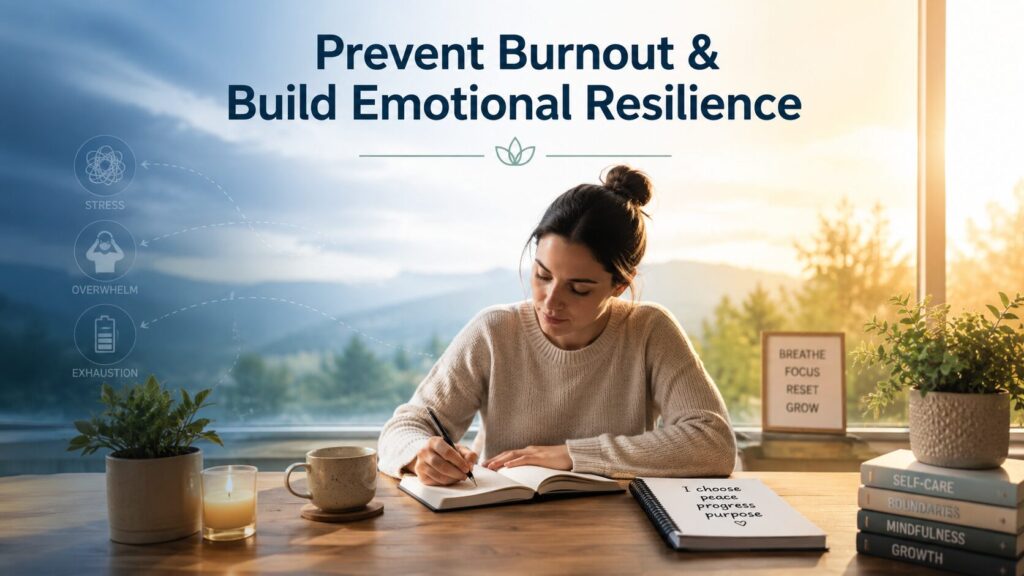
Learn how to prevent burnout and build emotional resilience with practical strategies for managing stress, setting healthy boundaries, improving self-care, and strengthening your ability to cope with life’s challenges. Discover simple habits that support long-term mental wellness and emotional well-being.
Feeling mentally exhausted, emotionally drained, or overwhelmed by daily stress? In this video, you’ll learn practical, evidence-informed strategies to help prevent burnout, strengthen emotional resilience, and create healthier habits for long-term well-being.
Burnout prevention involves managing chronic stress through healthy boundaries, regular self-care, adequate rest, and effective coping strategies. Building emotional resilience helps you adapt to challenges, recover from setbacks, and maintain mental well-being during stressful periods.
Prevent Burnout & Build Emotional Resilience: A Lived-Experience Guide
About the Author
Kevin Mack is a mental health and wellness content creator dedicated to making complex psychological topics easier to understand. Through research-driven articles and educational resources, he helps readers explore stress management, emotional resilience, personal growth, and overall mental well-being.
Medical Disclaimer
The information in this article is provided for educational and informational purposes only and is not intended as medical advice, diagnosis, or treatment. Always consult a qualified healthcare professional regarding any mental health concerns, symptoms, or treatment decisions.