
By Kevin Mack | Updated May 25, 2026
Written for The Mental Health Blogger with an educational, non-medical focus on mental health, addiction recovery, and whole-person wellness.
Contents
- 1 Key Takeaways
- 2 Introduction
- 3 What Are Co-Occurring Disorders in Dual Diagnosis Cases?
- 4 Why Do Co-Occurring Disorders Matter in Dual Diagnosis Treatment?
- 5 What Are the Most Common Co-Occurring Disorders Seen in Dual Diagnosis Cases?
- 6 What Are the Main Signs of Co-Occurring Disorders in Dual Diagnosis Cases?
- 7 What Causes Co-Occurring Disorders in Dual Diagnosis Cases?
- 8 How to Understand Co-Occurring Disorders in Real Life
- 9 Common Myths About Co-Occurring Disorders in Dual Diagnosis Cases
- 10 Expert Insights About Dual Diagnosis and Co-Occurring Disorders
- 11 Best Practices and Practical Tips for Understanding Dual Diagnosis
- 12 People Also Ask:
- 13 Conclusion
- 14 Sources and References
- 15 About the Author
- 16 Medical Disclaimer
Key Takeaways
- The most common co-occurring disorders seen in dual diagnosis cases include depression, anxiety disorders, PTSD, bipolar disorder, ADHD, personality disorders, and psychotic disorders.
- Dual diagnosis means a person has both a mental health disorder and a substance use disorder at the same time. SAMHSA defines this as co-occurring mental health and substance use disorders.
- Alcohol, opioids, cannabis, stimulants, sedatives, and other substances can overlap with mental health symptoms, which can make diagnosis and treatment more complex.
- One condition does not always “cause” the other. Sometimes substance use starts first. Sometimes mental health symptoms come first. Sometimes both share risk factors like trauma, stress, genetics, or environment.
- Integrated care is often recommended because treating mental health and substance use separately can miss the way both conditions affect each other.
Introduction
Common co-occurring disorders in dual diagnosis cases often include depression, anxiety disorders, PTSD, bipolar disorder, ADHD, personality disorders, schizophrenia, and eating disorders. Learn how mental health conditions and substance use disorders can overlap and why integrated support matters.
Dual diagnosis can feel confusing because it rarely looks the same from one person to another. When people ask, “What are the most common co-occurring disorders seen in dual diagnosis cases?” They are usually trying to understand why addiction and mental health struggles often appear together.
In simple terms, dual diagnosis means someone is dealing with both a mental health disorder and a substance use disorder. That may include depression with alcohol use disorder, PTSD with opioid misuse, anxiety with cannabis use, bipolar disorder with stimulant misuse, or several other combinations.
I have seen that one of the biggest misunderstandings around dual diagnosis is the idea that there must be one clear starting point. Real life is usually more complicated.
A person may use alcohol to numb anxiety. Another may develop depression after years of drug use. Someone else may have trauma, panic attacks, and substance use all feeding into each other.
This article explains the most common co-occurring disorders in dual diagnosis cases, why they matter, how they may show up, and what people should understand before making assumptions.
The most common co-occurring disorders seen in dual diagnosis cases are depression, anxiety disorders, post-traumatic stress disorder, bipolar disorder, ADHD, personality disorders, schizophrenia spectrum disorders, and eating disorders. These often appear alongside alcohol use disorder, opioid use disorder, cannabis use disorder, stimulant use disorder, or sedative misuse.
What Are Co-Occurring Disorders in Dual Diagnosis Cases?
Co-occurring disorders in dual diagnosis cases happen when a person has at least one mental health condition and at least one substance use disorder at the same time. SAMHSA explains that co-occurring disorders may include any combination of mental disorders and substance use disorders recognized in the DSM-5-TR.
A common example would be a person living with major depression while also struggling with alcohol use disorder. Another example would be someone with PTSD who misuses opioids, benzodiazepines, or cannabis to cope with flashbacks, sleep problems, or emotional distress.
Dual diagnosis is not a single disorder. It is a clinical description of overlapping conditions.
Why People Search for Dual Diagnosis Information
People often search this topic because they want answers to questions like:
- Why does my loved one have both addiction and depression?
- Can anxiety lead to substance abuse?
- Is PTSD connected to drug or alcohol use?
- Can substance use make bipolar disorder worse?
- What happens if both conditions are treated together?
These are important questions because dual diagnosis can affect mood, behavior, relationships, work, sleep, safety, and recovery planning.
Why Dual Diagnosis Can Be Hard to Understand
Dual diagnosis is often hard to recognize because symptoms can overlap. For example, substance withdrawal can look like anxiety, depression, irritability, insomnia, or mood swings. Substance intoxication can sometimes resemble mania, paranoia, poor judgment, or emotional instability.
That does not mean every symptom is caused by substance use. It means a careful assessment matters.
Why Do Co-Occurring Disorders Matter in Dual Diagnosis Treatment?
Co-occurring disorders matter because mental health symptoms and substance use can intensify each other. A person may drink to calm panic attacks, then feel worse the next day.
Someone may use stimulants to cope with depression, then experience crashes, insomnia, or anxiety. A person with trauma may use substances to numb memories, but the substance use may create more instability over time.
SAMHSA notes that having more than one disorder can complicate diagnosis and treatment, and integrated care can improve quality of care by treating the whole person.
That point is important. If someone only receives addiction treatment without mental health support, the underlying depression, anxiety, trauma, or mood disorder may remain untreated.
If someone only receives therapy for mental health but ongoing substance use is ignored, recovery may also become harder.
Why Understanding the Pattern Helps
Understanding common co-occurring disorders can help people:
- Notice warning signs earlier
- Ask better questions during intake or assessment
- Avoid blaming the person as “lazy” or “unmotivated”
- Understand why recovery may involve both therapy and substance use support
- Recognize that relapse prevention often includes mental health stability
- Look for whole-person treatment options
Dual diagnosis is not about labeling someone. It is about seeing the full picture.
Related Video: Understanding Mental Illness and Substance Use Together
For readers who prefer a visual explanation, this video offers a helpful overview of how mental health disorders and substance use disorders can overlap. It can help explain why dual diagnosis care often looks at the whole person instead of treating addiction and mental health as completely separate issues.
What Are the Most Common Co-Occurring Disorders Seen in Dual Diagnosis Cases?
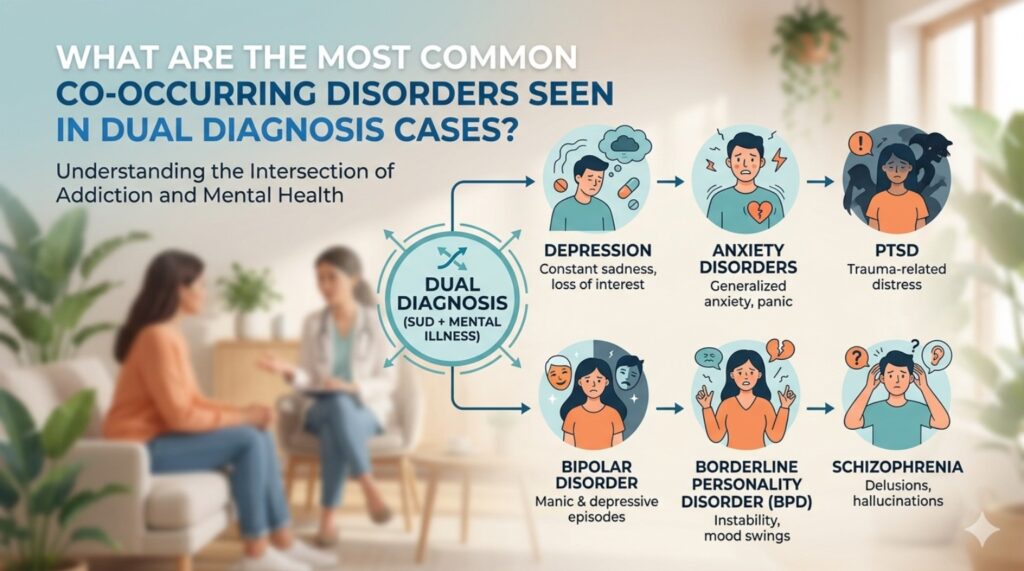
The most common co-occurring disorders seen in dual diagnosis cases include mood disorders, anxiety disorders, trauma-related disorders, attention disorders, personality disorders, psychotic disorders, and eating disorders.
NIDA notes that substance use disorders often occur with mental disorders such as depression, bipolar disorder, ADHD, anxiety disorders, schizophrenia, and others.
Below are the most common categories.
Depression and Substance Use Disorders
Depression is one of the most common mental health conditions seen in dual diagnosis cases. A person may use alcohol, cannabis, opioids, or other substances to numb sadness, hopelessness, loneliness, low energy, or emotional pain.
Depression can also appear after substance use has become severe. Alcohol and drug use can disrupt sleep, relationships, work, finances, and physical health. These problems can deepen feelings of shame, guilt, and despair.
Common signs may include:
- Ongoing sadness or emptiness
- Loss of interest in normal activities
- Sleep changes
- Fatigue
- Isolation
- Increased substance use to escape emotions
- Thoughts of worthlessness
Depression with substance use can be especially concerning when someone talks about not wanting to live, feeling like a burden, or having no way out. In that case, immediate support matters.
Anxiety Disorders and Substance Use Disorders
Anxiety disorders are also very common in dual diagnosis cases. Some people use alcohol, cannabis, sedatives, or other substances to calm racing thoughts, panic attacks, social fear, or physical tension.
At first, substances may seem to “help.” Over time, they can make anxiety worse. Alcohol withdrawal can increase anxiety. Cannabis may trigger panic in some people. Stimulants can raise heart rate and intensify anxious thoughts.
Common anxiety-related conditions may include:
- Generalized anxiety disorder
- Panic disorder
- Social anxiety disorder
- Phobias
- Obsessive-compulsive symptoms
A person may not describe it as anxiety. They may say, “I cannot shut my brain off,” “I need something to calm down,” or “I cannot be around people unless I use first.”
PTSD and Substance Use Disorders
Post-traumatic stress disorder is highly relevant in dual diagnosis cases because trauma can strongly influence substance use. People with PTSD may use substances to cope with nightmares, flashbacks, hypervigilance, emotional numbness, anger, shame, or sleep problems.
PTSD and substance use can create a painful cycle. Trauma symptoms lead to substance use. Substance use leads to risky situations, relationship conflict, or emotional crashes. Those experiences can then worsen trauma symptoms.
Common PTSD-related signs may include:
- Nightmares or intrusive memories
- Avoidance of reminders
- Feeling constantly on edge
- Irritability or anger
- Emotional shutdown
- Trouble sleeping
- Substance use to numb or escape
A trauma-informed approach is important because pushing someone to “just stop using” without understanding what they are trying to survive emotionally may miss the deeper issue.
Bipolar Disorder and Substance Use Disorders
Bipolar disorder can also appear in dual diagnosis cases. It involves mood episodes that may include depression, mania, or hypomania. Substance use can complicate bipolar disorder because drugs and alcohol may worsen mood swings, sleep problems, impulsivity, and risky behavior.
During manic or hypomanic periods, a person may feel unusually energized, confident, restless, or impulsive. This can increase the risk of alcohol use, stimulant use, risky spending, unsafe choices, or skipping treatment.
During depressive periods, the same person may use substances to escape emotional pain or low energy.
Important signs may include:
- Periods of unusually high energy
- Reduced need for sleep
- Racing thoughts
- Risk-taking behavior
- Deep depressive crashes
- Substance use during mood shifts
One key challenge is that stimulant intoxication, withdrawal, sleep deprivation, and mood episodes may look similar from the outside. Careful evaluation matters.
ADHD and Substance Use Disorders
ADHD can be connected with substance use disorders, especially when symptoms are untreated or misunderstood. People with ADHD may struggle with impulsivity, restlessness, emotional regulation, boredom, frustration, and difficulty staying organized.
Some may use nicotine, cannabis, stimulants, or alcohol as a form of self-management. Others may misuse prescription stimulants or use substances to cope with shame from school, work, or relationship struggles.
Common ADHD-related signs may include:
- Impulsive decisions
- Difficulty finishing tasks
- Restlessness
- Emotional reactivity
- Poor time management
- Risk-taking
- Substance use to focus, relax, or escape frustration
ADHD does not automatically lead to addiction. But when ADHD, stress, low support, trauma, or easy access to substances overlap, risk can increase.
Personality Disorders and Substance Use Disorders
Personality disorders may also co-occur with substance use disorders. This does not mean the person is “bad” or impossible to help. It means long-term patterns in emotions, relationships, identity, or impulse control may affect recovery.
Borderline personality disorder is often discussed in dual diagnosis settings because it can involve intense emotions, fear of abandonment, impulsivity, self-harm risk, and unstable relationships. Substances may be used to cope with emotional pain or sudden distress.
Other personality disorder patterns may involve distrust, emotional detachment, impulsive behavior, or difficulty maintaining stable relationships.
Common concerns may include:
- Intense emotional reactions
- Unstable relationships
- Impulsive substance use
- Fear of rejection
- Anger or conflict
- Self-destructive coping patterns
The important point is that personality disorder traits should be approached with compassion, structure, and evidence-based support, not judgment.
Schizophrenia Spectrum Disorders and Substance Use Disorders
Schizophrenia spectrum disorders can also co-occur with substance use disorders. These conditions may involve hallucinations, delusions, disorganized thinking, unusual beliefs, or reduced motivation.
Substance use can complicate symptoms. Cannabis, stimulants, hallucinogens, and other substances may worsen paranoia, confusion, or psychosis in some people. Alcohol or sedatives may also interfere with stability, treatment, and daily functioning.
Possible signs may include:
- Hearing or seeing things others do not
- Strong unusual beliefs
- Paranoia
- Confused speech
- Withdrawal from others
- Substance use during emotional distress
- Poor medication or treatment consistency
This is an area where professional evaluation is especially important. Psychosis-like symptoms can come from several causes, including substances, medical conditions, sleep deprivation, trauma, or primary mental health disorders.
Eating Disorders and Substance Use Disorders
Eating disorders may also appear in dual diagnosis cases. Some people use stimulants, laxatives, alcohol, or other substances in connection with body image distress, appetite control, emotional pain, or compulsive behaviors.
Eating disorders are serious and can affect both physical and mental health. Substance use can increase risk by adding dehydration, malnutrition, heart strain, sleep disruption, or emotional instability.
Common signs may include:
- Extreme concern about weight or body shape
- Restrictive eating
- Binge eating
- Purging behaviors
- Misuse of stimulants or laxatives
- Substance use tied to body image or control
This combination often needs careful support because both the eating behavior and substance use can become coping tools.
What Are the Main Signs of Co-Occurring Disorders in Dual Diagnosis Cases?
The main signs of co-occurring disorders in dual diagnosis cases often include mood changes, increased substance use, worsening relationships, sleep problems, poor functioning, emotional instability, and repeated attempts to quit without lasting success.
Here are signs that may suggest both mental health and substance use concerns are present.
- Using substances to manage emotions: A person may say they need alcohol, cannabis, pills, or drugs to calm down, sleep, feel normal, socialize, or stop thinking. This matters because it may show that the substance is being used as emotional regulation.
- Mental health symptoms worsen when substance use increases: Depression, anxiety, irritability, paranoia, panic, or mood swings may become more intense during heavy use, intoxication, or withdrawal. This does not prove the substance caused the mental health issue, but it shows the two may be interacting.
- Repeated relapse during emotional stress: Some people stay sober during calm periods but return to substance use during grief, conflict, trauma reminders, loneliness, or panic. This pattern may point to untreated emotional triggers.
- Isolation and secrecy: A person may withdraw from family, avoid friends, hide substance use, miss appointments, or stop doing things they once cared about. This can happen with both addiction and mental health symptoms.
- Sleep disruption: Insomnia, oversleeping, nightmares, late-night use, or staying awake for long periods can appear in depression, anxiety, PTSD, bipolar disorder, stimulant use, withdrawal, and several other conditions.
- Trouble at work, school, or home: Missed responsibilities, financial stress, legal issues, conflict, or poor concentration may reflect both substance use and untreated mental health symptoms.
These signs do not confirm a diagnosis. They are clues that a professional assessment may be helpful.
What Causes Co-Occurring Disorders in Dual Diagnosis Cases?
Co-occurring disorders usually do not have one simple cause. NIDA explains that mental disorders and substance use disorders can share risk factors, and each may also influence the other.
Shared Risk Factors
Some people are more vulnerable because of overlapping risk factors, such as:
- Family history of addiction or mental illness
- Trauma or adverse childhood experiences
- Chronic stress
- Social isolation
- Poverty or unstable housing
- Grief or loss
- Long-term untreated symptoms
- Peer or environmental exposure to substances
These factors do not guarantee dual diagnosis. They simply increase vulnerability.
Self-Medication
Self-medication is one of the most common explanations people understand. Someone may use alcohol to calm anxiety, opioids to escape emotional pain, cannabis to sleep, or stimulants to push through depression.
The problem is that short-term relief can turn into long-term dependency. The substance may begin as a coping tool, then become another source of distress.
Substance-Induced Symptoms
Sometimes substance use can create or worsen mental health symptoms. Withdrawal from alcohol, opioids, benzodiazepines, or stimulants can affect mood, sleep, anxiety, and thinking. Some substances can also contribute to paranoia, panic, depression, or psychosis-like symptoms.
This is why timing matters. A clinician may ask when symptoms started, whether they existed before substance use, and how they change during sobriety or withdrawal.
A Two-Way Cycle
In many dual diagnosis cases, it is not “mental health caused addiction” or “addiction caused mental illness.” It is a cycle.
A person feels emotional pain. They use a substance. The substance creates consequences. Those consequences increase shame, stress, or symptoms. Then the person uses again to cope.
Breaking that cycle usually requires support for both conditions.
How to Understand Co-Occurring Disorders in Real Life
Dual diagnosis becomes easier to understand when you stop looking for one single cause and start looking for patterns.
Step 1: Look at the Timeline
A helpful first step is to ask when symptoms began. Did anxiety start in childhood before substance use? Did depression appear after heavy drinking began?
A timeline does not diagnose the condition, but it helps organize the story.
Step 2: Notice the Function of Substance Use
Ask what the substance seems to do for the person. Do they use it to sleep, socialize, numb memories, reduce panic, escape depression, increase focus, or feel confident?
This question matters because it reveals the emotional need behind the behavior.
Step 3: Separate Blame From Patterns
Blame rarely helps. Patterns do. Instead of saying, “They just do not care,” it may be more accurate to ask, “What symptoms get worse before the substance use increases?”
That shift can make conversations more practical and less shaming.
Step 4: Encourage Whole-Person Support
If both mental health and substance use are present, support should address both. SAMHSA describes integrated care as a better quality approach for people living with co-occurring disorders.
That may include therapy, recovery support, peer support, medication management when appropriate, family education, crisis planning, and lifestyle support.
Step 5: Use Credible Resources
Dual diagnosis is too important to rely only on social media advice. Credible resources like SAMHSA, NIDA, NAMI, and MedlinePlus can help readers understand terms, treatment options, and support pathways. SAMHSA’s National Helpline also provides treatment referral information for people facing mental health or substance use concerns.
Common Myths About Co-Occurring Disorders in Dual Diagnosis Cases
Myth 1: Addiction Must Be Treated Before Mental Health
Some people believe substance use must be fully resolved before mental health can be addressed. That is not always realistic. Many people need both forms of support together because each condition affects the other.
Myth 2: Mental Illness Always Causes Addiction
Mental illness can increase vulnerability to substance use, but it is not the only explanation. Substance use can also worsen symptoms, and both may share deeper risk factors.
Myth 3: Dual Diagnosis Means Someone Is Beyond Help
This is false and harmful. Dual diagnosis can be complex, but people can improve with the right support, treatment plan, consistency, and community resources.
Myth 4: Substance Use Is Always a Choice With No Deeper Issue
Substance use involves choices, but addiction is more complicated than willpower. Mental health symptoms, trauma, environment, brain reward pathways, stress, and coping patterns can all play a role.
Myth 5: One Diagnosis Explains Everything
A label can be useful, but it does not explain the whole person. A person is more than depression, alcohol use disorder, PTSD, or anxiety. Good care looks at symptoms, history, strengths, relationships, environment, and goals.
Expert Insights About Dual Diagnosis and Co-Occurring Disorders
One practical insight I have learned from writing about mental health is that dual diagnosis often hides behind everyday language. People may not say, “I have co-occurring disorders.” They may say:
- “I only drink because I cannot sleep.”
- “Weed is the only thing that calms me down.”
- “I use because I do not want to feel anything.”
- “I cannot function without something in my system.”
- “When I stop, my anxiety gets unbearable.”
Those statements are important because they reveal a possible relationship between symptoms and substance use.
Another key distinction is the difference between relief and recovery. A substance may provide temporary relief, but recovery usually requires safer coping tools, emotional support, healthier routines, and treatment that addresses the underlying pattern.
Comparison Table: Common Co-Occurring Disorders and How They May Show Up
| Co-Occurring Disorder | Common Substance Connection | What Readers May Notice |
|---|---|---|
| Depression | Alcohol, opioids, cannabis, sedatives | Isolation, sadness, low energy, using to numb pain |
| Anxiety disorders | Alcohol, cannabis, benzodiazepines, sedatives | Panic, tension, avoidance, using to calm down |
| PTSD | Alcohol, opioids, cannabis, sedatives | Nightmares, flashbacks, hypervigilance, using to escape memories |
| Bipolar disorder | Alcohol, stimulants, cannabis, multiple substances | Mood swings, impulsivity, sleep changes, risky behavior |
| ADHD | Nicotine, cannabis, stimulants, alcohol | Impulsivity, restlessness, focus problems, emotional frustration |
| Personality disorders | Alcohol, sedatives, stimulants, multiple substances | Intense emotions, conflict, impulsive use, unstable relationships |
| Psychotic disorders | Cannabis, stimulants, alcohol, hallucinogens | Paranoia, hallucinations, confusion, withdrawal |
| Eating disorders | Stimulants, laxatives, alcohol, diet-related misuse | Restriction, bingeing, body image distress, control-related use |
Best Practices and Practical Tips for Understanding Dual Diagnosis
Look for Patterns, Not Perfect Explanations
You may not know what came first. That is okay. Focus on patterns such as triggers, symptoms, substance use, consequences, and recovery attempts.
Use Non-Shaming Language
Instead of saying “addict” or “wild,” use person-first language like “a person with a substance use disorder” or “someone living with depression and alcohol use disorder.”
Encourage Professional Assessment
A trained professional can help sort out whether symptoms are primary, substance-induced, trauma-related, or connected to multiple factors.
Support Integrated Care
When possible, look for care that addresses mental health and substance use together. This may include counseling, recovery programs, psychiatric support, medication-assisted treatment when appropriate, and peer support.
Do Not Ignore Crisis Signs
If someone talks about suicide, self-harm, overdose risk, severe withdrawal, psychosis, or danger to others, treat it as urgent. In the United States, people can call or text 988 for immediate mental health crisis support. For treatment referrals, SAMHSA’s National Helpline is available at 1-800-662-HELP (4357).
People Also Ask:
What is the most common co-occurring disorder with substance use?
Depression and anxiety disorders are among the most common mental health conditions seen with substance use disorders. Many people use alcohol, cannabis, opioids, or sedatives to cope with sadness, panic, racing thoughts, or emotional pain. However, PTSD, bipolar disorder, ADHD, personality disorders, and psychotic disorders can also appear in dual diagnosis cases.
What does dual diagnosis mean?
Dual diagnosis means a person has both a mental health disorder and a substance use disorder. For example, someone may have alcohol use disorder and depression, or opioid use disorder and PTSD. The term is often used interchangeably with co-occurring disorders, though co-occurring disorders can include several combinations of mental health and substance use conditions.
Can anxiety and addiction happen together?
Yes. Anxiety and addiction can happen together. Some people use alcohol, cannabis, sedatives, or other substances to reduce anxiety symptoms. Over time, the substance may worsen anxiety, create dependence, or make daily functioning harder. This is why anxiety and substance use often need to be addressed together.
Is PTSD common in dual diagnosis cases?
PTSD is common in many dual diagnosis cases, especially when someone uses substances to cope with trauma symptoms. Nightmares, flashbacks, emotional numbness, hypervigilance, and sleep problems can make alcohol or drugs feel like short-term relief. Long-term recovery often requires trauma-informed support.
Can substance use cause mental health symptoms?
Yes, substance use can cause or worsen mental health symptoms in some cases. Intoxication, withdrawal, sleep loss, and long-term use can affect mood, anxiety, thinking, and behavior. However, not all mental health symptoms are caused by substances. A careful assessment is needed to understand the full picture.
Why is dual diagnosis hard to treat?
Dual diagnosis can be hard to treat because mental health symptoms and substance use often reinforce each other. A person may use substances to cope with symptoms, but the substance use may worsen those symptoms later. Treatment may be more effective when both conditions are addressed together instead of separately.
What substances are most often involved in dual diagnosis?
Alcohol is commonly involved, but opioids, cannabis, stimulants, sedatives, and multiple substances can also appear in dual diagnosis cases. The substance involved may depend on the person’s symptoms, environment, access, history, and coping patterns.
What should someone do if they suspect dual diagnosis?
A good next step is to seek a professional assessment from a mental health or addiction treatment provider. It helps to share a clear timeline of symptoms, substance use, triggers, treatment history, and safety concerns. For immediate help finding treatment in the United States, SAMHSA’s National Helpline can provide referrals.
Conclusion
The most common co-occurring disorders seen in dual diagnosis cases include depression, anxiety disorders, PTSD, bipolar disorder, ADHD, personality disorders, psychotic disorders, and eating disorders.
These conditions often overlap with alcohol use disorder, opioid use disorder, cannabis use disorder, stimulant misuse, sedative misuse, or multiple substance use patterns.
The main point is simple. Dual diagnosis is not just about addiction. It is not just about mental health either. It is about how both conditions interact in a real person’s life.
Understanding that connection can reduce shame, improve communication, and support better treatment decisions.
If mental health symptoms and substance use are both present, the most helpful path is usually compassionate, informed, whole-person support.
Sources and References
- SAMHSA: Co-Occurring Disorders and Other Health Conditions
Explains that co-occurring disorders involve the coexistence of a mental health disorder and a substance use disorder.
https://www.samhsa.gov/substance-use/treatment/co-occurring-disorders - SAMHSA: Screening and Treatment of Co-Occurring Disorders
Discusses why integrated screening and treatment can improve quality of care for people with co-occurring disorders.
https://www.samhsa.gov/mental-health/serious-mental-illness/co-occurring-disorders - NIDA: Co-Occurring Disorders and Health Conditions
Provides research-based information on mental disorders, substance use disorders, and overlapping risk factors.
https://nida.nih.gov/research-topics/co-occurring-disorders-health-conditions - NAMI: Substance Use Disorders and Dual Diagnosis
Offers consumer-friendly information on substance use disorders and how they may occur alongside mental illness.
https://www.nami.org/co-occurring-conditions/substance-use-disorders/ - SAMHSA National Helpline
A free, confidential treatment referral and information service for people facing mental health or substance use concerns.
https://www.samhsa.gov/find-help/helplines/national-helpline
About the Author
Kevin Mack is the founder and lead writer behind The Mental Health Blogger, a mental health education website focused on making complex mental health topics easier to understand for everyday readers.
Kevin writes about anxiety, depression, trauma, dual diagnosis, substance use recovery, emotional wellness, and related mental health topics in a clear, compassionate, and non-medical style.
His work is based on careful research, lived-experience awareness, and a strong commitment to writing helpful content that reduces stigma.
Kevin’s goal is to explain mental health topics in a way that feels human, practical, and trustworthy without replacing professional medical advice, diagnosis, or treatment.
Through The Mental Health Blogger, Kevin creates educational resources for people who want to better understand mental health symptoms, co-occurring disorders, recovery challenges, and the importance of seeking support when life feels overwhelming.
Medical Disclaimer
The information in this article is for educational and informational purposes only. It is not intended to diagnose, treat, cure, or prevent any mental health condition, substance use disorder, medical condition, or co-occurring disorder.
This content should not be used as a substitute for professional medical advice, mental health counseling, addiction treatment, diagnosis, or care from a qualified healthcare provider.
If you are experiencing symptoms of depression, anxiety, PTSD, substance misuse, withdrawal, suicidal thoughts, self-harm urges, or any mental health crisis, please seek help from a licensed medical professional, therapist, counselor, or emergency service provider.
If you or someone you know is in immediate danger or may harm themselves or others, call 911 or your local emergency number right away. In the United States, you can also call or text 988 to reach the Suicide & Crisis Lifeline for immediate support.
Always speak with a qualified healthcare professional before making decisions about mental health treatment, medication, substance use recovery, detox, or dual diagnosis care.