
Contents
- 1 Different Types of Mental Illness and Their Symptoms Explained
- 2 Introduction
- 3 What Is Mental Illness
- 4 Anxiety Disorders
- 5 Depressive Disorders
- 6 Bipolar Disorders
- 7 Schizophrenia Spectrum Disorders
- 8 Trauma Related Disorders
- 9 Obsessive Compulsive and Related Disorders
- 10 Eating Disorders
- 11 Neurodevelopmental Disorders
- 12 Personality Disorders
- 13 When to Seek Help
- 14 Conclusion and Final Thoughts
- 15 FAQ: Different Types of Mental Illness and Their Symptoms
- 16 Trusted Mental Health Resources and Medical References
Different Types of Mental Illness and Their Symptoms Explained
A Complete Guide to Common Mental Health Conditions, Warning Signs, and Symptom Patterns
Introduction
Learn about different types of mental illness and their symptoms, including anxiety, depression, bipolar disorder, schizophrenia, and more, explained clearly.
Mental health shapes how we think, feel, connect with others, and handle everyday stress. Yet mental illness is still misunderstood by many people.
Some imagine it looks the same for everyone. Others believe symptoms are always obvious or extreme. In reality, mental illness shows up in many different ways, often quietly, and often over time.
Mental illness refers to a wide range of mental health conditions that affect mood, thinking, behavior, and emotional regulation.
These conditions can impact daily life, relationships, work performance, and physical health.
Some mental illnesses are temporary and respond well to early treatment. Others are long term conditions that require ongoing support and management.
This guide breaks down the different types of mental illness and their symptoms in a clear and human way.
Each section explains how the condition may feel, how it may affect daily life, and what warning signs people often overlook.
The goal is understanding, not labeling. Knowledge helps reduce stigma. It also helps people recognize when support may be needed.
Whether you are learning for yourself, supporting someone you love, or building mental health awareness, this guide offers a complete foundation written with care, clarity, and respect.
Video – 8 Things You Can Do to Improve Your Mental Health
Before exploring the different types of mental illness in detail, this short video offers a clear overview of 8 things to do to improve your mental health.
What Is Mental Illness
Mental illness is a medical condition that affects the brain and emotional functioning. It is not a weakness. It is not a personal failure. It is not something a person can simply think away.
Mental health conditions are diagnosed based on patterns of symptoms, duration, severity, and how much they interfere with daily life. Clinicians often use criteria from DSM-5 along with clinical evaluations and personal history.
Mental illness can affect people of all ages, genders, cultures, and backgrounds. Symptoms may come and go. They may change over time. Many people live full and meaningful lives while managing a mental health condition with the right care.
Anxiety Disorders
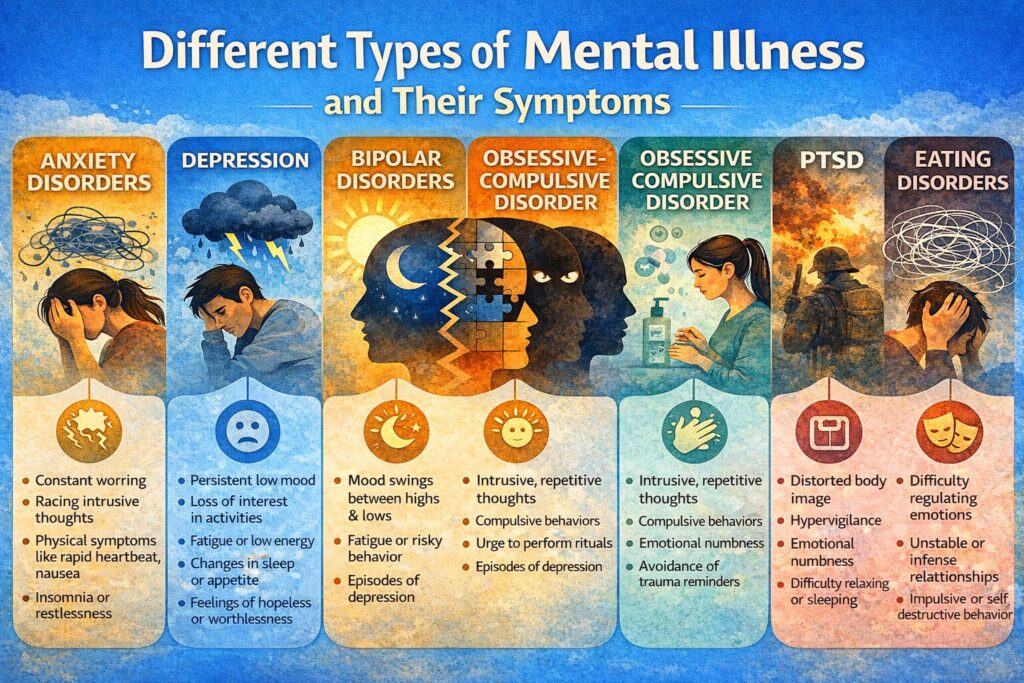
Anxiety disorders involve persistent fear, worry, or nervous system activation that feels difficult to control. While occasional anxiety is normal, anxiety disorders are intense, frequent, and disruptive.
Common Symptoms of Anxiety Disorders
- Constant worry that feels hard to stop, even when there is no clear reason
- Racing thoughts that jump from one fear to another
- Physical symptoms such as muscle tension, headaches, nausea, or rapid heartbeat
- Difficulty sleeping due to restlessness or intrusive thoughts
- Avoidance of situations that trigger fear or panic
Types of Anxiety Disorders
Generalized Anxiety Disorder
This involves ongoing anxiety about everyday situations. People often describe feeling tense most of the day. The worry feels exhausting and uncontrollable.
Panic Disorder
This includes sudden panic attacks that may feel like a heart attack. Symptoms can include chest tightness, shortness of breath, dizziness, and fear of losing control.
Social Anxiety Disorder
This centers on intense fear of judgment or embarrassment in social settings. People may avoid conversations, public speaking, or group activities.
Specific Phobias
These involve intense fear of a specific object or situation such as heights, flying, needles, or certain animals.
Depressive Disorders
Depressive disorders affect mood, motivation, energy, and self worth. Depression is more than sadness. It is a deep emotional and physical state that can affect every part of life.
Common Symptoms of Depressive Disorders
- Persistent low mood or emotional numbness
- Loss of interest in activities once enjoyed
- Fatigue that does not improve with rest
- Changes in appetite or sleep patterns
- Feelings of guilt, hopelessness, or worthlessness
- Difficulty concentrating or making decisions
Types of Depressive Disorders
Major Depressive Disorder
This involves episodes of severe depression lasting weeks or months. Symptoms interfere with daily functioning and relationships.
Persistent Depressive Disorder
This is a long term form of depression that lasts for years. Symptoms may be less intense but feel constant and draining.
Seasonal Affective Disorder
This type of depression follows a seasonal pattern, often worsening during fall and winter months when daylight is limited.
Bipolar Disorders
Bipolar disorders involve shifts in mood, energy, and activity levels that move between emotional highs and lows. These mood changes are more extreme than typical mood swings.
Common Symptoms of Bipolar Disorders
- Periods of elevated mood, energy, or confidence
- Reduced need for sleep without feeling tired
- Rapid speech and racing ideas
- Impulsive decisions or risky behavior
- Episodes of depression similar to major depressive disorder
Types of Bipolar Disorder
Bipolar I Disorder
This includes full manic episodes that may require hospitalization, often followed by depressive episodes.
Bipolar II Disorder
This involves hypomanic episodes that are less severe than mania, along with significant depressive episodes.
Cyclothymic Disorder
This includes frequent mood changes over time that do not meet full criteria for mania or major depression but still affect daily life.
Schizophrenia Spectrum Disorders
Schizophrenia spectrum disorders affect perception, thinking, and emotional expression. These conditions can disrupt how a person interprets reality.
Common Symptoms of Schizophrenia Spectrum Disorders
- Hallucinations such as hearing voices or seeing things others do not
- Delusions or fixed false beliefs
- Disorganized thinking or speech
- Reduced emotional expression
- Difficulty maintaining relationships or daily routines
These conditions often require long term treatment and structured support.
Trauma Related Disorders
Trauma related disorders develop after exposure to distressing or life threatening events. Not everyone who experiences trauma develops a disorder, but for some, symptoms persist.
Common Symptoms of Trauma Related Disorders
- Flashbacks or intrusive memories
- Nightmares related to the traumatic event
- Emotional numbness or detachment
- Hypervigilance or exaggerated startle response
- Avoidance of reminders linked to the trauma
Post Traumatic Stress Disorder
PTSD can occur after accidents, violence, abuse, natural disasters, or military combat. Symptoms may appear months or even years later.
Obsessive Compulsive and Related Disorders
These disorders involve intrusive thoughts and repetitive behaviors performed to reduce anxiety.
Common Symptoms
- Unwanted thoughts that cause distress
- Repetitive behaviors such as checking, cleaning, or counting
- Strong urge to perform rituals even when they feel irrational
- Temporary relief after rituals, followed by renewed anxiety
Obsessive compulsive disorder is not about being neat or organized. It is about distress and loss of control.
Eating Disorders
Eating disorders involve disrupted relationships with food, body image, and self perception. They can affect people of all sizes and backgrounds.
Common Symptoms
- Restrictive eating or binge eating patterns
- Fear of weight gain or distorted body image
- Physical symptoms such as dizziness, hair loss, or digestive issues
- Emotional distress linked to eating or body shape
Examples include anorexia nervosa, bulimia nervosa, and binge eating disorder.
Neurodevelopmental Disorders
These conditions begin in childhood and affect learning, communication, or behavior.
Common Examples
- Attention deficit hyperactivity disorder
- Autism spectrum disorder
- Learning disorders
Symptoms may include difficulty focusing, impulsivity, sensory sensitivities, or social communication challenges.
Personality Disorders
Personality disorders involve long term patterns of thinking, feeling, and behaving that differ from cultural expectations.
Common Symptoms
- Difficulty regulating emotions
- Unstable relationships
- Intense fear of abandonment
- Rigid thinking patterns
These patterns often develop early and can improve with therapy and support.
When to Seek Help
If mental health symptoms begin to interfere with daily life, relationships, work, or physical health, support can help. Early intervention often leads to better outcomes.
Signs it may be time to seek help include ongoing distress, withdrawal from loved ones, changes in behavior, or feeling overwhelmed most days.
Support can come from therapists, psychiatrists, primary care providers, support groups, or trusted community resources.
Conclusion and Final Thoughts
Mental illness is complex, personal, and deeply human. There is no single experience that defines it.
Symptoms vary. Severity varies. Recovery looks different for everyone.
Understanding the different types of mental illness and their symptoms helps reduce fear and misinformation.
It encourages compassion. It also empowers people to recognize when something does not feel right and to reach for support.
Mental health care is not about fixing someone. It is about helping people feel supported, understood, and capable of living meaningful lives.
With awareness, treatment, and empathy, recovery and stability are possible.
If you or someone you care about is struggling, you are not alone. Help exists. Healing is not linear, but it is real.
Reviewed by: Steven Gans, MD
Board-certified Psychiatrist | Assistant Professor of Psychiatry, Harvard Medical School | Active Supervisor at Massachusetts General Hospital.
FAQ: Different Types of Mental Illness and Their Symptoms
What are the most common types of mental illness
The most common types include anxiety disorders, depressive disorders, bipolar disorders, trauma related disorders, schizophrenia spectrum disorders, eating disorders, and neurodevelopmental conditions such as ADHD.
How do I know if I have a mental illness
If symptoms like ongoing sadness, anxiety, mood changes, or difficulty functioning last for weeks and interfere with daily life, it may be time to seek a mental health evaluation.
Can mental illness symptoms change over time
Yes. Mental illness symptoms can improve, worsen, or shift depending on stress levels, treatment, lifestyle changes, and life events.
Are mental illnesses treatable
Most mental health conditions are treatable. Many people experience symptom relief through therapy, medication, lifestyle changes, or a combination of treatments.
What is the difference between anxiety and depression
Anxiety often involves excessive worry and physical tension, while depression is marked by low mood, loss of interest, and reduced energy. Some people experience both at the same time.
Can children and teens have mental illness
Yes. Mental illness can affect people of all ages. Early signs may appear in childhood or adolescence and benefit from early support.
Is mental illness caused by trauma
Trauma can contribute to some mental health conditions, but mental illness can also result from genetics, brain chemistry, environment, or a combination of factors.
When should someone seek professional help
If mental health symptoms interfere with work, school, relationships, or daily functioning, or cause distress most days, professional support is recommended.
Can mental illness go away on its own
Some symptoms may improve over time, but many mental health conditions benefit from treatment to reduce severity and prevent symptoms from returning.
Is mental illness a lifelong condition
Some conditions are short term, while others are long term. With proper treatment, many people manage symptoms successfully and lead fulfilling lives.
Trusted Mental Health Resources and Medical References
1. National Institute of Mental Health
Website: https://www.nimh.nih.gov
The National Institute of Mental Health is the leading U.S. government agency for mental health research. It provides evidence based information on different types of mental illness, symptoms, causes, diagnosis, and treatment options written in clear, accessible language.
2. Mental Health America
Website: https://www.mhanational.org
Mental Health America is a long standing nonprofit organization focused on education, screening tools, and mental health awareness. It offers user friendly explanations of mental health conditions and symptom checklists suitable for the general public.
3. World Health Organization
Website: https://www.who.int
The World Health Organization provides global, research backed guidance on mental health conditions, prevalence, and symptom patterns. It is especially valuable for inclusive and internationally recognized mental health information.
-
 Original Case Study: How Do Couples Navigate the Highs and Lows of Bipolar Disorder in a Marriage?
 -
How to Clear Your Mind Before Bed: A 5-Minute Practical Decompression Guide
-
How to Improve Mental Wellness When You Have no Time?
-
How Do I Create a Daily Mental Health Checklist for Digital Detoxing?
-
How Do I Clear Brain Fog Naturally and Get My Focus Back?